
Reviewed · ANGKOR TEMPLE TOURS
Private Tour: (Avoid Crowds & Heat) 2-Day Angkor Temples
Morning light meets ancient stone. This private 2-day Angkor temples route is built for people who want the best views without cooking in the worst hours. I especially like the way the plan mixes major icons with calmer ruins, and the guide-led storytelling that helps you actually read the sites instead of just photographing them. One thing to plan for: the Angkor Archaeological Park entrance ticket is extra and you’ll be climbing stairs and walking a fair amount.
I love that pickup, drop-off, and an air-conditioned private vehicle are included, with snacks/refreshment to keep you going. Guides named in recent experiences like Tay, Viet, Kim, Tai, and Sopheara are praised for route choices that reduce crowds and for history explanations you can follow day to day. The only real consideration is stamina—if you’re not comfortable with lots of steps, you’ll feel it.
In This Review
- Key Takeaways Before You Go
- Why This Private Angkor Plan Cuts Through the Chaos
- Getting to Temples in Comfort: Pickup, Air-Conditioning, and Breaks
- Day 1 at Angkor: Banteay Srei, the Quiet Temples, and Jayavarman VII’s Complex World
- Banteay Srei: Citadel of Beauty in Pink Sandstone
- Banteay Samre: Peaceful Isolation With Angkor-Wat-Echo Towers
- Pre Rup: The Meaning Behind the Color and Materials
- Preah Khan: A Buddhist City Built Like a University
- Neak Pean: The Healing Pond and Its Symbolism
- Day 2 at Angkor: Angkor Wat, Angkor Thom, Ta Prohm, and a Crowd-Check Detour
- Angkor Wat: The World’s Largest Religious Monument
- Angkor Thom: A Capital City Wrapped in Temples
- Ta Prohm: Jungle-Grabbed Ruins and Film-Set Fame
- Ta Nei: A Smaller Buddhist Temple for Better Breathing Room
- Guides Like Tay, Viet, and Kim: Why the Story Matters as Much as the Stone
- Price and Value: What the $62 Covers (and Why the Ticket Still Matters)
- Timing Tips and What to Wear: The Practical Stuff That Saves Your Day
- Who This Tour Fits Best
- Should You Book This Private 2-Day Angkor Temples Tour?
- FAQ
- Is the Angkor entrance ticket included in the $62 tour price?
- What’s included besides the guide?
- What time does the tour start?
- Is this a private tour?
- Can I add sunrise or sunset?
- Can I cancel for a full refund?
Key Takeaways Before You Go
- Crowd-smart timing and routing: the plan is designed to avoid the busiest moments when possible
- Licensed guide-led history: you’ll get context that makes each temple easier to understand
- Comfort included: hotel pickup and drop-off plus an air-conditioned private vehicle
- A balanced day plan: big names on day two, with quieter spots on day one
- Great value if you’re set on private: you’re paying for convenience and guide time, not just access
- Expect stairs and uneven stone: the sites are walk-and-climb focused
More temple circuits, set side by side
- Angkor Wat Sunrise or Sunset Tour with Guide from Siem Reap★ 5.0 · 12,109 reviews
- Siem Reap: Angkor Wat: Small-Group Sunrise or Sunset Tour★ 5.0 · 9,444 reviews
- Siem Reap: Angkor Wat 2-Day Tour with Sunrise and Sunset★ 4.9 · 4,429 reviews
- Siem Reap: Full-Day Angkor Wat Guided Tour with Sunset★ 4.9 · 3,803 reviews
Why This Private Angkor Plan Cuts Through the Chaos
Angkor can be overwhelming fast. The trick is not just seeing famous temples—it’s seeing them in a way that doesn’t drain you before lunch.
This tour is built around two simple wins. First, it uses a route that gives you early access to less-expected temple areas, so you’re not only stuck in the highest-traffic flow. Second, it’s a private experience, which means your guide can adjust your pace and where you stop, instead of you getting swept into the same tight schedule as everyone else.
The tour also leans into a practical reality: the sun in Cambodia doesn’t care about your selfie plans. Starting early helps, and the day structure is geared toward avoiding the worst heat windows.
Getting to Temples in Comfort: Pickup, Air-Conditioning, and Breaks
You start in Siem Reap (pickup is included) and the tour begins around 7:30am. That early start matters here. It’s the difference between temples that feel magical and temples that feel like a marathon.
Once you’re in the vehicle, you’ve got air conditioning and a private driver, plus snacks and refreshment along the way. In one recent experience, the comfort details were called out clearly—cold water, snacks, and even lemongrass-scented cool towels—small touches that help you handle the physical side of Angkor.
This is also a good setup for families or groups who don’t want to fight tuk-tuks all day. You’re not “budget touring”; you’re paying so you can focus on the temples, not the logistics.
Day 1 at Angkor: Banteay Srei, the Quiet Temples, and Jayavarman VII’s Complex World
Day one leans into charm and variety. You’re not only hitting the headline sites—you’re learning how Khmer rulers expressed power, faith, and engineering across different temple types.
Banteay Srei: Citadel of Beauty in Pink Sandstone
Banteay Srei is often the first stop people fall for. It’s known as the Citadel of Beauty, and it’s especially famous for its detailed carvings in pink sandstone. The temple dates to the second half of the 10th century and sits a little more than 20 km north of Angkor.
Time here is about one hour. That’s just enough for you to notice the craftsmanship without rushing through it. The carvings look best when you slow down and let your guide point out themes and layout.
More time at the temples, spread over days

Banteay Samre: Peaceful Isolation With Angkor-Wat-Echo Towers
Next comes Banteay Samre, an isolated temple with a calmer feel and a quieter setting. It was built in the first half of the 12th century, and its tower style is often compared to Angkor Wat.
You’ll have about 45 minutes here. The key value isn’t just the structure—it’s the perspective. You start to see how temple design repeats and evolves, instead of treating each stop like a standalone postcard.
Pre Rup: The Meaning Behind the Color and Materials
Pre Rup translates to turning the body, which hints at the religious function of the place. It was built in the middle of the 10th century, and it’s known for the harmony between laterite, brick, and sandstone.
Expect around 30 minutes. Pre Rup is the kind of stop where a quick explanation changes everything. With the right context, you’ll understand why certain stones and colors matter beyond looking pretty in photos.
Preah Khan: A Buddhist City Built Like a University
Preah Khan (built in the late 12th century) was created as a Buddhist university and city by Jayavarman VII. The atmosphere has been compared to Ta Prohm—so expect the same “how did this jungle and stone become one” vibe—but it also has its own distinctive structure.
This one is highlighted for its round-columned, two-storied building. Your time is about one hour, and it’s worth using that time to look beyond the main features. The guide’s explanation here helps you connect the temple to the wider story of Jayavarman VII’s era.
Neak Pean: The Healing Pond and Its Symbolism
Neak Pean dates to the late 12th century as well, built by Jayavarman VII. It was made for miraculous healing, and its signature moment is a unique monument in the middle of a pond—symbolic in a way that’s more about meaning than spectacle.
Plan for around 30 minutes. This stop can feel slower, which is exactly the point. After busier temples earlier, it gives your brain a breather and helps you understand Angkor’s spiritual architecture.
Day 2 at Angkor: Angkor Wat, Angkor Thom, Ta Prohm, and a Crowd-Check Detour
Day two is your major hitting day—because you’ll be ready by then. It’s also when having a guide matters most, since timing and movement between sites is where you can lose hours.
Angkor Wat: The World’s Largest Religious Monument
Angkor Wat is the headline for a reason. It’s described as the world’s largest religious monument, and you’ll get about two hours here.
Don’t treat it as a single photo stop. Use the time to understand the layout and the symbolism your guide explains. When you know what you’re looking at, Angkor Wat stops being just huge and becomes coherent.
Angkor Thom: A Capital City Wrapped in Temples
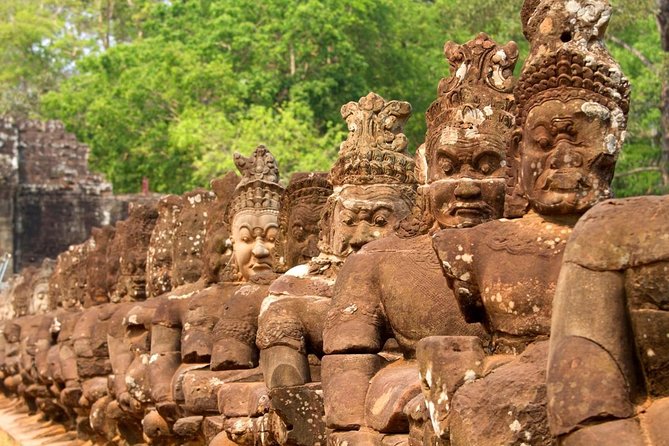
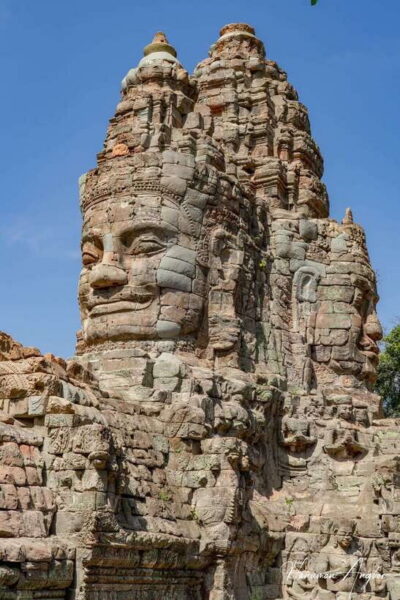
Angkor Thom is the charming capital city of the Khmer Empire, inside its walls. This is where you’ll find many major temple features clustered together, including Bayon, Phimeanakas, Baphuon, the Terrace of the Elephants, the Terrace of the Leper King, and Prah Palilay, among others.
You’ll spend around two hours. This is a lot to take in, so the guide’s job is to help you prioritize. A good guide keeps you moving smartly—so you see the main elements without burning your energy.
Ta Prohm: Jungle-Grabbed Ruins and Film-Set Fame
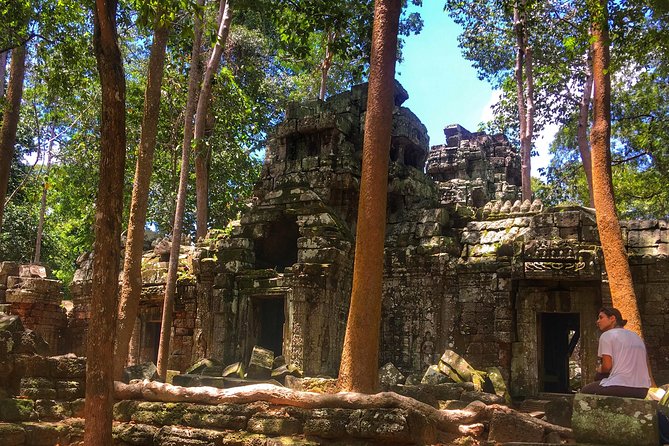
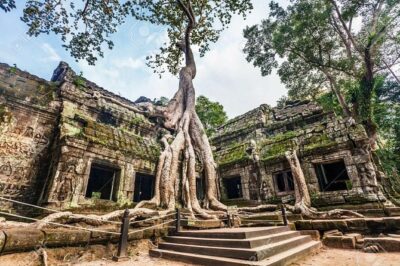
Ta Prohm is the romantic stop. You’re here for the strangler figs and silk-cotton trees entwined among the ruins—those scenes are why people love Angkor. Your time is about one hour.
Ta Prohm is also known for being used as a film set. That pop-culture familiarity can actually help you connect to the place faster, but don’t let it replace the history. I like using the guide’s explanation to see how the temple fits into Khmer religious life, not just movie memory.
Ta Nei: A Smaller Buddhist Temple for Better Breathing Room
Near the end, you visit Ta Nei, a Buddhist temple built in the late 12th century in the reign of Jayavarman VII. The highlight here is practical: it’s a good option to avoid the crowds.
You’ll get about 30 minutes. This is the kind of final stop that keeps the day from ending in heat-stressed exhaustion. If you want a calmer finish after Angkor Wat and Ta Prohm, this helps a lot.
Guides Like Tay, Viet, and Kim: Why the Story Matters as Much as the Stone
The most repeated praise is not about monuments—it’s about the guide. People like Tay, Viet, Kim, Tai, and Sopheara are singled out for being organized, safe, and strongly informed.
In real terms, that means:
- You get help sorting what matters at each site, so you don’t feel lost.
- Your guide can manage the route to maximize your views and minimize the crush.
- Explanations turn the site from scenery into meaning.
A private setup also gives your guide room to adapt. In some experiences, the flexibility of a smaller group was emphasized, so if you want to spend extra minutes on carvings or step back from the loudest areas, this style makes it more realistic.
Price and Value: What the $62 Covers (and Why the Ticket Still Matters)
The tour price is $62, and the big catch is that the Angkor Archaeological Park entrance ticket is not included. The listed ticket cost is $62 per person for a 2- or 3-day visit.
So yes, you should expect a total closer to $124 per person once you add the entrance pass. That’s a fair mental budget for a private, two-day guided program with pickup, air-con transport, and stops across a spread of temple types.
Where the value shows up:
- You’re not spending your day negotiating transport between sites.
- You’re paying for a licensed guide who helps you understand what you’re seeing.
- You’re getting snacks/refreshment and a comfortable vehicle for long stretches.
If you already have the entrance ticket and you’re traveling with someone who enjoys learning, it’s usually easy to justify. If you’re on a tight budget and don’t want to pay for guide time, a self-guided plan can feel cheaper—but you also give up the “crowd-smart” advantage and the interpretive context.
Timing Tips and What to Wear: The Practical Stuff That Saves Your Day
Because the tour is structured to start early, I’d plan around morning sun and afternoon heat.
Bring:
- Comfortable shoes for uneven stone and stairs and climbing (this was specifically flagged in recent feedback)
- Sun protection (hat/sunscreen)
- A light layer for shade when you’re between stops
Even with snacks and refreshment, you’ll want to keep your energy steady. The included comforts—like cold water and those cool towels some guides provide—help you last longer, but you still need the basics.
Also, if you’re interested in light at different times, there’s an option: you can tell the guide on day one whether you want sunrise or sunset on the following day, and it’s complimentary.
Who This Tour Fits Best
This is a strong match if:
- You’re a first-time visitor who wants structure and context fast
- You want to avoid the worst crowds and heat with smart routing
- You like history and want your guide to connect the dots between temples
- You’re traveling in a small group and prefer a private format over day tours with strangers
It may be less ideal if:
- You have limited mobility or find stairs very challenging
- You want full freedom with no set route
- You’re only interested in one or two iconic temples and don’t care about the quieter ones
Should You Book This Private 2-Day Angkor Temples Tour?
I’d book it if you want Angkor that feels manageable—cared for logistics, a good guide, and a plan that mixes famous temples with calmer stops. The biggest draw is how the private setup helps reduce wasted time and lets you move through the ruins with purpose.
Wait or consider an alternative if you’re very price-sensitive, because the tour price doesn’t include the Angkor entrance ticket. Also, if you’re not comfortable with stairs and climbing, don’t assume the temple sites will be “easy-mode.”
If you match the pace, you’ll leave with more than photos—you’ll have a clear sense of how Khmer temples connect across centuries.
FAQ
Is the Angkor entrance ticket included in the $62 tour price?
No. The Angkor Archaeological Park entrance pass is not included. The ticket is listed separately as $62 per person for a 2- or 3-day visit.
What’s included besides the guide?
Hotel pickup and drop-off in Siem Reap, transport in an air-conditioned private vehicle, a professional licensed guide, and snacks and refreshment are included.
What time does the tour start?
The start time is listed as 7:30am.
Is this a private tour?
Yes. It’s a private tour/activity, meaning only your group participates.
Can I add sunrise or sunset?
Yes. Let the guide know on day one if you’d like sunrise or sunset on the following day, and it’s complimentary.
Can I cancel for a full refund?
Free cancellation is available up to 24 hours in advance of the experience start time.
Just Your Group: Private Days
- Full-Day Angkor Wat Sunrise Private Tour with Guide from Siem Reap
★ 5.0 · 2,920 reviews - Siem Reap: Angkor Wat Private Tuk-Tuk Tour
★ 4.9 · 2,222 reviews - Angkor Wat Private Day Tour from Siem Reap
★ 5.0 · 834 reviews - Angkor Wat Private Tuk-Tuk Tour (sunrise Option) & more
★ 5.0 · 439 reviews - Private Angkor Wat Day Tour – Best of Angkor
★ 5.0 · 269 reviews
More Days at the Temples
- Siem Reap: Angkor Wat 2-Day Tour with Sunrise and Sunset
★ 4.9 · 4,429 reviews - Angkor 2-Day Sunset & Sunrise Small-Group Tour
★ 5.0 · 2,567 reviews - 2 Days Exclusive Temple Highlights with Sunset and Sunrise Tour
★ 5.0 · 1,157 reviews - Siem Reap: Angkor Sunrise 1- or 2-Day Guided Temples Tour
★ 4.9 · 1,132 reviews - 2 Days Guided Historical Tour in Angkor
★ 5.0 · 855 reviews
More Temple Circuits Around Siem Reap
- Angkor Wat Sunrise or Sunset Tour with Guide from Siem Reap
★ 5.0 · 12,109 reviews - Siem Reap: Angkor Wat: Small-Group Sunrise or Sunset Tour
★ 5.0 · 9,444 reviews - Siem Reap: Angkor Wat 2-Day Tour with Sunrise and Sunset
★ 4.9 · 4,429 reviews - Siem Reap: Full-Day Angkor Wat Guided Tour with Sunset
★ 4.9 · 3,803 reviews - Angkor Wat Sunrise tour with Small – Group and Guide tours
★ 5.0 · 3,655 reviews
Just Added: Fresh Siem Reap Tour Reviews

Angkor Temple Tours, compared.
 ★ 5.0Angkor Wat Sunrise or Sunset Tour with Guide from Siem ReapFrom $1812,109 reviews
 ★ 5.0Angkor Wat: Small-Group Sunrise or Sunset TourFrom $159,444 reviews
 ★ 4.9Angkor Wat 2-Day Tour with Sunrise and SunsetFrom $344,429 reviews
 ★ 4.9Full-Day Angkor Wat Guided Tour with SunsetFrom $153,803 reviews
 ★ 5.0Angkor Wat Sunrise tour with Small – Group and Guide toursFrom $143,655 reviews
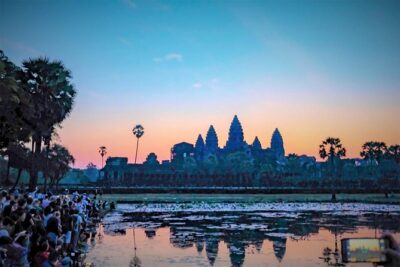 ★ 5.0Angkor Wat Highlights and Sunrise Guided Tour from Siem ReapFrom $233,213 reviews
 ★ 5.0Angkor Wat Sunset Small Group Tour with Lunch IncludedFrom $203,059 reviews
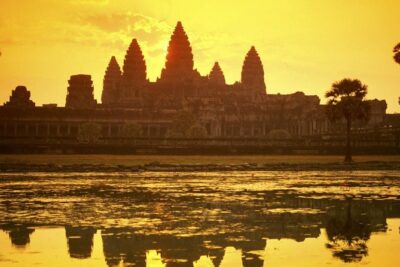 ★ 5.0Full-Day Angkor Wat Sunrise Private Tour with Guide from Siem ReapFrom $602,920 reviews
Browse the lists this tour appears in