
Reviewed · ANGKOR WAT TEMPLE TOURS
Private Tours Angkor Wat For 2 Days
Angkor at sunrise and sunset is a big deal. This private 2-day plan makes it easier by pairing English-speaking guide Rain with private transport between temples, so you spend less time figuring logistics and more time seeing Khmer art up close. I especially like the combination of the quieter, smaller carvings at Banteay Srei and the big-significance sights like Angkor Wat.
Two things I really appreciate: you get a clear, temple-by-temple route (from Banteay Srei through Phnom Bakheng, then back again for Angkor Wat sunrise), and the small comforts help in the heat. The driver Kann is the kind of person you’re glad to have on the road, keeping things safe and ready with water and cool towels, while Rain explains what you’re actually looking at.
One thing to plan for: the price does not include temple entry passes (and meals aren’t included either), so you’ll need to budget separately once you arrive.
In This Review
- Key highlights you’ll care about
- Why a Private Two-Day Angkor Wat Plan Feels Better
- What’s Included (and what’s on you) Before Day 1 Starts
- Your Day 1 Route: Banteay Srei, Then Ruins to Phnom Bakheng Sunset
- Banteay Srei: Pink sandstone and tiny details
- Preah Khan: Ruined but full of mood
- Neak Pean: The man-made island calm
- Pre Rup: A Hindu pyramid with strong views
- Phnom Bakheng: Your Day 1 sunset anchor
- Your Day 2 Plan: Angkor Wat Sunrise, Bayon with Naga Details, Then Ta Prohm
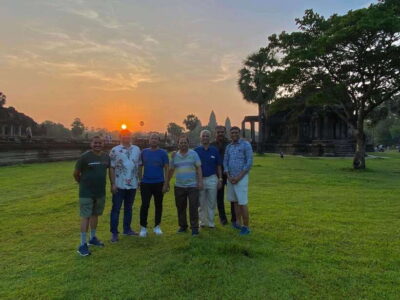
- Angkor Wat: Sunrise and the best-preserved giant
- Bayon Temple via the South Gate and its Naga-lined causeway
- Ta Prohm: The monastery temple and the roots
- The Real Value: Guide Rain and Driver Kann Make It Easier to Enjoy
- Timing, Weather, and How to Stay Comfortable
- Price and Budget Reality for $240
- Who This Two-Day Angkor Tour Fits Best
- Should You Book Private Tours Angkor Wat For 2 Days?
- FAQ
- What’s included in the $240 price?
- Do I need to buy temple entry passes?
- Is accommodation included in the tour price?
- What time does the tour start, and where does it begin?
- Which temples are visited across the two days?
- Is this tour private or shared with strangers?
- What if the weather is poor, or I need to cancel?
Key highlights you’ll care about
- Private transport for two full days: you’re not bouncing between temples with other groups.
- Sunrise at Angkor Wat plus sunset at Phnom Bakheng: two iconic timing windows, built into the schedule.
- Classical carvings at Banteay Srei: pink sandstone and fine details that reward slower looking.
- Big-stone atmosphere at Preah Khan and Ta Prohm: ruined structures and ancient monastic spaces that feel cinematic even without effects.
- Heat-smart support: bottled water is included, and the driver may add extras like cool towels.
Other ways to walk the great temple
- Angkor Wat Sunrise or Sunset Tour with Guide from Siem Reap★ 5.0 · 12,109 reviews
- Siem Reap: Angkor Wat: Small-Group Sunrise or Sunset Tour★ 5.0 · 9,444 reviews
- Siem Reap: Angkor Wat 2-Day Tour with Sunrise and Sunset★ 4.9 · 4,429 reviews
- Siem Reap: Full-Day Angkor Wat Guided Tour with Sunset★ 4.9 · 3,803 reviews
Why a Private Two-Day Angkor Wat Plan Feels Better
Angkor is huge, and your time is the real currency. A private setup helps you avoid the most common headache: getting stuck in crowd bottlenecks without knowing where to go next. Here, your guide picks you up each day and brings you between temple stops with private transportation, then drops you back at your hotel each evening.
This tour also gives you a sensible pace for a first visit. You’re not just rushing through the “must-sees.” You get a blend: smaller, detail-heavy temples on Day 1, then the major Angkor landmarks and the most famous sunrise/sunset viewpoints on Days 1 and 2.
And you’re not locked into one choice for lodging. Accommodation isn’t included, which is handy if you already booked a hotel near Pub Street, near the Old Market, or somewhere quieter for sleep.
What’s Included (and what’s on you) Before Day 1 Starts
Let’s keep it practical. What’s covered:
- An English-speaking tour guide
- Bottled water
- Private transportation
- A true private experience for your group only
- A mobile ticket for the booking
What’s not covered:
- Temple passes / admission tickets (the tour notes admission tickets are not included)
- Food and drinks, including lunch and dinner
- Personal expenses
That last point matters for budgeting. Many people see the $240 price and assume it includes entry. It doesn’t. You’ll want to set aside extra money for the temple entry side of things, plus meals.
Also, the tour notes sunscreen and comfortable shoes. That’s not fluff. Between walking, standing in sunlight, and repeat temple entrances, your feet and skin will do most of the complaining long before your brain feels it.
Your Day 1 Route: Banteay Srei, Then Ruins to Phnom Bakheng Sunset
Day 1 is built like a tour of contrast. You start with exquisite Khmer carving, then move toward atmosphere and scale as you head for the sunset viewpoint at the end.
Banteay Srei: Pink sandstone and tiny details
Banteay Srei is famous for pink sandstone and exceptionally fine carvings. It’s also small compared to the big Angkor giants, which changes how you experience it. Instead of getting lost in a massive complex, you can slow down and look at the craft.
You’ll likely feel the biggest reward here when you step back and notice how much decoration is packed into the stone. The temple’s carvings are why people call it a masterpiece of classical Khmer art. The schedule gives you about one hour, which can be enough if you’re focused on the main features and quick enough to see more than just one corner.
A possible drawback: because the carvings are so intricate, one hour can still feel like it flies by if you stop for photos every five minutes. If you’re a photo person, plan to move on purpose.
More temple circuits, set side by side
Preah Khan: Ruined but full of mood
Next is Preah Khan, a network of ruined stone structures. It’s not restored “museum perfect,” and that’s a plus. The damage and age create a texture you don’t get at temples that are rebuilt to look new.
You get around one hour here. The key is to look for structure: doors, causeways, and the ways the stone blocks form corridors and openings. Even with ruins, these layouts show how the space was meant to guide movement and attention.
Neak Pean: The man-made island calm
Neak Pean is a man-made island with a Buddhist temple. This is a nice tempo shift after Preah Khan’s scattered, atmospheric stone. The setting gives you a moment that feels more meditative, even if you’re moving quickly.
You’ve got about 40 minutes. With a shorter stop, you’ll want to prioritize the central features and not get stuck exploring every edge. This is a good place to drink water, catch your breath, and refocus for the final stretch.
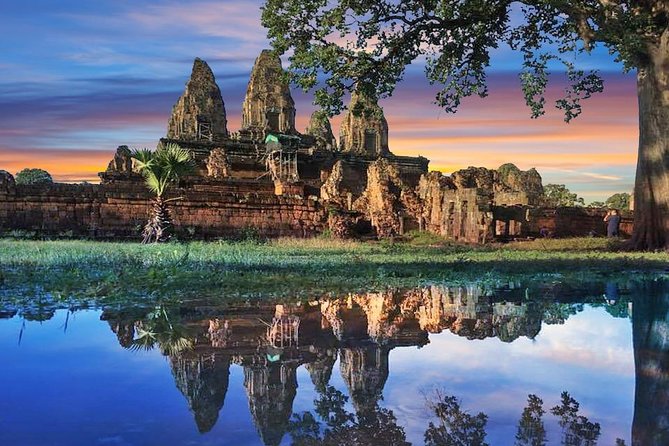
Pre Rup: A Hindu pyramid with strong views
Then comes Pre Rup, a Hindu temple also known as a pyramid. Even if you don’t climb or stay long, this site is about geometry and elevation. The schedule gives you about 40 minutes, which is usually enough to see the temple’s shape, take photos, and understand how it’s positioned in the broader area.
Phnom Bakheng: Your Day 1 sunset anchor
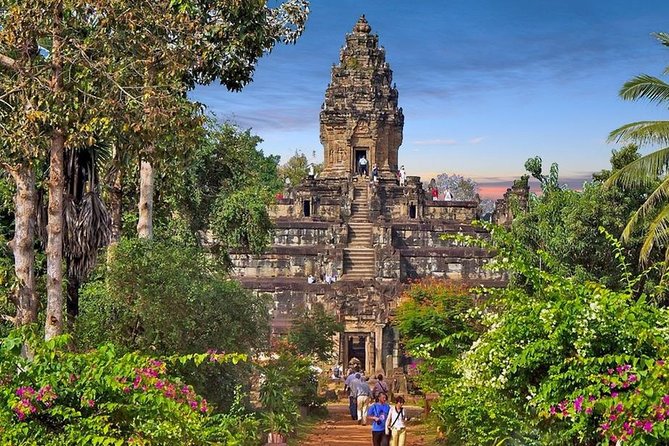
Finally, you end at Phnom Bakheng, described as the last temple to view the Bakheng mountain sunset. This stop is the big timing moment for the day. You’ll be here for about two hours, which gives you space for the pre-sunset period, the sunset window, and the time afterward when you’re still buzzing from the light.
This is also where your camera setup matters. The tour strongly recommends sunscreen and comfortable shoes, but I’d add one more practical note: wear breathable clothes and plan for humidity. You’ll be standing and moving slowly. Your phone or camera will also need stable grip, not that quick shaky “I’m holding my breath” style.
Day 1 ends after the sunset, with your guide returning you to your lodging in the evening.
Your Day 2 Plan: Angkor Wat Sunrise, Bayon with Naga Details, Then Ta Prohm
Day 2 is where Angkor starts feeling like a story you can’t skip. You hit sunrise at the most famous temple, then you move into Angkor Thom and finish with one of the most atmospheric scenes in the whole complex.
Angkor Wat: Sunrise and the best-preserved giant
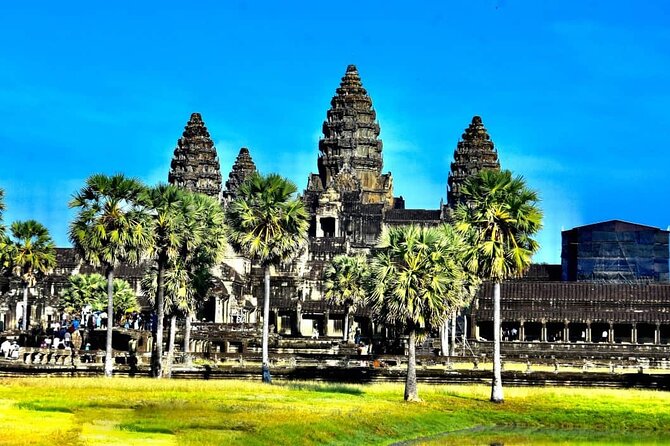
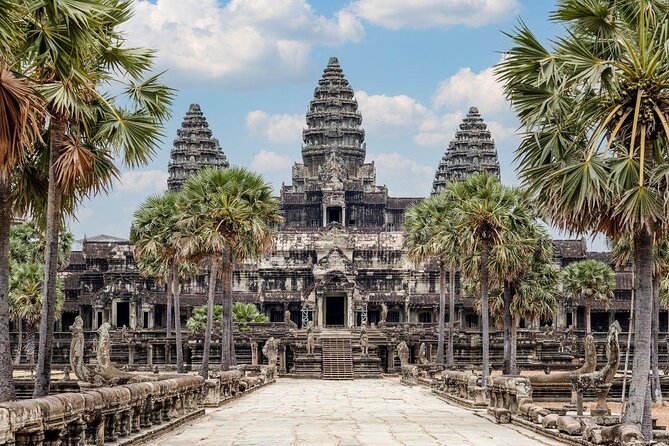
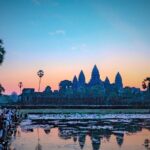
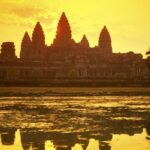
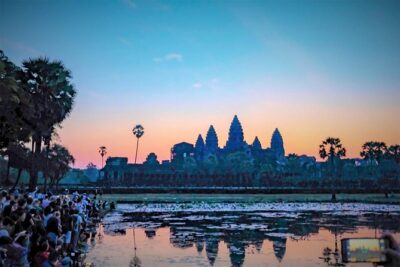
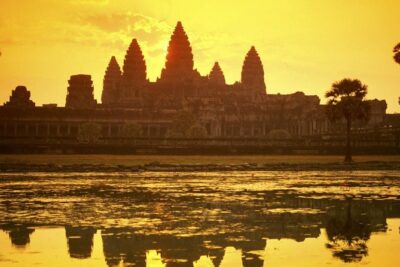
You start with Angkor Wat, aiming for sunrise and then exploring the temple for about three hours. Angkor Wat is described as the best-preserved and the most religiously significant of the Angkor temples, and the scale hits immediately.
What I like about this schedule is that it doesn’t treat sunrise as a one-minute checkbox. After the sunrise viewing, you get time to actually explore. Angkor Wat’s layout rewards slow orientation: once you understand the proportions and axis, the whole complex makes more sense.
You’ll want to prepare early for light and crowds. Even with a private guide, sunrise areas can get packed. The tour’s private format still helps because you’re guided through what to do next rather than wandering in the dark.
Bayon Temple via the South Gate and its Naga-lined causeway
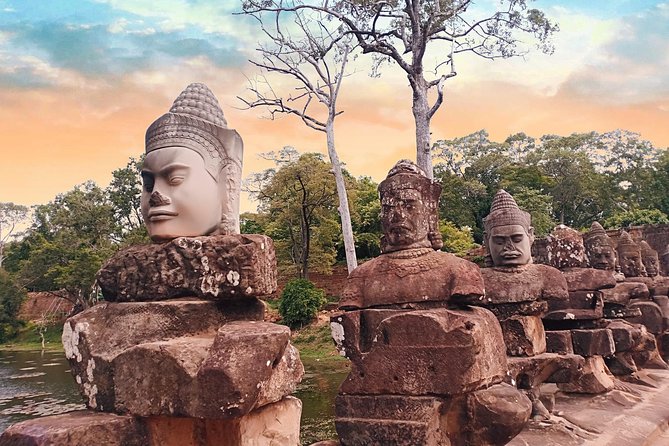
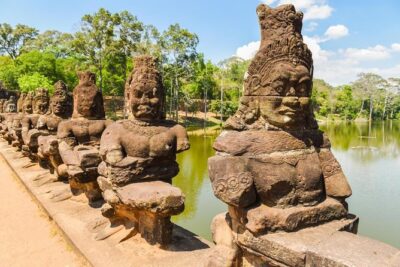
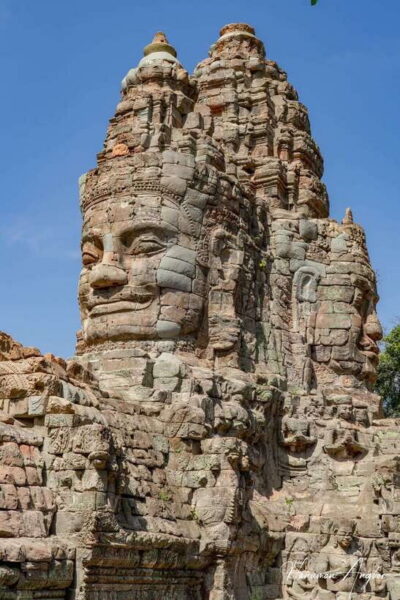
Next is Bayon Temple, starting from the South Gate of Angkor Thom. The causeway is lined with statues of gods and demons holding a giant Naga. That detail matters because it sets the mood before you even reach the faces.
At Bayon, you’ll see the iconic smiling stone faces. Then the route continues to Baphuon (the schedule notes this as the next stop after Bayon).
This segment gives you about three hours, which is a solid amount of time. The trick here is not to just photograph the faces, but to notice placement and repetition—how the temple is designed to confront you from different angles as you move.
A small consideration: if you’re someone who hates crowds and hates delays, Bayon’s popularity can still affect your pace. The private setup helps, but it doesn’t change that this is the most photographed zone in the region.
Ta Prohm: The monastery temple and the roots
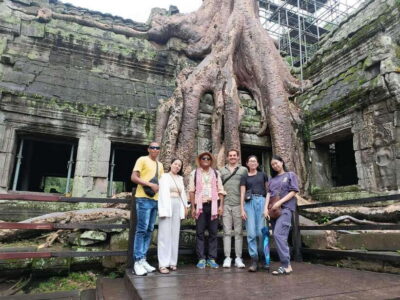
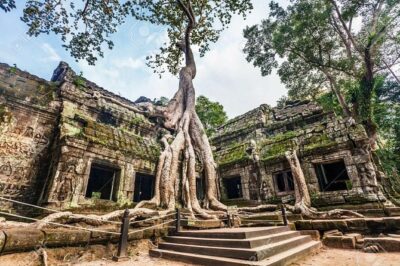
Last is Ta Prohm, described as one of the most atmospheric temples in Angkor. It’s also noted as once home to 2,740 monks. That monastic detail gives the scene a human anchor. It’s not just stone and trees; it was once daily life.
You get about one hour here. That’s enough for the main “wow” view, and enough to understand why Ta Prohm feels like time stopped mid-scene. The drawback is simple: because it’s so visually strong, it’s easy to spend all your time looking straight ahead. Try to look up and around too—there’s a lot going on in the vertical stonework.
The Real Value: Guide Rain and Driver Kann Make It Easier to Enjoy
A private temple tour lives or dies by the guide-driver duo. In this case, the details matter.
Guide Rain is described as both knowledgeable and intuitive about interests, plus able to help with navigating around crowds. That’s a big deal. Angkor crowds are not just annoying; they can flatten your experience by forcing you into a rush-and-wait rhythm. When a guide can adapt the order and the pace to the conditions, you feel less trapped and you see more with less stress.
Driver Kann also stands out in the small ways that reduce friction: safe driving plus cool towels and water ready for the heat. Those touches don’t sound glamorous, but they keep you walking with energy instead of pretending you’re fine when your body is quietly melting.
The tour also includes bottled water, which is an easy but essential baseline.
Timing, Weather, and How to Stay Comfortable
This experience requires good weather. If conditions are poor and the tour must be canceled, you’re offered a different date or a full refund. That’s worth paying attention to because sunrise and sunset visits are the heart of the plan.
Practical comfort tips based on what the tour emphasizes:
- Sunscreen is highly recommended
- Comfortable shoes are highly recommended
- Bring a camera and be ready for sunrise and sunset light
- Wear something that follows the tour’s note about proper uniform (the provider may have guidance)
A small humor note: Angkor doesn’t care if you brought the perfect outfit. It cares if you can walk, stand, and sweat without becoming miserable.
Price and Budget Reality for $240
At $240 for a two-day private tour, the biggest “value” question is how many people are sharing the cost. The tour is private for your group, and private transport and an English-speaking guide are included. If you can split among two or more people, this can feel like a fair price for a two-day Angkor plan that saves time and confusion.
But don’t forget the big separate costs:
- Temple passes (admission tickets are not included)
- Meals and drinks are not included
So the best way to judge value is to compare not just cost, but mental load. With this plan, you’re not hunting entry lines while hungry, not figuring transport between temple complexes, and not guessing which viewpoint to prioritize. For many first-timers, that reduction in stress is part of what you’re paying for.
Who This Two-Day Angkor Tour Fits Best
This tour fits you best if:
- You want sunrise and sunset without turning it into a chaotic self-planning project
- You prefer a private guide who can explain what you’re seeing as you go
- You care about a mix of detailed carving (Banteay Srei) and iconic set pieces (Angkor Wat, Bayon, Ta Prohm)
- You plan to travel with a small group and can split the private cost
It may not be ideal if:
- You’re extremely price-sensitive and want to minimize all extras beyond the headline amount
- You dislike walking in heat and would rather do a shorter temple circuit
- You want meals included (they are not)
Should You Book Private Tours Angkor Wat For 2 Days?
I’d book this if your priority is a well-paced, private Angkor introduction built around the light-changing moments. The route covers both the famous faces and the carved-stone craft, then lands you at sunset and sunrise viewpoints with time to actually enjoy the moment rather than sprint through it.
I wouldn’t book it blindly if you hate the idea of extra budgeting. You still need temple passes, plus meals and drinks. Once you factor that in, the $240 price starts to make more sense as a private guide + private transport package.
If you can travel with at least one other person to share costs, and you’re willing to do the heat-and-humidity part with sunscreen and good shoes, this is a strong option.
FAQ
What’s included in the $240 price?
You get an English-speaking tour guide, bottled water, and private transportation. It’s also a private experience for your group only, and the tour uses a mobile ticket.
Do I need to buy temple entry passes?
Yes. Temple pass and admission tickets are not included, so you’ll need to purchase the required entry before visiting the temples.
Is accommodation included in the tour price?
No. Accommodation is not included, which gives you flexibility to choose your own place to stay.
What time does the tour start, and where does it begin?
The start time is 8:00 am, and the meeting point is in Krong Siem Reap, Cambodia. The activity ends back at the meeting point.
Which temples are visited across the two days?
Day 1 includes Banteay Srei, Preah Khan, Neak Pean, Pre Rup, and Phnom Bakheng. Day 2 includes Angkor Wat, Bayon Temple, Baphuon, and Ta Prohm.
Is this tour private or shared with strangers?
It’s private. Only your group participates.
What if the weather is poor, or I need to cancel?
The experience requires good weather. If it’s canceled due to poor weather, you’ll be offered a different date or a full refund. You can cancel up to 24 hours in advance for a full refund; within 24 hours, the amount paid is not refunded.
More Days at the Temples
- Siem Reap: Angkor Wat 2-Day Tour with Sunrise and Sunset
★ 4.9 · 4,429 reviews - Angkor 2-Day Sunset & Sunrise Small-Group Tour
★ 5.0 · 2,567 reviews - 2 Days Exclusive Temple Highlights with Sunset and Sunrise Tour
★ 5.0 · 1,157 reviews - Siem Reap: Angkor Sunrise 1- or 2-Day Guided Temples Tour
★ 4.9 · 1,132 reviews - 2 Days Guided Historical Tour in Angkor
★ 5.0 · 855 reviews
More Temple Circuits Around Siem Reap
- Angkor Wat Sunrise or Sunset Tour with Guide from Siem Reap
★ 5.0 · 12,109 reviews - Siem Reap: Angkor Wat: Small-Group Sunrise or Sunset Tour
★ 5.0 · 9,444 reviews - Siem Reap: Angkor Wat 2-Day Tour with Sunrise and Sunset
★ 4.9 · 4,429 reviews - Siem Reap: Full-Day Angkor Wat Guided Tour with Sunset
★ 4.9 · 3,803 reviews - Angkor Wat Sunrise tour with Small – Group and Guide tours
★ 5.0 · 3,655 reviews
Angkor Wat, a Few More Ways In
- Angkor Wat Sunrise or Sunset Tour with Guide from Siem Reap
★ 5.0 · 12,109 reviews - Siem Reap: Angkor Wat: Small-Group Sunrise or Sunset Tour
★ 5.0 · 9,444 reviews - Siem Reap: Angkor Wat 2-Day Tour with Sunrise and Sunset
★ 4.9 · 4,429 reviews - Siem Reap: Full-Day Angkor Wat Guided Tour with Sunset
★ 4.9 · 3,803 reviews - Angkor Wat Sunrise tour with Small – Group and Guide tours
★ 5.0 · 3,655 reviews
Just Added: Fresh Siem Reap Tour Reviews

Angkor Wat Temple Tours, compared.
 ★ 5.0Angkor Wat Sunrise or Sunset Tour with Guide from Siem ReapFrom $1812,109 reviews
 ★ 5.0Angkor Wat: Small-Group Sunrise or Sunset TourFrom $159,444 reviews
 ★ 4.9Angkor Wat 2-Day Tour with Sunrise and SunsetFrom $344,429 reviews
 ★ 4.9Full-Day Angkor Wat Guided Tour with SunsetFrom $153,803 reviews
 ★ 5.0Angkor Wat Sunrise tour with Small – Group and Guide toursFrom $143,655 reviews
 ★ 5.0Angkor Wat Highlights and Sunrise Guided Tour from Siem ReapFrom $233,213 reviews
 ★ 5.0Angkor Wat Sunset Small Group Tour with Lunch IncludedFrom $203,059 reviews
 ★ 5.0Full-Day Angkor Wat Sunrise Private Tour with Guide from Siem ReapFrom $602,920 reviews
Browse the lists this tour appears in