
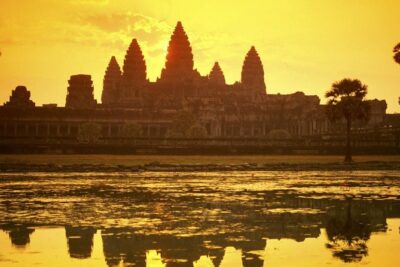
Two days at Angkor start with the light. This private, tailored tour pairs early sunrise at Angkor Wat with a smart mix of the famous monuments and quieter places like Banteay Srei and Kbal Spean. You get an A/C vehicle, pickup, and an English-speaking guide who helps you read the carvings and layout instead of just walking past them.
I like that the day is built for pacing: you see the headline sights, then you spread out across smaller temples and backroads where you can actually slow down. One thing to plan for: the Angkor Wat 3-Day Ticket ($62 per person) is not included, and day 1 starts early with moderate walking.
In This Review
- Key things I’d watch for before you go
- The big picture: what makes this two-day Angkor Wat tour work
- Day 1, morning to sunset: Angkor Wat sunrise and the Angkor Thom circuit
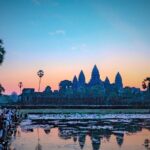
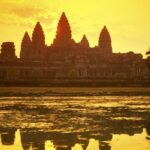
- Sunrise at Angkor Wat: why the early start is worth it
- Angkor Thom South Gate: entering through the grand entrance
- Bayon Temple: those face towers are the point
- Terrace of the Elephants: carvings that show action, not just ornament
- Terrace of the Leper King: the reliefs are the star
- Phimeanakas: a royal viewpoint temple
- Ta Nei and Ta Prohm: two different flavors of “less famous”
- Ta Prohm to Angkor Wat again: why the second Angkor visit matters
- Day 2: the quieter Angkor that feels more local
- Banteay Samre: first taste of the more distant temples
- Banteay Srei: the 12.5-mile cultural drive and the temple details
- Kbal Spean: the jungle river story stop
- Srah Srang: royal bath and the reservoir perspective
- Sunset at Pre Rup or Srah Srang: ending with a view that isn’t forced
- Price and value: what $375 covers, and what to add on
- Comfort, pacing, and how to get the most out of two packed days
- The guide factor: why the names people mention matter
- Should you book this private two-day Angkor Wat tour?
- FAQ
- What’s the group size for this private tour?
- Is pickup from my hotel included?
- Are meals included?
- Do I need an entrance ticket for Angkor Wat?
- What’s the main experience timing on day 1 and day 2?
- What’s included in the price besides transportation and the guide?
- Is service animal access allowed?
Key things I’d watch for before you go
- Sunrise timing at Angkor Wat sets the tone for everything else you see
- Big temples plus remote stops like Banteay Srei and Kbal Spean
- A private English guide and driver with hotel pickup and drop-off
- Two different ways to experience Angkor Wat across the two days
- Sunset options on day 2 at Pre Rup or Srah Srang
- Budget for tickets and meals since food and the Angkor ticket are separate
Other ways to walk the great temple
- Angkor Wat Sunrise or Sunset Tour with Guide from Siem Reap★ 5.0 · 12,109 reviews
- Siem Reap: Angkor Wat: Small-Group Sunrise or Sunset Tour★ 5.0 · 9,444 reviews
- Siem Reap: Angkor Wat 2-Day Tour with Sunrise and Sunset★ 4.9 · 4,429 reviews
- Siem Reap: Full-Day Angkor Wat Guided Tour with Sunset★ 4.9 · 3,803 reviews
The big picture: what makes this two-day Angkor Wat tour work
Angkor can feel like a giant “temples checklist” if you do it on autopilot. This tour is designed to avoid that. You’re not just moving from one famous photo spot to another. You’re getting a guided route that ties each temple to the story of the Khmer kingdom and the way the sites were laid out.
Two things help most. First, you start with a sunrise visit to Angkor Wat, which changes how the complex looks and how you feel inside it. Second, you don’t stop at the standard hits. You also get the out-in-the-world feeling of Banteay Srei and the river setting at Kbal Spean, which gives you variety without needing to switch tours.
The private format matters too. Your driver can adjust timing around your pace, and your guide can steer attention to details you’d otherwise miss—like why certain areas feel more ceremonial than decorative.
Day 1, morning to sunset: Angkor Wat sunrise and the Angkor Thom circuit
Day 1 is built like a classic Angkor day, but with extra structure. You leave early for sunrise over Angkor Wat, then you work through Angkor Thom in a loop that hits several of the most memorable carved stops.
Sunrise at Angkor Wat: why the early start is worth it
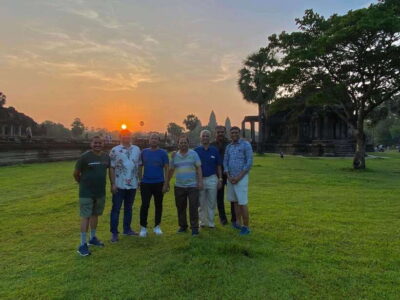
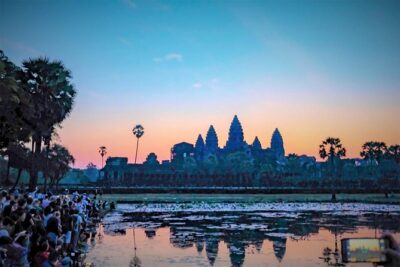
Seeing Angkor Wat at sunrise isn’t just about getting a nice picture. Morning light makes the stone feel different—sharper shadows, calmer crowds, and a quieter mood that helps you understand the scale. The tour includes this early departure from your hotel, and you’ll have time to experience the complex before the day fills in.
One practical note: the entrance ticket isn’t included (you’ll buy the Angkor Wat 3-Day Ticket separately), and the tour lists admission as not included at each stop. That means you should plan ahead so you’re not scrambling on site.
Also, this tour doesn’t treat Angkor Wat as a one-time visit. You’ll return to Angkor Wat later in the day, which is a smart move because the temple reads differently in different light.
Angkor Thom South Gate: entering through the grand entrance
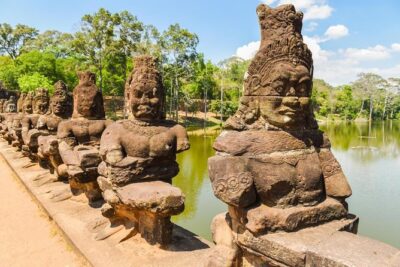
After breakfast, you head to the South Gate of Angkor Thom. This is one of the main ceremonial entry points into the walled city concept. It’s visually strong and it helps you orient yourself for what comes next—especially when your guide points out how the gate leads your eye into the larger complex.
You’ll have a choice for breakfast timing. You can eat at food stalls/restaurants in the Angkor Park area, or return to your hotel for breakfast with the tour arrangements.
More temple circuits, set side by side
Bayon Temple: those face towers are the point
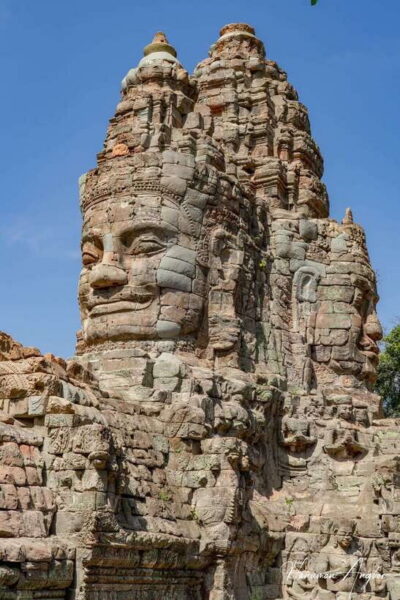
Next comes Bayon Temple, the centerpiece tied to King Jayavarman VII. This stop is famous for its 37 towers with sculptural decoration and large rock-face expressions. If you’ve only seen Bayon in one photo, it can be hard to grasp what changes as you walk around the towers. A guide really helps here—because the faces aren’t random. They’re part of a deliberate visual program that frames the temple’s meaning.
Terrace of the Elephants: carvings that show action, not just ornament
A short move brings you to the Terrace of the Elephants—three platforms bordered by stone elephants carved in scenes of an elephant hunt. This is one of those stops where you start noticing how Khmer art tells stories in sequence. Even in a short visit, you can spot how the terrace acts like a stage.
If you’re short on time later, I’d still treat this as a must-do. It’s not only decorative; it’s narrative.
Terrace of the Leper King: the reliefs are the star
Then you reach the Terrace of the Leper King, known for extremely detailed relief work that is described as well preserved. The name ties to King Yasovarman I and the story of leprosy, but what you’ll remember is the density of the carvings and how much is packed into the surfaces.
This stop is also a good example of why guided time helps. A guide can point out what to look for so the reliefs don’t just become background texture.
Phimeanakas: a royal viewpoint temple
Next is Phimeanakas, described as a smaller royal temple with a 12-meter-high pyramid and a view across the Angkor Thom area. Even without climbing every possible step in every direction, the point is the perspective. It helps you connect the city layout to what you’re seeing on the ground.
It’s also a useful breather in the middle of a very busy day.
Ta Nei and Ta Prohm: two different flavors of “less famous”
After lunch, you continue to Ta Nei Temple, set about 4.5 km from Angkor Wat. This is a chance to experience a smaller site that still feels part of the larger Angkor system. Your guide can help you read it in relation to the bigger complexes.
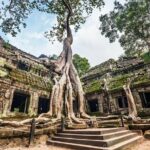
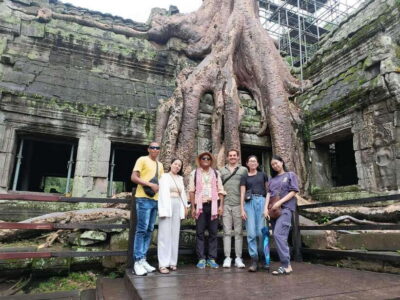
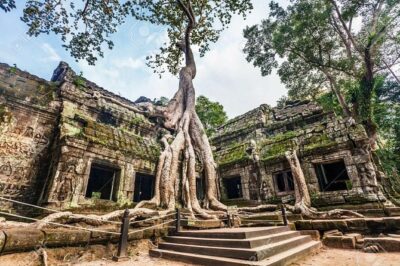
Then comes Ta Prohm, often called the Jungle Temple. The tour is scheduled so you reach Ta Prohm before the later Angkor Wat return. That sequencing can be helpful. Ta Prohm tends to overwhelm your attention with the way nature and stone interact. When you go afterward, you can compare the mood shifts between the sites.
Ta Prohm to Angkor Wat again: why the second Angkor visit matters
The day ends back at Angkor Wat for a longer viewing block. If sunrise felt like a quiet opening act, the later hours can feel more like a full immersion. Your guide will help you decide what to focus on, including the option to climb steep steps for broader views from higher points of the complex.
Day 2: the quieter Angkor that feels more local
Day 2 is where the tour earns its name as a “best-of” mix. Because you start early on day 1, day 2 is designed to let you sleep a little longer and have breakfast at your hotel before pickup.
This day is more travel-time heavy, but the stops are chosen to give you the sense that Angkor doesn’t end at the main ring road.
Banteay Samre: first taste of the more distant temples
You begin at Banteay Samre (about 1 hour 30 minutes onsite). This is one of the temple options that puts you further from the main complex. The value here is variety: you see the styles and workmanship beyond the most crowded landmarks.
Banteay Srei: the 12.5-mile cultural drive and the temple details
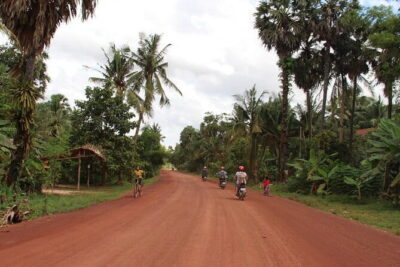
Next is Banteay Srei, located about 20 km from the main complex. The route includes a drive through small villages and rice fields, which matters because you’re not only consuming temples. You’re also seeing how Cambodian life sits around the heritage sites.
Banteay Srei is also an attention-to-detail temple. Expect to spend time looking at carvings rather than chasing big sweeping vistas.
Kbal Spean: the jungle river story stop
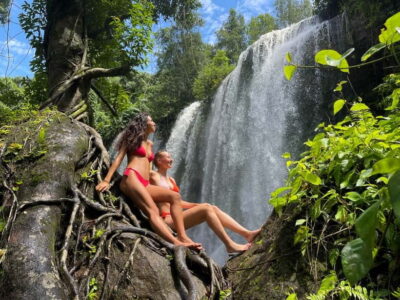
Then you head toward Kbal Spean, described as a river in the jungle about 60 km from the main complex. It’s often referred to as the river of a thousand linga. Even if you only have a portion of the time you’d like, this stop stands out because it’s different: it’s about the spiritual carvings connected to water and the setting.
You’ll also make choices for lunch en route. The tour notes that you can decide where you want to eat.
Srah Srang: royal bath and the reservoir perspective
After Kbal Spean, you visit Srah Srang, translated as Royal bath. It’s a water reservoir south of the East Baray and close to the Pyramid Temple of Pre Rup. This stop helps you reconnect the dots between temple architecture and water features, which were essential to the way the city was imagined.
Sunset at Pre Rup or Srah Srang: ending with a view that isn’t forced
To wrap up, you return into the main Angkor area for sunset. The tour gives you a choice: watch the sun settle over the water reservoir of Srah Srang, or do sunset at Pre Rup. Either way, the goal is a slower finish to a long two days, with the light changing how carvings and stone edges look one last time.
If you’re the kind of person who wants your final photo to feel earned rather than staged, sunset here is a good fit.
Price and value: what $375 covers, and what to add on
This tour costs $375 per group (up to 3 people). That structure can be a great value if you’re traveling as a pair or with a small family.
Here’s the realistic way to think about it:
- You’re paying for a private A/C vehicle, pickup and drop-off, and a certified English-speaking guide plus the driver.
- The tour includes guide and driver costs, but food isn’t included.
- The big add-on is the Angkor Wat 3-Day Ticket at $62 per person (entrance fee not included on the stops).
So if you have 3 people, you can think of the tour portion as $125 each, then budget $62 per person for the ticket on top, plus meals.
Also, plan for timing. This experience is typically booked about 62 days in advance on average, which hints that popular dates and pickup windows can fill up.
Comfort, pacing, and how to get the most out of two packed days
This is a private tour, so you’re not fighting for space in a big bus line. Still, Angkor isn’t a lazy weekend stroll. The tour notes moderate physical fitness. You should expect some walking, plus climbing steps at Angkor Wat if you choose to go up.
A few practical ways to make it smoother:
- Start day 1 ready for early mornings, since the sunrise plan is part of the value.
- Plan meals with energy in mind. Since lunch options are described as local and international near the Angkor Park area, you can choose what fits your appetite that day.
- Use the guide’s eye. The strongest moments of Angkor are the small ones: relief details, layout clues, and the meanings behind the carvings.
And because the tour is individually tailored, you can ask for things like a least crowded route when that matters most to you, plus late pickup or lunch preferences. That’s a real advantage over one-size-fits-all temple circuits.
The guide factor: why the names people mention matter
When a guide is good, you don’t just see the temples. You understand why they were built and how the parts connect. The tour’s structure supports that because there’s real time at each stop—enough for someone to explain what you’re looking at instead of rushing.
In particular, you may be matched with guides such as Sokky (with driver T), Ram, Raksmey (with driver Long), Sok Ly, or Khemrint Kheng. Each of these names is tied to accounts of clear historical explanation and helpful flexibility, which is exactly what you want in a place as layered as Angkor.
Should you book this private two-day Angkor Wat tour?
Book it if you want:
- Sunrise at Angkor Wat with a guide-run plan
- A mix of headline temples and more remote sites like Banteay Srei and Kbal Spean
- Private pacing with hotel pickup and drop-off in an A/C vehicle
- A route designed so you don’t only chase the busiest names
Skip it or compare if:
- You’re mainly after the absolute shortest day possible. This route is active and includes a lot of temples across two days.
- You don’t want to deal with ticket planning, since the Angkor Wat 3-Day Ticket is required and not included.
- You’d rather explore completely on your own without a guided narrative.
If your goal is to leave Angkor with more than a stack of photos, this is a strong fit. The value comes from the combination: light, context, and the quieter corners that help the whole place feel like one connected story.
FAQ
What’s the group size for this private tour?
It’s priced per group and designed for up to 3 people.
Is pickup from my hotel included?
Yes. The tour includes pickup and drop-off from/to your hotel (or meeting point).
Are meals included?
No. Food and beverages are not included, but there are restaurants and food stalls in the Angkor Park area and you can also have breakfast at your hotel on day 2.
Do I need an entrance ticket for Angkor Wat?
Yes. The Angkor Wat 3-Day Ticket costs $62 per person and is not included in the tour price.
What’s the main experience timing on day 1 and day 2?
Day 1 starts early for sunrise at Angkor Wat. Day 2 lets you sleep a bit longer and have breakfast before pickup, then it ends with sunset at Pre Rup or Srah Srang.
What’s included in the price besides transportation and the guide?
Included are an air-conditioned vehicle, private transportation, an experienced driver, a certified English-speaking guide, and all costs for the guide and driver (including entrance for them).
Is service animal access allowed?
Yes. Service animals are allowed on this experience.
More Days at the Temples
- Siem Reap: Angkor Wat 2-Day Tour with Sunrise and Sunset
★ 4.9 · 4,429 reviews - Angkor 2-Day Sunset & Sunrise Small-Group Tour
★ 5.0 · 2,567 reviews - 2 Days Exclusive Temple Highlights with Sunset and Sunrise Tour
★ 5.0 · 1,157 reviews - Siem Reap: Angkor Sunrise 1- or 2-Day Guided Temples Tour
★ 4.9 · 1,132 reviews - 2 Days Guided Historical Tour in Angkor
★ 5.0 · 855 reviews
More Temple Circuits Around Siem Reap
- Angkor Wat Sunrise or Sunset Tour with Guide from Siem Reap
★ 5.0 · 12,109 reviews - Siem Reap: Angkor Wat: Small-Group Sunrise or Sunset Tour
★ 5.0 · 9,444 reviews - Siem Reap: Angkor Wat 2-Day Tour with Sunrise and Sunset
★ 4.9 · 4,429 reviews - Siem Reap: Full-Day Angkor Wat Guided Tour with Sunset
★ 4.9 · 3,803 reviews - Angkor Wat Sunrise tour with Small – Group and Guide tours
★ 5.0 · 3,655 reviews
Angkor Wat, a Few More Ways In
- Angkor Wat Sunrise or Sunset Tour with Guide from Siem Reap
★ 5.0 · 12,109 reviews - Siem Reap: Angkor Wat: Small-Group Sunrise or Sunset Tour
★ 5.0 · 9,444 reviews - Siem Reap: Angkor Wat 2-Day Tour with Sunrise and Sunset
★ 4.9 · 4,429 reviews - Siem Reap: Full-Day Angkor Wat Guided Tour with Sunset
★ 4.9 · 3,803 reviews - Angkor Wat Sunrise tour with Small – Group and Guide tours
★ 5.0 · 3,655 reviews
Just Added: Fresh Siem Reap Tour Reviews

Angkor Wat Temple Tours, compared.
 ★ 5.0Angkor Wat Sunrise or Sunset Tour with Guide from Siem ReapFrom $1812,109 reviews
 ★ 5.0Angkor Wat: Small-Group Sunrise or Sunset TourFrom $159,444 reviews
 ★ 4.9Angkor Wat 2-Day Tour with Sunrise and SunsetFrom $344,429 reviews
 ★ 4.9Full-Day Angkor Wat Guided Tour with SunsetFrom $153,803 reviews
 ★ 5.0Angkor Wat Sunrise tour with Small – Group and Guide toursFrom $143,655 reviews
 ★ 5.0Angkor Wat Highlights and Sunrise Guided Tour from Siem ReapFrom $233,213 reviews
 ★ 5.0Angkor Wat Sunset Small Group Tour with Lunch IncludedFrom $203,059 reviews
 ★ 5.0Full-Day Angkor Wat Sunrise Private Tour with Guide from Siem ReapFrom $602,920 reviews
Browse the lists this tour appears in