
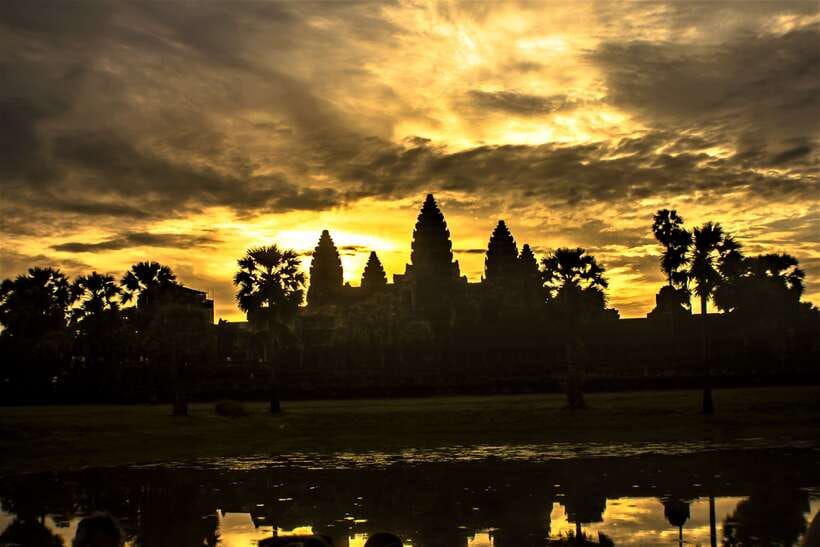
Reviewed · ANGKOR SUNRISE & SUNSET TOURS
Siem Reap: 2-Day Temple Highlights Sunrise and Sunset Option
Sleep early, see Angkor. This 2-day temple route puts Sunrise at Angkor Wat and a second-day lineup (Ta Prohm, Angkor Thom, Bayon) right at the center, plus air-conditioned transfers that actually matter in Cambodia’s heat. I also like that the tour is built around contrast: first smaller, more intimate temples like Pre Rup and Banteay Srei, then the big “wow” complexes.
A lot of the magic here comes from the guide. Guests highlight guides such as Chhay, Sak, Bun, Pi, Pal, and Yuth for clear English, great pacing, and storytelling that links Khmer religion to what you’re standing in front of. You also get real comfort support: ice-cold water and cooling towels after temple stops, with drivers described as attentive and on-time.
One consideration: it’s early and it’s walk-heavy. Day 2 starts pre-dawn, you’ll be on uneven temple ground, and some sites require climbing stairs. If you’re sensitive to heat or tired legs, plan for slow moments and good shoes.
In This Review
- Key highlights that make this tour worth it
- Sunrise at Angkor Wat is the whole point
- Day 1: Pre Rup, Banteay Srei, Neak Pean, Preah Khan, and a rice-field ending
- Pre Rup: a temple mountain with real viewpoints
- Banteay Srei: the small temple with the sharpest carvings
- Neak Pean: Buddhism on an artificial island
- Preah Khan: ruined atmosphere and World Monument Fund restoration
- Sunset option on Day 1: rice fields or Bakheng
- Day 2: pre-dawn Angkor Wat, Ta Prohm, Ta Nei, and the theater of Angkor Thom
- Morning: Angkor Wat again, but now you see the whole complex
- Ta Prohm: jungle atmosphere and the 2,740 monks past
- Ta Nei: a late 12th-century stone temple pause
- Angkor Thom South Gate and Bayon faces: gods left, demons right
- Terrace of the Leper King and Terrace of Elephants
- The guide and van: what you really get beyond the temple names
- Price and value: $46 for the tour, then budget for the Angkor pass
- What to wear and pack for Angkor temple days
- Who should book this, and who should skip it
- Should you book it?
- FAQ
- What temples are included in the 2 days?
- Is the Angkor temple entry fee included?
- Do I need a torch for the sunrise part?
- Are meals included?
- What’s included for comfort during the tour?
- How does pickup work?
- Is there a sunset option on Day 1?
- What should I bring and what should I wear?
- Is the tour wheelchair accessible?
Key highlights that make this tour worth it
- Angkor Wat sunrise timing with pre-dawn departure and an entrance from the eastern side (torch needed)
- Pre Rup + Banteay Srei contrast: massive temple mountain views, then sharp sandstone carvings
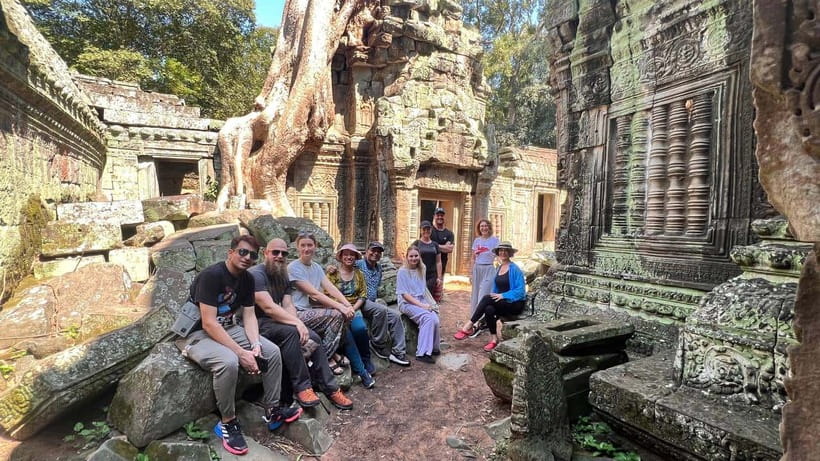
- Ta Prohm as an atmosphere temple with jungle setting and its 2,740-monks past
- Angkor Thom big set pieces: South Gate with 54 figures, Bayon faces, and terraces
- Cooling comfort: bottled water plus cold towels and an A/C vehicle
- Small-group energy that keeps the pace manageable in hot weather
Chasing the light? More dawn and dusk runs
- Angkor Wat Sunrise or Sunset Tour with Guide from Siem Reap★ 5.0 · 12,109 reviews
- Siem Reap: Angkor Wat: Small-Group Sunrise or Sunset Tour★ 5.0 · 9,444 reviews
- Sunset tour of Kampong Phluk stilts home village on the Tonle Sap★ 5.0 · 4,865 reviews
- Siem Reap: Angkor Wat 2-Day Tour with Sunrise and Sunset★ 4.9 · 4,429 reviews
Sunrise at Angkor Wat is the whole point
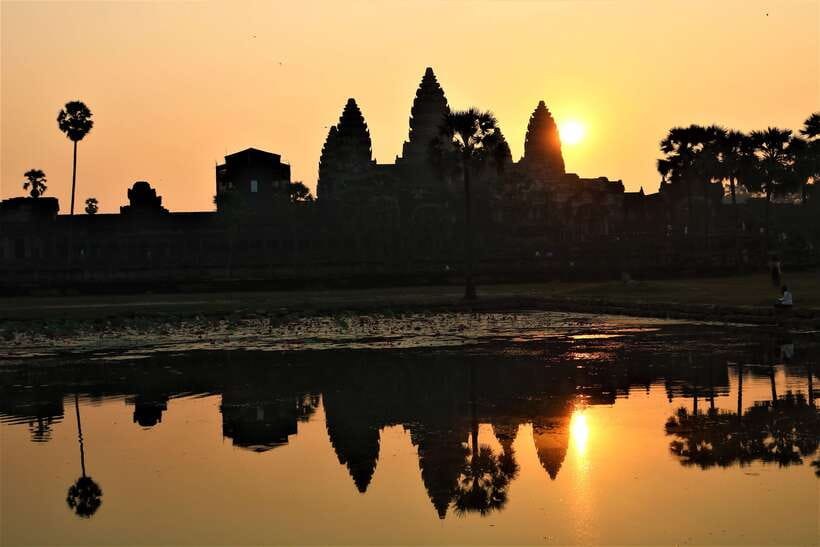
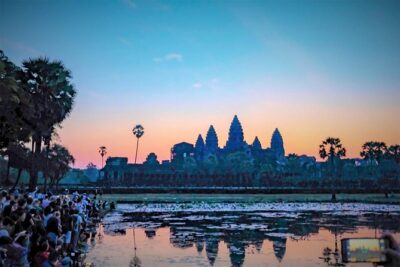
If you’ve ever watched the sky change color at a famous ruin, you already know why early starts are worth it. Angkor Wat at sunrise is different because the whole complex feels like it’s waking up with you. This tour is designed to get you there before the worst crowds, with a pre-dawn pickup and a route that lets you walk in before the light really floods in.
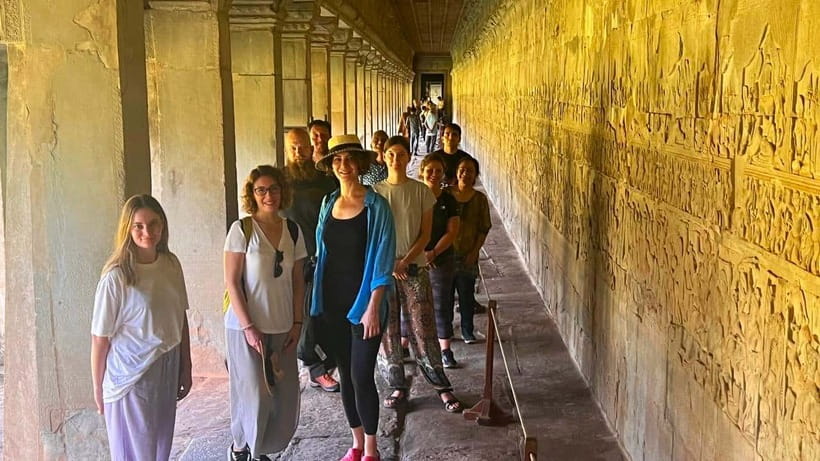
You’ll enter Angkor Wat in darkness from the eastern side, and yes, you should bring a torch. That one detail helps a lot. It turns the early corridors into a guided “follow the lines” experience instead of a shaky scramble. As you move deeper into the complex, you get the long bas-relief stretches where the carvings run continuously—exactly the kind of visual storytelling your guide can point out when you’re still not fully awake.
Then you transition from early-morning awe to breakfast right outside the temple area. It’s a smart reset: you get the peak photo moment, then you fuel up before the day turns into more walking.
Day 1: Pre Rup, Banteay Srei, Neak Pean, Preah Khan, and a rice-field ending
Day 1 is the “warm up your eyes” day. Instead of only hitting the headline names, you start with temples that are smaller, more textured, and often less hectic. The payoff is that you learn the rhythm of Khmer temple design before Angkor Wat and Angkor Thom throw the big scale at you.
Pre Rup: a temple mountain with real viewpoints
You begin at Pre Rup, a Hindu temple built as the state temple of King Rajendravarman (dedicated in 961 or early 962). It’s built as a temple mountain using brick, laterite, and sandstone. What you’ll feel here is the structure. It’s not just “see ruins.” It’s “see how the layers work,” and how Khmer builders made religion feel like a physical climb toward the sacred.
The location also gives you that classic temple viewpoint energy—especially if you catch the light later in the day. You get a sense of why this site still draws people even when it’s not the most famous on the poster.
Banteay Srei: the small temple with the sharpest carvings
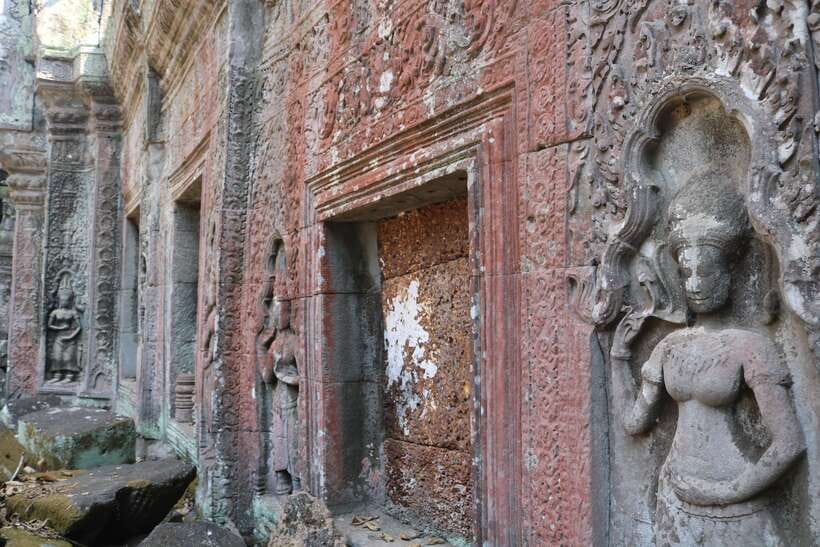
Next comes Banteay Srei, famous for its intricate sandstone reliefs. It’s smaller than many Angkor sites, but that’s the point. The craftsmanship is the show. Expect extremely fine carving work that many people consider among the best in Cambodia.
There’s also a meaningful modern layer to this stop. Banteay Srei was only accessible again starting in the late 1990s, after the Khmer Rouge period. That detail matters because it reminds you these places didn’t just survive time. They survived politics, conflict, and disruption too.
More temple circuits, set side by side
Neak Pean: Buddhism on an artificial island
Then you visit Neak Pean, an artificial island with a Buddhist temple set on a circular island in the Jayatataka Baray. This site shifts the feel. From the Hindu temple mountain style, you move into a calmer, more symbolic space—one that feels designed for reflection.
If you’re the kind of traveler who likes to understand why a temple looks the way it does, ask your guide what the circular island and setting are meant to suggest. Even on days packed with stops, this one can give you breathing room.
Preah Khan: ruined atmosphere and World Monument Fund restoration
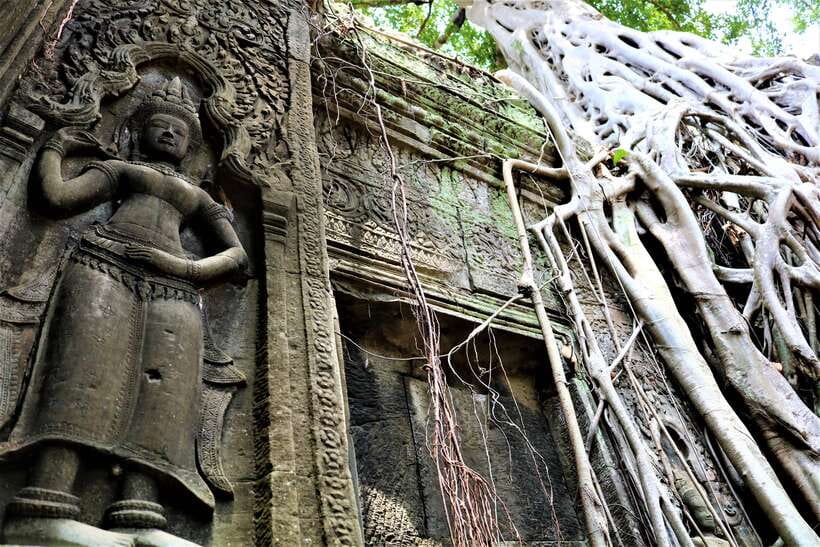
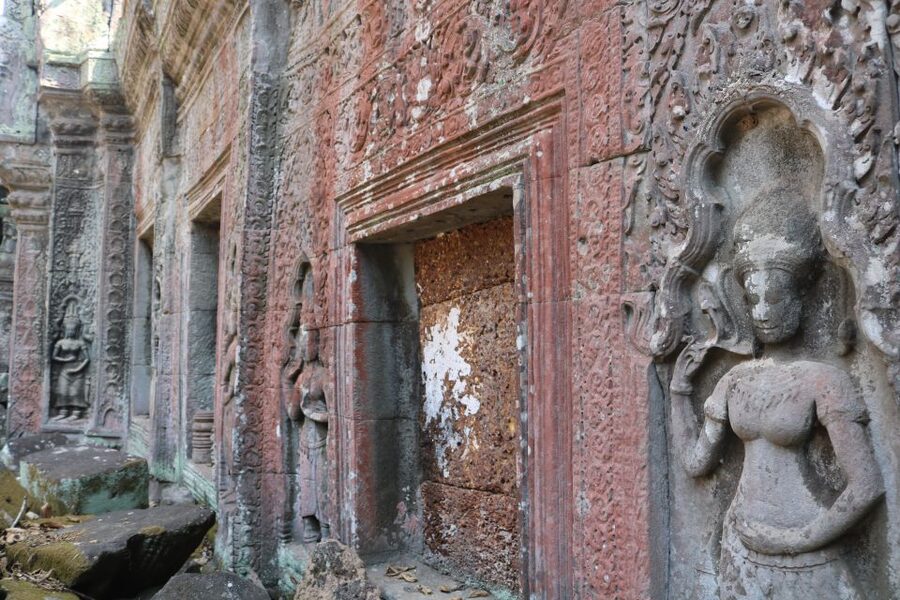
After that, you head to Preah Khan. It’s a ruined temple that feels alive—tree roots over crumbling stone, and a “someone was just here” atmosphere even though you’re surrounded by history.
Preah Khan was commissioned by Jayavaraman VII in honor of his father. It’s also currently being restored by the World Monument Fund, and in some areas it’s in remarkably good condition. That blend can be startling: you see the damage, then you see the careful repair. It makes the temple feel less like a static exhibit and more like a living conservation story.
Sunset option on Day 1: rice fields or Bakheng
To close Day 1, you get a sunset finish. Depending on the option, that’s either a peaceful rice-field sunset drink or a sunset at Bakheng Temple (for the small group option).
Either way, this is a good choice to end the first day. After so many temples, you need a moment where the only job is to look outward and let the day settle. The rice-field option is often slower and quieter. Bakheng is more “temple view” energy. Your guide can help you choose what matches your style.
Day 2: pre-dawn Angkor Wat, Ta Prohm, Ta Nei, and the theater of Angkor Thom
Day 2 is the big hitters day. The challenge is that these are vast places, and the heat can turn even simple walking into hard work. This is where the A/C van and pacing you hear praised in reviews become more than comfort—it’s part of how you enjoy the temples instead of racing through them.
Morning: Angkor Wat again, but now you see the whole complex
You’ll return to the sunrise plan with a pre-dawn start and a torch during the dark entrance. The goal is to put you in position to experience the carvings and geometry at their most dramatic moment, when shadows make the reliefs pop.
The guide’s role here is huge. You’re looking at hundreds of details. Without context, you just get images. With the guide, you start seeing the religious and artistic logic behind what you’re seeing.
Ta Prohm: jungle atmosphere and the 2,740 monks past
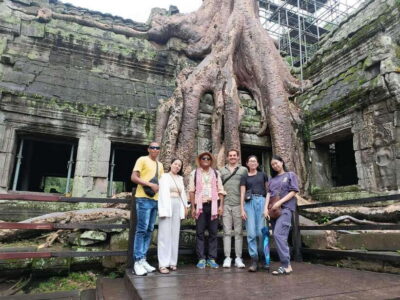
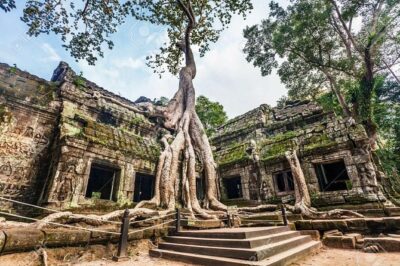
After Angkor Wat, you head into Ta Prohm, one of the most atmospheric temples in the Angkor area. This site was once home to 2,740 monks, and its famous look comes from the way nature and ruin have blended here.
A fun historic note your guide may mention: French explorer Henri Mouhot “rediscovered” the site in the early 1850s, and Ta Prohm looks much as it did then. That historical framing matters because you’re not just seeing broken stone. You’re seeing a specific moment in how Europeans encountered Angkor.
Ta Nei: a late 12th-century stone temple pause
Then you move to Ta Nei, a late 12th-century stone temple. This is often the calm reset between the big emotional hits. It gives your eyes and legs a breather while still keeping the day moving through meaningful sites.
Angkor Thom South Gate and Bayon faces: gods left, demons right
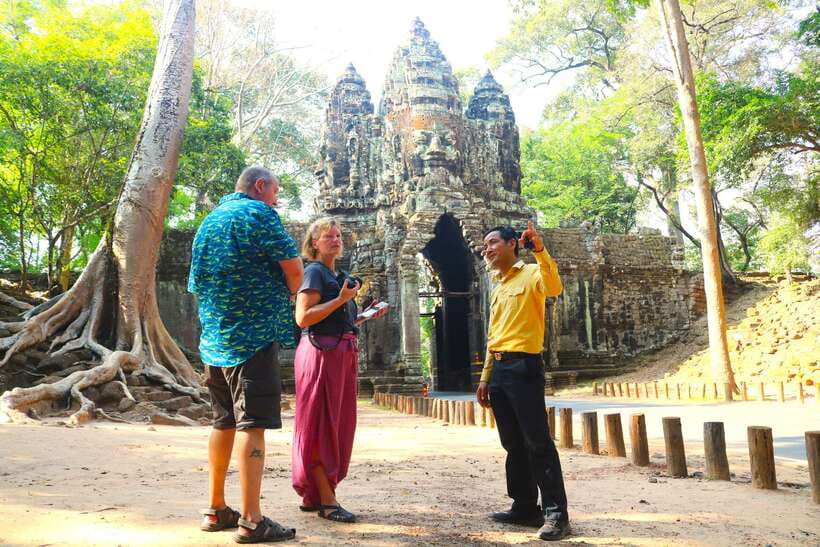
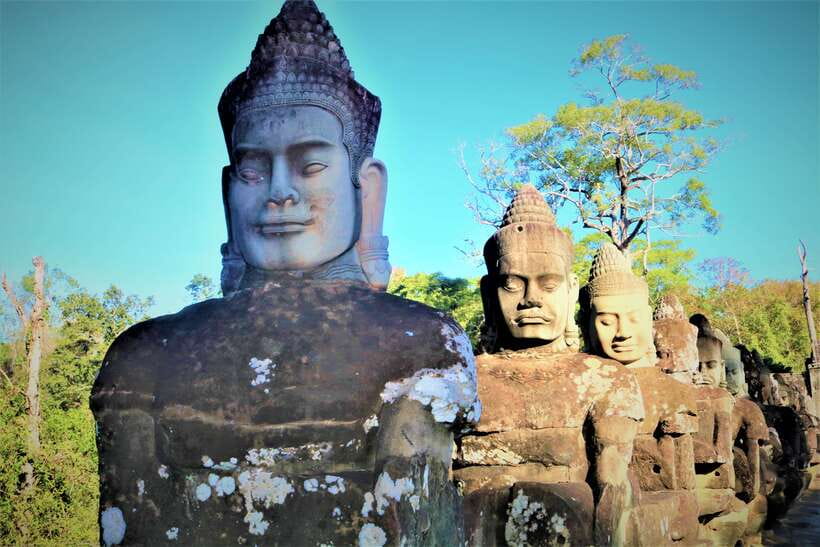
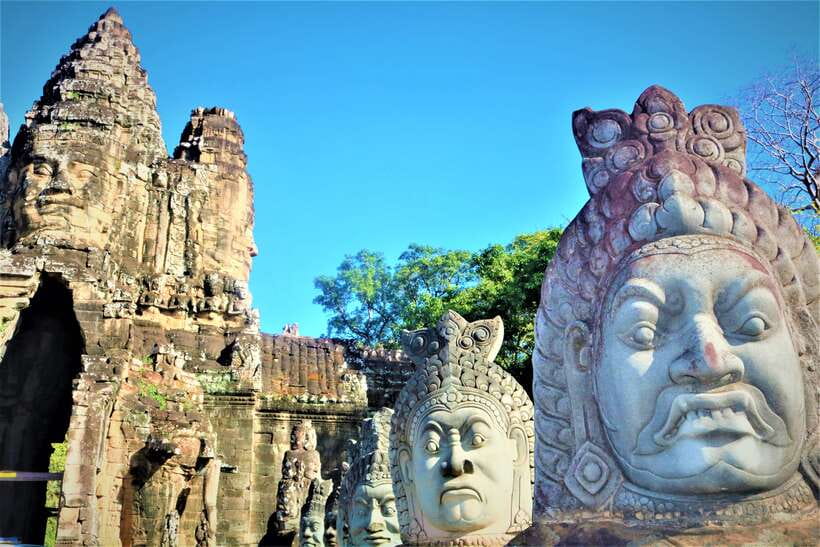
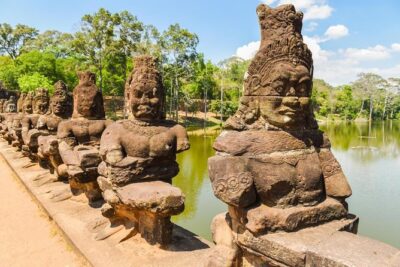
Next comes Angkor Thom, starting at the Southern Gate. It’s flanked by a row of 54 stone figures on each side: gods on the left and demons on the right. This is the kind of setup where you really benefit from a guide pointing out what you’re actually looking at, not just where to stand for photos.
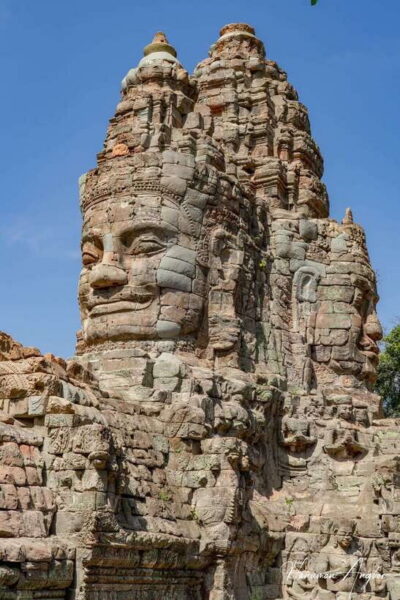
Then you reach Bayon, famous for its central towers covered in more than 200 enormous faces. At ground level, those faces can feel like they’re watching you from every angle. It’s also a site where pacing helps—if you rush, you miss the way your perspective shifts as you walk around.
Terrace of the Leper King and Terrace of Elephants
Finally, you explore the Terrace of the Leper King and the Terrace of Elephants. These terraces add personality to the day. They turn Angkor Thom from “big buildings” into storytelling surfaces full of scenes.
Even if you only catch part of it, you’ll come away feeling you didn’t just see temples—you saw narratives carved into stone.
The guide and van: what you really get beyond the temple names
The itinerary is only half the story. The other half is how you move through it.
This tour runs on air-conditioned round-trip hotel transfers, and bottled water plus cool towels are part of the routine. Multiple reviews mention drivers doing the little things that keep you human: ice-cold water when you return from heat, towels for cooling off, safe driving, and consistent on-time pickups.
On the guide side, guests repeatedly praise the combination of clear English and story-based explanations. People bring up guides such as Chhay for humor plus deep context, Sak for engaging Khmer culture and religion stories, Bun for patient pacing and photo help, and Pi for knowing where to stand for the best sunrise and sunset views.
That matters because Angkor can overwhelm you fast. The best guides help you get your bearings fast, then give you just enough detail to make the carvings feel like messages, not decoration.
Group size is another practical point. Many reviews describe small-group comfort—often fewer people than the big buses you see around the park. Smaller groups usually mean less waiting, easier photo stops, and more time where you actually want it: in front of a carving long enough to understand it.
Price and value: $46 for the tour, then budget for the Angkor pass
The listed tour price is $46 per person for 2 days. That price covers hotel pickup and drop-off, A/C transport, a licensed English-speaking guide, and the cooling extras (bottled water and cool towels). It also includes the sunset add-on depending on your option (rice-field drink or Bakheng).
The big item not included is the temples entry fee. You’ll need to budget $62 per person for a 2- or 3-day pass. Meals are also not included.
So is it good value? I think so, because you’re not just buying access to ruins. You’re buying:
- guide interpretation (how to read what you’re seeing)
- logistics that cut down wasted time
- A/C transport that keeps you functional
- practical heat management (water and cooling towels)
If you were to try to DIY the same sunrise timing and build the route yourself, you’d spend time on planning and still might not get the same pacing or photo setup. In this case, the tour price plus the pass ends up feeling fair for the amount of ground you cover across two full days.
What to wear and pack for Angkor temple days
Angkor isn’t hard because it’s technical. It’s hard because it’s hot, dusty, and full of uneven stone.
You should bring:
- comfortable shoes (seriously)
- insect repellent
- a torch for the pre-dawn Angkor Wat entrance (Day 2 sunrise)
Dress rules are strict enough to matter. Shorts are not allowed, and you’re expected to dress respectfully with covered shoulders and knees. This is where I see people lose time at the start of tours—because they show up dressed wrong for Khmer temple expectations.
Also: don’t feed animals. It’s a simple rule, but guides enforce it for a reason: it helps protect both people and animals.
Who should book this, and who should skip it
This tour is a great fit if you:
- want sunrise at Angkor Wat and also a full second day through Angkor Thom and Ta Prohm
- like learning how religion and history connect to architecture
- appreciate small-group pacing plus AC comfort and heat support
- want a guide who helps with photo placement and timing
You might want to reconsider if:
- you struggle with early mornings and long walking days
- you need wheelchair access (this activity is not wheelchair accessible, and it’s not suitable for people with mobility impairments)
- you don’t want to follow temple dress rules (no shorts)
Should you book it?
I’d book this tour if your priority is a well-paced 2-day Angkor plan that mixes big-name icons with meaningful “in-between” stops like Pre Rup, Banteay Srei, Neak Pean, and Preah Khan. The sunrise and sunset options also give you a satisfying arc: first day ends with a calm horizon moment, and the second day starts with Angkor at its most dramatic.
The main reason to hesitate is the physical side. If you’re not ready for pre-dawn starts and uneven temple ground, you’ll feel it. But if you can handle early mornings and good shoes, this is one of the more sensible ways to experience Angkor without turning it into a rushed checklist.
FAQ
What temples are included in the 2 days?
You’ll visit Pre Rup, Neak Pean, Preah Khan, Banteay Srei, Angkor Wat, Ta Nei, Ta Prohm, Angkor Thom, Bayon, the Terrace of the Leper King, and the Terrace of Elephants.
Is the Angkor temple entry fee included?
No. The temples entry fee is not included. The pass mentioned is $62.00 per person for a 2- or 3-day pass.
Do I need a torch for the sunrise part?
Yes. The tour notes that you enter Angkor Wat in darkness during sunrise, and bringing a torch is recommended.
Are meals included?
No. Meals are not included.
What’s included for comfort during the tour?
You get complimentary bottled water and cool towels, plus round-trip transportation by air-conditioned vehicle.
How does pickup work?
Hotel pickup and drop-off are included, and pickup is available from all hotels in Siem Reap city.
Is there a sunset option on Day 1?
Yes. Depending on the option, you’ll either have a rice-field sunset drink or a sunset at Bakheng Temple.
What should I bring and what should I wear?
Bring comfortable walking shoes and insect repellent. Wear respectful clothing with covered shoulders and knees. Shorts are not allowed.
Is the tour wheelchair accessible?
No. It is unfortunately not wheelchair accessible, and it is not suitable for people with mobility impairments.
More Days at the Temples
- Siem Reap: Angkor Wat 2-Day Tour with Sunrise and Sunset
★ 4.9 · 4,429 reviews - Angkor 2-Day Sunset & Sunrise Small-Group Tour
★ 5.0 · 2,567 reviews - 2 Days Exclusive Temple Highlights with Sunset and Sunrise Tour
★ 5.0 · 1,157 reviews - Siem Reap: Angkor Sunrise 1- or 2-Day Guided Temples Tour
★ 4.9 · 1,132 reviews - 2 Days Guided Historical Tour in Angkor
★ 5.0 · 855 reviews
More Temple Circuits Around Siem Reap
- Angkor Wat Sunrise or Sunset Tour with Guide from Siem Reap
★ 5.0 · 12,109 reviews - Siem Reap: Angkor Wat: Small-Group Sunrise or Sunset Tour
★ 5.0 · 9,444 reviews - Siem Reap: Angkor Wat 2-Day Tour with Sunrise and Sunset
★ 4.9 · 4,429 reviews - Siem Reap: Full-Day Angkor Wat Guided Tour with Sunset
★ 4.9 · 3,803 reviews - Angkor Wat Sunrise tour with Small – Group and Guide tours
★ 5.0 · 3,655 reviews
Dawn and Dusk Over Angkor
- Angkor Wat Sunrise or Sunset Tour with Guide from Siem Reap
★ 5.0 · 12,109 reviews - Siem Reap: Angkor Wat: Small-Group Sunrise or Sunset Tour
★ 5.0 · 9,444 reviews - Sunset tour of Kampong Phluk stilts home village on the Tonle Sap
★ 5.0 · 4,865 reviews - Siem Reap: Angkor Wat 2-Day Tour with Sunrise and Sunset
★ 4.9 · 4,429 reviews - Siem Reap: Full-Day Angkor Wat Guided Tour with Sunset
★ 4.9 · 3,803 reviews
Just Added: Fresh Siem Reap Tour Reviews

Angkor Sunrise & Sunset Tours, compared.
 ★ 5.0Angkor Wat Sunrise or Sunset Tour with Guide from Siem ReapFrom $1812,109 reviews
 ★ 5.0Angkor Wat: Small-Group Sunrise or Sunset TourFrom $159,444 reviews
 ★ 5.0Sunset tour of Kampong Phluk stilts home village on the Tonle SapFrom $214,865 reviews
 ★ 4.9Angkor Wat 2-Day Tour with Sunrise and SunsetFrom $344,429 reviews
 ★ 4.9Full-Day Angkor Wat Guided Tour with SunsetFrom $153,803 reviews
 ★ 5.0Angkor Wat Sunrise tour with Small – Group and Guide toursFrom $143,655 reviews
 ★ 5.0Angkor Wat Highlights and Sunrise Guided Tour from Siem ReapFrom $233,213 reviews
 ★ 5.0Angkor Wat Sunset Small Group Tour with Lunch IncludedFrom $203,059 reviews
Browse the lists this tour appears in