
Reviewed · ANGKOR TEMPLE TOURS
Siem Reap Angkor 2-Day Tour
Angkor isn’t just one temple. This 2-day loop strings together the most famous sights in a way that makes the whole place feel like a story you can walk through. I like that you get hotel pickup plus an A/C vehicle (no dusty tuk-tuk slog), and I also like how the plan layers big “wow” moments with photo-friendly stops and guide time to explain what you’re actually seeing. The one drawback to plan around is the Angkor Pass, which isn’t included and can change your total cost fast.
What makes this tour feel like good value is the rhythm: start early, cool off in the car, and keep moving while the temples are still waking up. You’ll also get practical comfort touches like cool water and cool towels, which matters when you’re doing long walking stretches in humid heat. If you hate early mornings or you’re on a tight budget once you add the pass and meals, this may feel a bit rushed.
In This Review
- Key things that matter on this 2-day Angkor circuit
- Why this 2-day plan works better than trying to wing it
- Day 1: Ta Prohm, Angkor Thom stops, then Angkor Wat in daylight
- Day 1 afternoon: Tonle Sap Lake and the floating village view
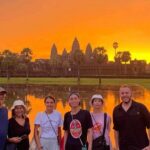
- Day 2: The 5:00 am Angkor Wat sunrise moment
- Day 2 afternoon: Banteay Srei pink sandstone and a hammock break
- What you really get from the included pickup, car, towels, and water
- Guides and photo help: where the praised experience shows up
- Price and value: what $110 covers and what to budget for
- Temple rules you should follow before you even go
- Who this 2-day tour fits best
- Should you book this 2-day Angkor experience?
- FAQ
- What time does the tour start on day 1?
- What time does day 2 sunrise at Angkor Wat begin?
- Where is the pickup point in Siem Reap?
- Is the Angkor Pass included in the price?
- What’s included in the tour price?
- Is lunch included?
- What should I wear to visit the temples?
- Can I cancel for a full refund?
Key things that matter on this 2-day Angkor circuit
- Angkor Wat sunrise timing (5:00 am start day 2) so you’re there before the crush
- A/C pickup and drop-off from your hotel, which keeps your energy for temples
- English-speaking guides praised for clear explanations and enthusiasm (names that show up in reviews include Mr. Mean Young and Chhola/Chola; drivers like Channy get credit too)
- A smart mix of temples: Ta Prohm, Angkor Thom, Preah Khan, then Banteay Srei’s pink sandstone
- Tonle Sap Lake + floating village in the afternoon on day 1, not just temples all day
- Dress code matters (shoulders covered, knees covered; tank tops not allowed), so bring the right clothes
More temple circuits, set side by side
- Angkor Wat Sunrise or Sunset Tour with Guide from Siem Reap★ 5.0 · 12,109 reviews
- Siem Reap: Angkor Wat: Small-Group Sunrise or Sunset Tour★ 5.0 · 9,444 reviews
- Siem Reap: Angkor Wat 2-Day Tour with Sunrise and Sunset★ 4.9 · 4,429 reviews
- Siem Reap: Full-Day Angkor Wat Guided Tour with Sunset★ 4.9 · 3,803 reviews
Why this 2-day plan works better than trying to wing it
Angkor can feel overwhelming fast. Even if you’re excited, it’s easy to lose time between sites, miss the best angles, or get stuck waiting in the heat while you figure things out. This tour gives you a built-in route and a guide to help you connect the dots between monuments.
You’re also not stuck riding around all day without breaks. With an A/C vehicle, cool water, and cool towels, you can actually reset between temple zones. That’s a big deal when your day includes multiple long walking segments, plus sunrise time.
The other thing I appreciate: you’re not just hitting the headline temples. You also get Angkor Thom’s key areas (Elephant Terrace, Leper King Terrace, and more) and then Preah Khan the next day, which helps the “bigger than you expect” scale of Angkor click into place.
Day 1: Ta Prohm, Angkor Thom stops, then Angkor Wat in daylight
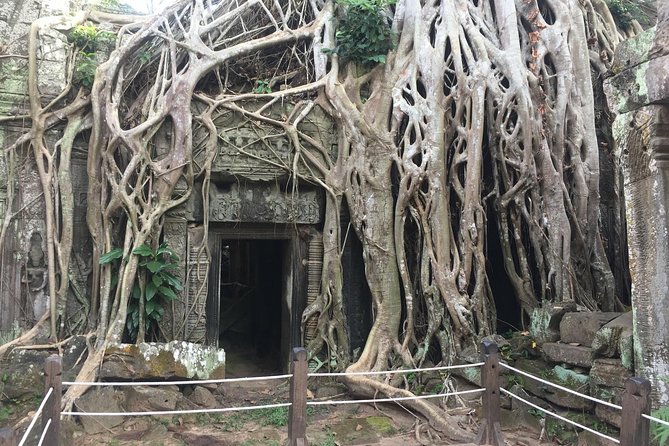
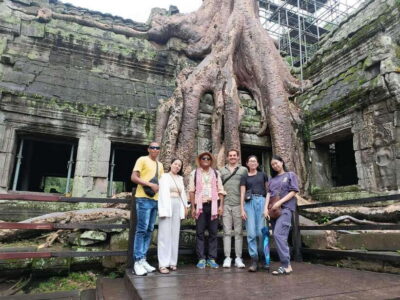
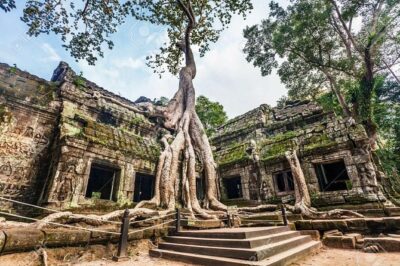
Day 1 starts at 8:00 am and it’s a strong opener. You begin with Ta Prohm, the famous Tomb Raider temple area, where the stonework blends with big tree roots. This is one of those sites where you’ll want a guide because the story behind the temple layout adds a lot to the photos.
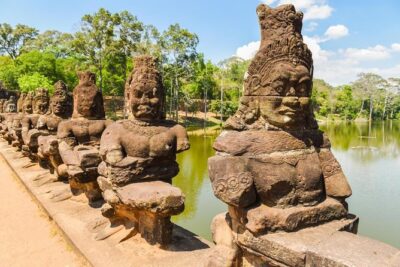
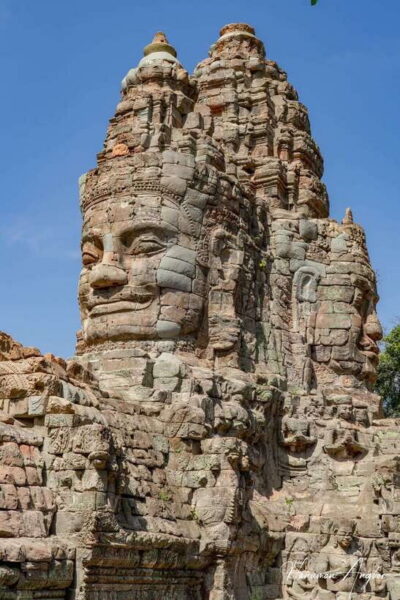
From Ta Prohm, you head into the heart of Angkor Thom. Your route includes several classic landmarks: Victory Gate, Elephant Terrace, Terrace of Leper King, the Enclosure Wall of the Royal Palace, and a viewing point connected to Pimeanakas (described as a 10th century temple in the tour notes). You’ll also exit from the southern entrance to see Prasat Baphoun, a prominent pyramid-shaped temple inside Angkor Thom.
This part of the day is where timing and guidance really pay off. Angkor Thom’s details can blur together if you don’t know what you’re looking at. A good guide helps you notice carvings, understand the role of different terraces, and connect how each spot fits into the Khmer empire story.
Lunch is planned as a pit stop around the Bayon area, then you have time to eat in the Angkor Park zone. After that break, you shift to Prasat Angkor Wat, the massive complex built in the early 12th century and later transformed through different religious use. You’ll walk key areas, cross the rainbow bridge, and get help with “good photo spots” along the way.
Angkor Wat is impressive in daylight, but it’s also a little deceptive—you think you’ve seen it all, then sunrise returns the next morning and you realize how much atmosphere changes. That’s why doing Angkor Wat twice is such a win here.
Day 1 afternoon: Tonle Sap Lake and the floating village view
In the afternoon, you head to Tonle Sap Lake, described as the largest freshwater lake in Southeast Asia, plus a look at the floating village. This is the best contrast to temple time: instead of stone and carvings, you’re watching daily life shaped by water and fishing.
You’ll see there are thousands of fishermen living on the lake. Even with just a short stop, it helps you understand why this region isn’t only about monuments. It’s also about how people live with the landscape.
Practical tip: since this is your “after a hot temple morning” slot, keep water nearby and pace yourself on any walking. Your schedule already includes lots of movement, so don’t turn this stop into a sprint.
Day 2: The 5:00 am Angkor Wat sunrise moment
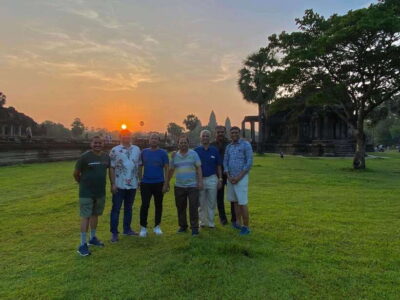
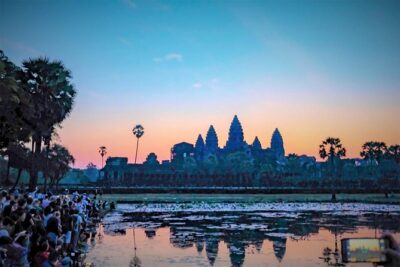
Day 2 starts early, at 5:00 am, for sunrise at Prasat Angkor Wat. If you’re wondering whether sunrise is worth the pain, yes—because the light changes the whole mood. The same buildings that looked grand by day feel more ghostly and calm before the crowds fully arrive.
You’ll also get breakfast arranged at a restaurant in the Angkor area after sunrise. This is smart timing. It means you don’t go from walking in the dark straight into another temple day without fuel.
After breakfast, you move to Preah Khan Temple, described as the largest ancestor temple of King Jayavarman VII. This is a temple that helps balance out the “most photographed” sites. Instead of only focusing on the famous face towers and iconic angles, you spend time in a place that supports slower looking and more understanding.
More time at the temples, spread over days


Day 2 afternoon: Banteay Srei pink sandstone and a hammock break
In the afternoon you travel north within the Angkor region to Prasat Banteay Srei, also called the Lady Temple. The highlight here is the pink sandstone, which makes the carvings and stone textures feel almost different from the rest of Angkor’s palette.
Lunch is planned at a local restaurant, and the tour includes a chance to relax in a hammock restaurant before returning. That’s not just comfort for comfort’s sake. After two days of temples and walking, a real pause helps you avoid the tired-museum effect where everything feels the same.
By the time you finish Banteay Srei, you’ve got a nice spread: giant iconic Angkor Wat, symbolic Angkor Thom, then the distinct color and carving style of Banteay Srei. It feels like you covered more than the usual two-day “checklist.”
What you really get from the included pickup, car, towels, and water
The included stuff is the part that quietly makes or breaks your trip.
You get pick-up and drop-off in Siem Reap (the listed start point is Hotel Somadevi Angkor Resort & Spa), plus an A/C car/van/minibus. You’ll often see Angkor tours done on a mix of local transport styles, but here the comfort angle is clearly part of the value.
You also get cool water and cool towels, which is exactly what you’ll want after midday walking. Heat is one of the biggest reasons people end up unhappy at Angkor, not because the temples are bad.
Another practical point: this is described as a private tour/activity, meaning it’s for your group rather than a large shared bus of strangers. That usually helps the pace stay reasonable and keeps photo stops from turning into a race.
Guides and photo help: where the praised experience shows up
The most consistent praise in the information you provided centers on guide quality—especially English clarity, temple knowledge, and enthusiasm. Names that come up include Mr. Mean Young and Chhola/Chola (with driver Channy also being mentioned alongside care and smooth pacing).
This matters because Angkor is not just “big ruins.” If your guide can explain what you’re seeing—why certain areas exist, what the carvings likely represent, and how the sites connect—you feel like you understand the place instead of just collecting images.
A good guide also helps with photos. The tour notes mention photo spots at Angkor Wat, and the vibe from the praise is that they actively help with angles and timing. That can save you frustration if you don’t want to spend all day trying to figure out where to stand.
Price and value: what $110 covers and what to budget for
The base price is listed as $110.00 per person for the 2 days. For many people, that feels like a fair “transport + guide + planning” bundle, especially since you’re getting A/C transport and the early sunrise start that can be a hassle to organize on your own.
But the big add-on is the Angkor Pass. It’s not included, with pricing shown in two ways:
- $62 per person (as listed for the tour)
- $37 per person for a single day (as stated in the notes)
So your total depends on which pass you end up buying. For this 2-day plan that includes both morning and sunrise timing, I’d budget as if you’ll use the $62 option unless the operator tells you otherwise.
Meals are another budget item. The highlights mention enjoying breakfast and lunch breaks, but the pricing notes list lunch as not included. Translation for your wallet: you should plan to pay for at least some lunches during stops and breaks.
Personal expenses aren’t included either, so bring a little extra for snacks or drinks beyond the included water.
Temple rules you should follow before you even go
Angkor is strict about clothing, and the tour notes spell out the common rules. You’re asked to dress properly:
- If you wear shorts and T-shirts, they must be long enough to cover to the knee and your shoulders should be covered.
- No tank tops are allowed.
- A note also says no scarf or shawl for covering.
Because it’s hot and humid, the notes suggest light cotton clothes. The weather note is helpful too: the period of November, December, and January is described as nice.
I’d treat this as a “don’t find out the hard way” situation. Have clothing that meets the rules, and your temple visits stay smooth.
Who this 2-day tour fits best
This experience fits you if you want a guided Angkor route that hits the famous spots without turning the trip into logistical work. It’s especially good if you:
- Prefer English explanations and want someone to point out what matters
- Don’t want to arrange sunrise timing yourself for Angkor Wat
- Like the idea of mixing temples with a real regional experience at Tonle Sap Lake
- Appreciate comfort upgrades like A/C, cool towels, and a planned pace
You might want a different setup if you’re the type who likes to wander totally independently, or if you’re very budget-sensitive once you add the Angkor Pass and meals.
Should you book this 2-day Angkor experience?
I’d book it if your goal is simple: see a smart selection of Angkor highlights over two days, with transport comfort and a guide who’s actually practiced at explaining. The sunrise on day 2 plus the second Angkor Wat visit is a strong structure, and the Tonle Sap stop gives you a break from temple-only days.
If you hate early mornings, or if you don’t want to deal with the Angkor Pass cost up front, then take a careful look at your total budget before committing. Also plan for lunches during breaks, since the notes don’t clearly promise lunch is covered.
Overall, this is the kind of tour that feels like good groundwork for a first or second time in Angkor: enough structure to keep you confident, plus enough variety to make the temples feel real instead of repetitive.
FAQ
What time does the tour start on day 1?
Day 1 starts at 8:00 am.
What time does day 2 sunrise at Angkor Wat begin?
Day 2 starts at 5:00 am to catch the sunrise at Prasat Angkor Wat.
Where is the pickup point in Siem Reap?
The listed meeting point is Hotel Somadevi Angkor Resort & Spa, Sivatha Blvd, Mondul II Village, Svay Dangkum, Siem Reap 17000 Cambodia.
Is the Angkor Pass included in the price?
No. The Angkor Pass is required and is listed as $62 per person. The notes also mention $37 per person for a single day pass.
What’s included in the tour price?
Included items are pickup & drop-off, an air-conditioned car/van/minibus, and cool water and cool towels.
Is lunch included?
Lunch is listed as not included in the tour notes, though the schedule includes stops for meals in the Angkor area. You should budget for lunch during those breaks.
What should I wear to visit the temples?
You should dress properly: shoulders covered and shorts must be knee length if you wear shorts. Tank tops are not allowed, and the notes also mention that no scarf or shawl is allowed.
Can I cancel for a full refund?
Yes. The policy says you can cancel for a full refund if you cancel at least 24 hours before the experience starts. If you cancel later than that, the amount paid isn’t refunded.
More Tour Reviews in Siem Reap
- Angkor Wat Sunrise or Sunset Tour with Guide from Siem Reap
★ 5.0 · 12,109 reviews - Siem Reap: Angkor Wat: Small-Group Sunrise or Sunset Tour
★ 5.0 · 9,444 reviews - From Siem Reap: Kampong Phluk Floating Village Tour by Boat
★ 4.9 · 6,979 reviews - Sunset tour of Kampong Phluk stilts home village on the Tonle Sap
★ 5.0 · 4,865 reviews - Siem Reap: Angkor Wat 2-Day Tour with Sunrise and Sunset
★ 4.9 · 4,429 reviews
More Days at the Temples
- Siem Reap: Angkor Wat 2-Day Tour with Sunrise and Sunset
★ 4.9 · 4,429 reviews - Angkor 2-Day Sunset & Sunrise Small-Group Tour
★ 5.0 · 2,567 reviews - 2 Days Exclusive Temple Highlights with Sunset and Sunrise Tour
★ 5.0 · 1,157 reviews - Siem Reap: Angkor Sunrise 1- or 2-Day Guided Temples Tour
★ 4.9 · 1,132 reviews - 2 Days Guided Historical Tour in Angkor
★ 5.0 · 855 reviews
More Temple Circuits Around Siem Reap
- Angkor Wat Sunrise or Sunset Tour with Guide from Siem Reap
★ 5.0 · 12,109 reviews - Siem Reap: Angkor Wat: Small-Group Sunrise or Sunset Tour
★ 5.0 · 9,444 reviews - Siem Reap: Angkor Wat 2-Day Tour with Sunrise and Sunset
★ 4.9 · 4,429 reviews - Siem Reap: Full-Day Angkor Wat Guided Tour with Sunset
★ 4.9 · 3,803 reviews - Angkor Wat Sunrise tour with Small – Group and Guide tours
★ 5.0 · 3,655 reviews
Just Added: Fresh Siem Reap Tour Reviews

Angkor Temple Tours, compared.
 ★ 5.0Angkor Wat Sunrise or Sunset Tour with Guide from Siem ReapFrom $1812,109 reviews
 ★ 5.0Angkor Wat: Small-Group Sunrise or Sunset TourFrom $159,444 reviews
 ★ 4.9Angkor Wat 2-Day Tour with Sunrise and SunsetFrom $344,429 reviews
 ★ 4.9Full-Day Angkor Wat Guided Tour with SunsetFrom $153,803 reviews
 ★ 5.0Angkor Wat Sunrise tour with Small – Group and Guide toursFrom $143,655 reviews
 ★ 5.0Angkor Wat Highlights and Sunrise Guided Tour from Siem ReapFrom $233,213 reviews
 ★ 5.0Angkor Wat Sunset Small Group Tour with Lunch IncludedFrom $203,059 reviews
 ★ 5.0Full-Day Angkor Wat Sunrise Private Tour with Guide from Siem ReapFrom $602,920 reviews
Browse the lists this tour appears in