
Reviewed · ANGKOR WAT TEMPLE TOURS
Siem Reap: Angkor Wat 2day Big and Small Circuit Guided Tour
Two days here feel like three lifetimes. This guided Angkor Wat big and small circuit tour strings together a sunset start, a sunrise at Angkor Wat, and temple stops that mix the famous with the quietly impressive. I especially love the contrast of sunrise light at Angkor Wat and the way your guide turns stones into stories about the Khmer Empire.
One thing to think about first: it is early, it is active, and it is not built for slow, flat walking. You’ll cover multiple temple areas, including a climb at Ta Keo, and the tour is not suitable for children under 12 or for people with mobility impairments or wheelchair users.
The trade-off is that the basics are handled for you. You get hotel pickup and drop-off, an AC van, cool water and wipe towels, and scheduled rest breaks so you can focus on the temples instead of logistics.
In This Review
- Key things you will notice on this tour
- How the 2-day big and small circuit tour works in your day
- Day 1 sunset loop: Preah Khan, Ta Som, and the temple world at nightfall
- Preah Khan: big scale, personal family story
- Neak Pean: the island temple and why the water mattered
- Ta Som: the tree-and-dancers entrance vibe
- East Mebon: a 10th-century ancestor temple and the old reservoir idea
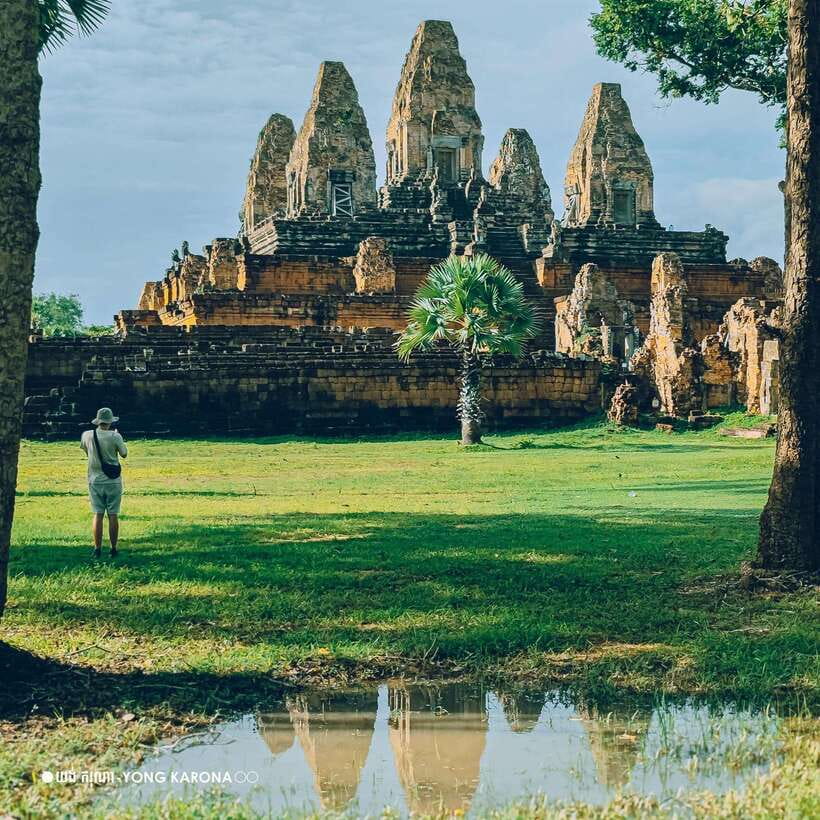
- Pre Rup: the coffin-like meditation structure and full-moon symbolism
- Phnom Bakheang: 33 towers and the heavens-on-a-hill feeling
- Day 2 sunrise and Angkor Wat: why the morning timing matters
- What you’re looking for at Angkor Wat
- Angkor Thom South Gate and the Bridge of Statues of gods
- Ta Prohm: jungle texture and movie fame with a real-world twist
- Banteay Kdei and the quieter temple feel
- Ta Keo: the 10th-century climb and the ancient-versus-modern moment
- Price and value: what $39 covers and what you must plan for
- Getting ready: shoes, sun gear, and temple rules that actually matter
- Who this tour suits best (and who should skip it)
- Should you book this Siem Reap 2-day Angkor tour?
- FAQ
- What is the duration of the tour?
- What does the tour price include?
- Are temple entrance fees included?
- Is food included?
- Is the guide English-speaking?
- How do I get the temple pass?
- Do I need to bring anything, and are there any rules for photos?
Key things you will notice on this tour
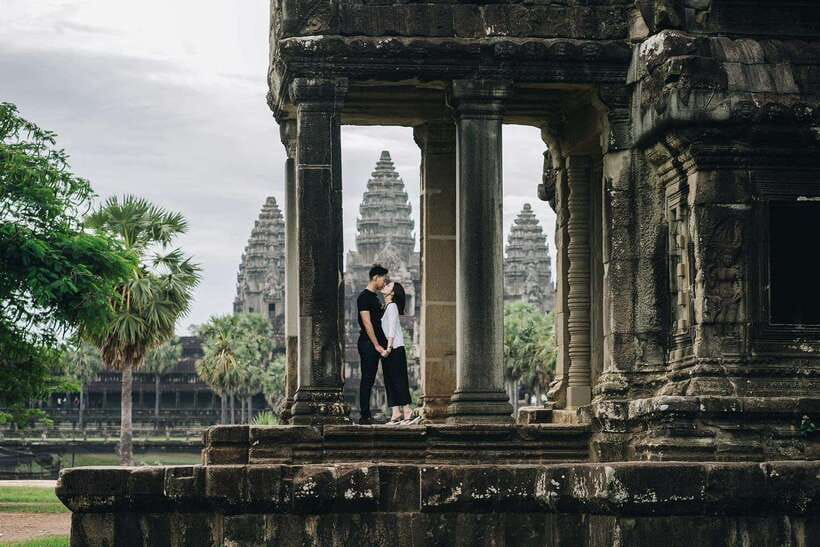
- Sunset-to-sunrise pacing across two days, so you see Angkor at different moods, not one snapshot
- Big-name temples plus lesser-known stops like Ta Prohm and Banteay Kdei, with quieter corners in between
- A guide who connects Khmer history to what you are seeing (English guides like Sayon or Sam can really make it click)
- Practical comfort touches: AC transport, cool water, wipe towels, and rest breaks
- Photo rules that keep it respectful: no flash photography, so you’ll use available light and steady your shot
Other ways to walk the great temple
- Angkor Wat Sunrise or Sunset Tour with Guide from Siem Reap★ 5.0 · 12,109 reviews
- Siem Reap: Angkor Wat: Small-Group Sunrise or Sunset Tour★ 5.0 · 9,444 reviews
- Siem Reap: Angkor Wat 2-Day Tour with Sunrise and Sunset★ 4.9 · 4,429 reviews
- Siem Reap: Full-Day Angkor Wat Guided Tour with Sunset★ 4.9 · 3,803 reviews
How the 2-day big and small circuit tour works in your day
This is a two-day format that helps you avoid the usual Angkor problem: either you go too fast, or you miss the morning magic. Day 1 begins at sunset, then you spend the evening and late light moving through a loop of standout temples. Day 2 starts before the heat really settles in, with a sunrise viewing at Angkor Wat and then more temple exploration while it is cooler and mornings are usually less crowded.
What makes this style of tour feel good is the rhythm. You do not just arrive, take photos, and shuffle onward. Instead, you get time to notice details and to understand why each site looks the way it does—especially when your guide explains the Khmer Empire and ties it to symbols, layouts, and what the builders were trying to communicate.
You’ll also appreciate the small-group approach. It is described as private or small groups depending on availability, which tends to make the pace more human. You’re not standing around as much, and your guide can answer questions without shouting over a crowd.
Day 1 sunset loop: Preah Khan, Ta Som, and the temple world at nightfall
Day 1 starts on the earlier side of the day, at sunset. That timing matters. When the sun drops, temple stone changes color and textures soften. Shadows move slower, and it becomes easier to see carvings without squinting into glare.
Preah Khan: big scale, personal family story
You begin with a cluster that includes Preah Khan, described as the biggest temple on the loop. It was built by King Bayon for his father, which gives you a useful way to read the site. Instead of treating it like a random ruin, you can think about it as a political and spiritual statement—how rulers used architecture to honor family, power, and belief.
Preah Khan can feel like its own micro-world: corridors, courtyards, and structures that invite you to keep walking and looking. If you like temples that feel lived-in (even when they are ancient), this is a strong start.
Neak Pean: the island temple and why the water mattered
Next comes Neak Pean Island temple. The key detail here is not only that it is pretty, but that the water around the island was used for bathing and health in the Angkor period. That turns the scene into more than scenery. You start noticing placement, the idea of purification, and how water systems were part of temple life.
In practical terms, this is also a good stop if you want a short breather between heavier walking sections. You can pause, look around, and reset your legs.
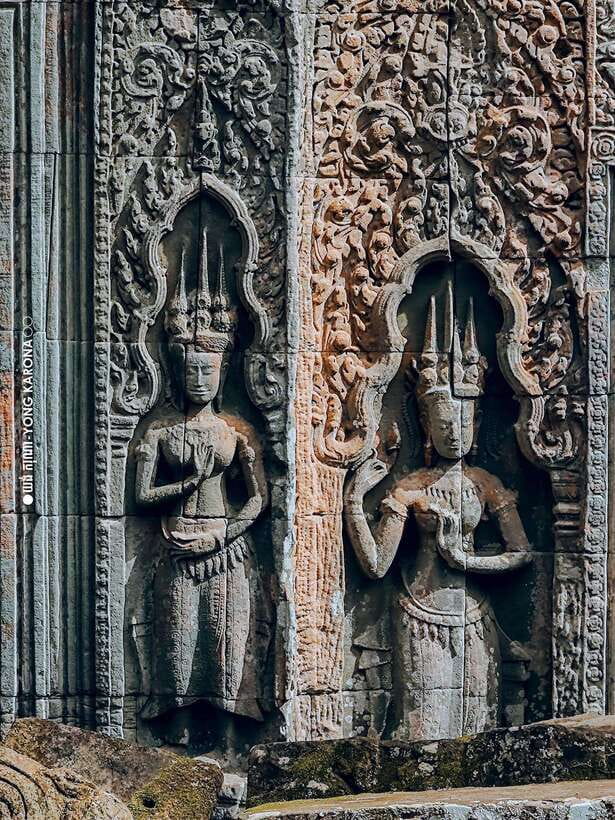
More temple circuits, set side by side
Ta Som: the tree-and-dancers entrance vibe
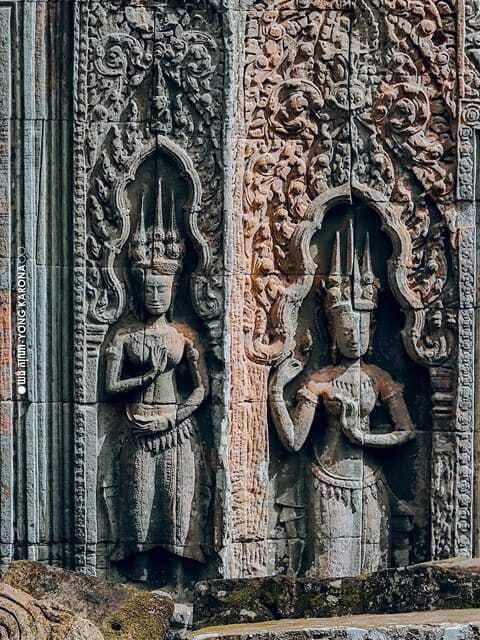
Then you reach Ta Som, known for a distinctive big tree over the east gate and for sculptures of dancers with long hair. It was built for the king’s sister. That personal angle helps the sculptures feel specific instead of generic decoration.
This is one of those temples where you’ll likely spend extra time just scanning details. Sunset light can make the carvings pop, and the tree framing adds drama to your photos—without you needing special gear.
East Mebon: a 10th-century ancestor temple and the old reservoir idea
East Mebon is next, built for ancestors and constructed as early as the 10th century. You’re also told it used to be in the middle of a reservoir. Even if the water situation looks different now, the original setting explains why the temple would have felt like a focal point: a place connected to reflection, ritual, and the idea of remembrance.
If you’re the type who likes temple layouts and why they were positioned where they were, East Mebon is a satisfying stop.
Pre Rup: the coffin-like meditation structure and full-moon symbolism
Pre-Rup is often mistaken for a crematorium, and that makes sense because of a stone structure that looks similar to a coffin. Here’s the deeper context: Hindus used this kind of structure to meditate within at the full moon.
That detail is more than trivia. It changes how you read the shape of the site. You start looking for intent—how architecture created space for belief, timekeeping, and ritual practice.
Phnom Bakheang: 33 towers and the heavens-on-a-hill feeling
Finally, Day 1 includes Phnom Bakheang, at the top of a hill. The 33 towers represent the heavens, and the stop lands as a symbolic payoff to the day. If you feel like your day has been temple after temple, this helps you step back. It’s a moment to understand the larger Khmer way of connecting earth and sky.
At sunset, hills and elevated views can feel extra rewarding because light lasts longer. Just plan for the walk up and wear shoes you trust on uneven ground.
Day 2 sunrise and Angkor Wat: why the morning timing matters
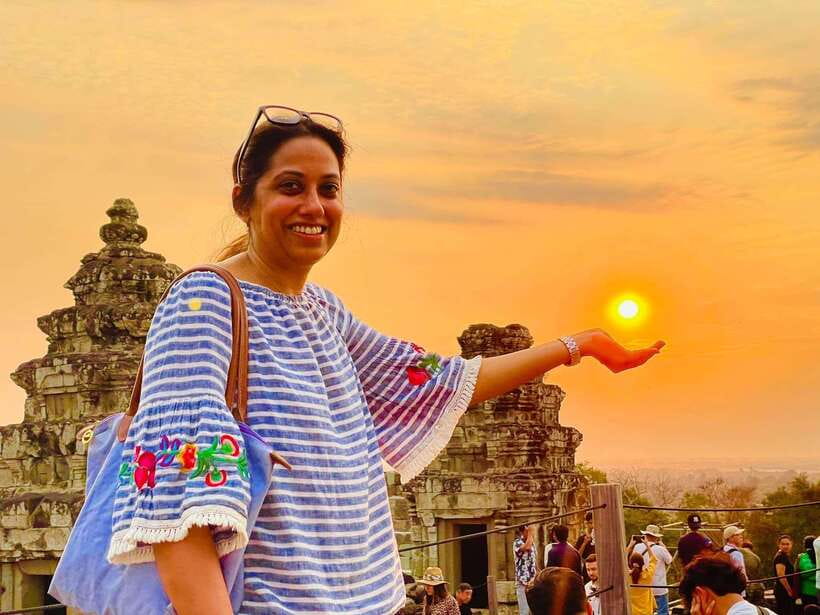
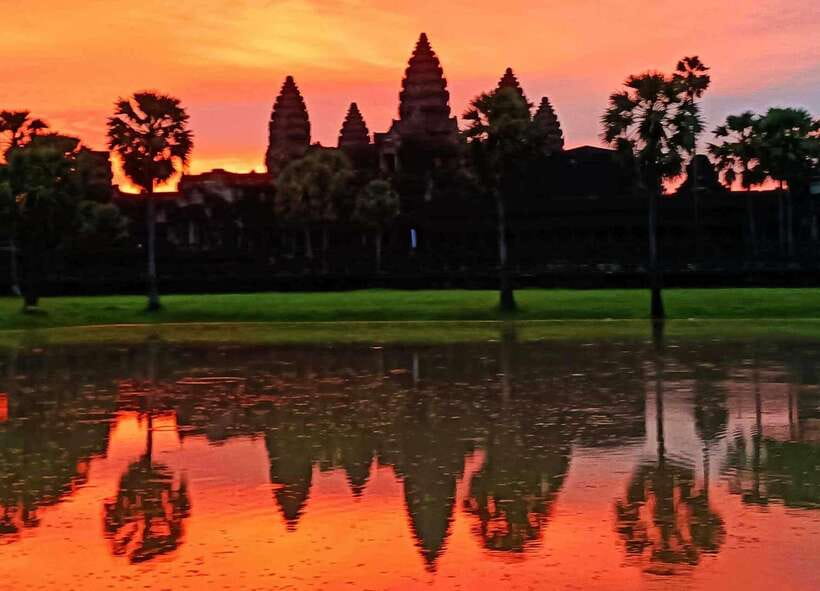
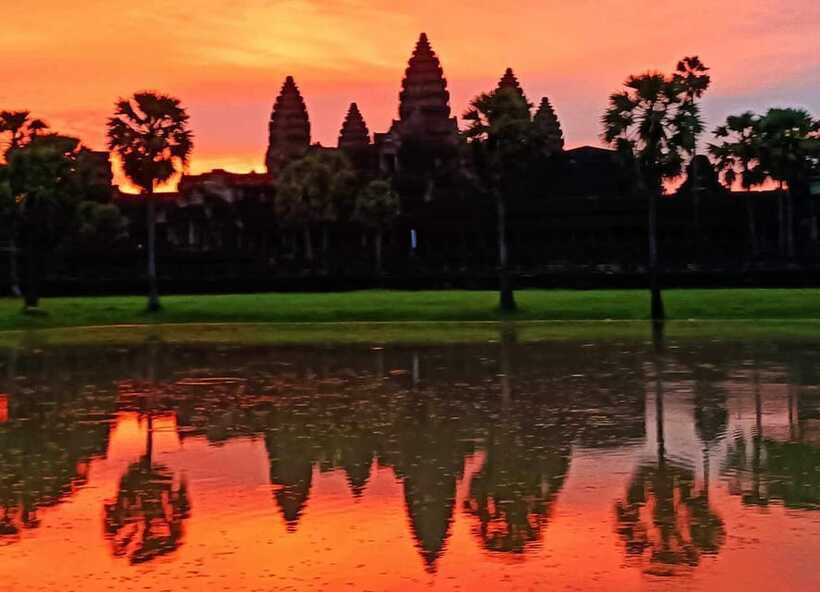
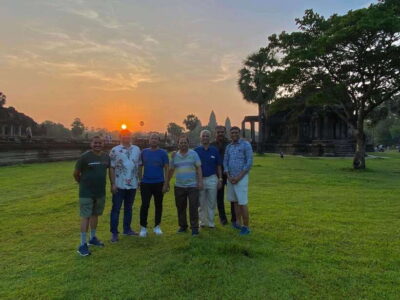
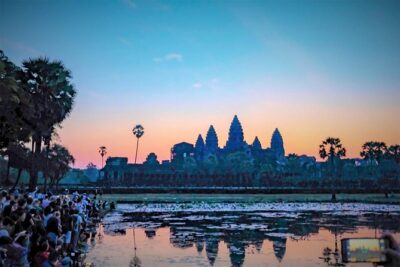
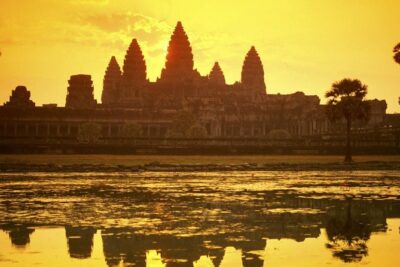
Day 2 is built around the Angkor Wat sunrise moment. This UNESCO-listed site still looks magnificent even without sunrise, but morning light does something specific: it sharpens contrast and makes the temple silhouette feel more dramatic.
It is also planned for your comfort. The tour notes cooler weather and fewer crowds in the morning. That is not a small detail. Comfort affects your ability to actually look, not just race through.
What you’re looking for at Angkor Wat
You’re not just watching the sun. You’re watching the way the temple reveals itself in layers—structures, reflective surfaces, and the overall geometry. With sunrise, shadows stretch and then slowly shift, and that movement makes details easier to see.
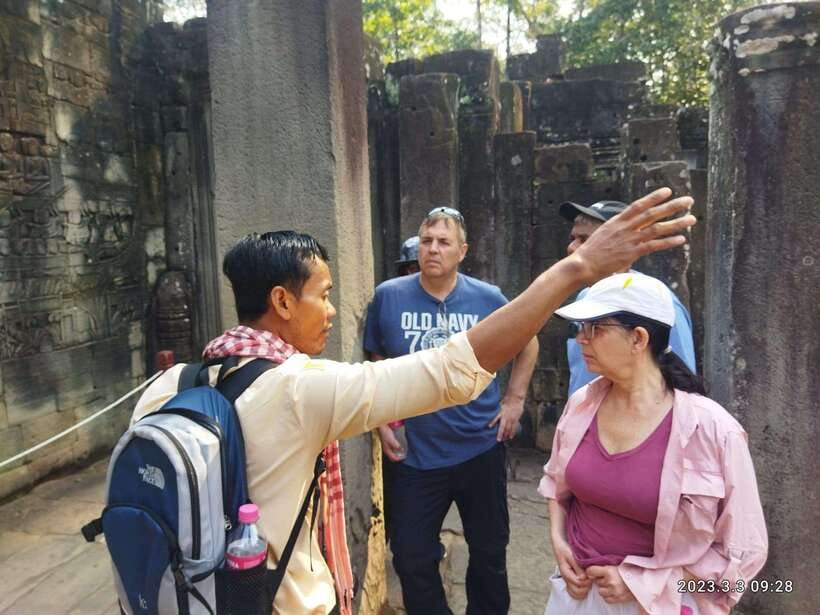
Your guide’s job here is helpful: they explain the site’s history and cultural context so you understand what you’re seeing instead of only capturing it. If your guide is someone like Sam, the focus tends to be on fitting the temple into the Khmer story rather than treating it like a standalone photo spot.
After sunrise, you continue exploring surrounding temples on the same day, and you’ll get occasional rest and food breaks as the morning turns into midday.
Angkor Thom South Gate and the Bridge of Statues of gods
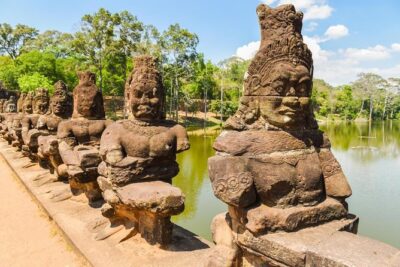
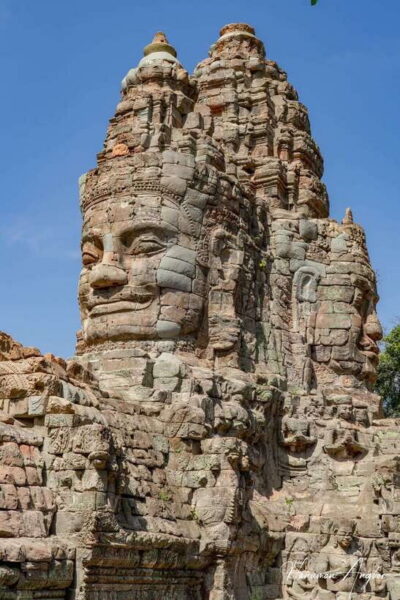
Later on Day 2 you visit South Gate of Angkor Thom and see the bridge of statues of gods. This is one of the easiest places to feel the scale of the city. The gate frames a whole world beyond it, and the bridge conceptually pulls you into a mythic journey.
Then you move toward Bayon, described as the temple home to large smiling faces. It is the kind of landmark that could feel like a gimmick if you did not have context. With the guide’s explanation, those faces start to feel like something intentional: a visual language meant to communicate presence, authority, and meaning.
Even if you’ve seen pictures before, being there changes your sense of proportion. Up close, the faces are not just decorative; they are part of how the whole space directs movement.
Ta Prohm: jungle texture and movie fame with a real-world twist
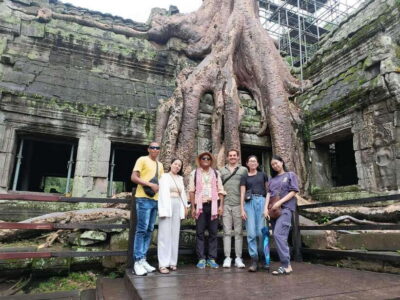
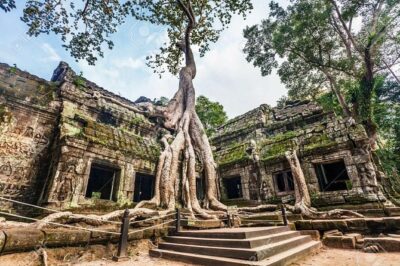
Next you get to Ta Prohm, the well-known jungle temple that is famous both for its past and for its feature in the Tomb Raider movie. The jungle look can draw people in fast, but the more valuable part is how you learn to separate what makes it visually dramatic from what makes it historically significant.
The tour keeps the pacing reasonable by including rest and food breaks and by moving between sites in a logical sequence. That matters here because Ta Prohm attracts attention, and if you get stuck waiting, the best light can disappear.
At Ta Prohm, expect the famous photo backdrops—but also take time for the surrounding architecture. The roots and growth are striking, yet the stonework still tells you what the builders wanted the temple to do: direct movement, control sightlines, and express belief through layout.
Banteay Kdei and the quieter temple feel
As you keep moving through the second half of the day, the tour intentionally includes lesser-known but still outstanding temples. One specifically mentioned is Banteay Kdei, a Buddhist temple.
This is where you often feel the value of a guided route. You are not just going by the biggest names. You’re getting a sense of variety across Angkor’s spiritual traditions and architectural styles. Banteay Kdei is also described in a way that suggests a more relaxed experience than the most crowded stops—another reason it works well after the intensity of sunrise and the central Angkor highlights.
Ta Keo: the 10th-century climb and the ancient-versus-modern moment
The day ends (or continues into the late part, depending on timing) with Ta Keo, described as a mountain temple built in the 10th century. You will walk up, treading between the ancient and modern eras.
That phrase matters because Ta Keo can feel different from flatter temple grounds. Even if you are not afraid of steps, you’ll feel the elevation. It is also a temple that rewards paying attention to structure: the way levels stack, the way stairs guide you, and the way views change as you climb.
If you are thinking about doing this tour, this is a good place to be honest with your own fitness. The tour is not marketed as gentle, and Ta Keo makes that obvious.
Price and value: what $39 covers and what you must plan for
The listed price is $39 per person for a 2-day guided experience. That is usually a good sign when you compare what’s included: hotel pickup and drop-off, an AC van, a live English guide, sunrise and sunset viewings, rest breaks, cool water, wipe towels, and local tax.
The two big extras you should budget for are also clearly stated:
- Temple entrance fees (paid separately through the ticketing process)
- Food (not included)
That means your real budget is really: $39 for the tour + a temple pass + meals. If you already planned to pay for the Angkor temple pass anyway, this tour’s value comes from the guide time and transportation. You’re not just buying access to ruins; you’re buying help connecting them in a smart route across two days.
One practical tip: the tour notes the temple pass can be purchased online or at the ticket office. If you like arriving prepared, use the Angkor Enterprise site listed in the tour info: https://www.angkorenterprise.gov.kh/.
Getting ready: shoes, sun gear, and temple rules that actually matter
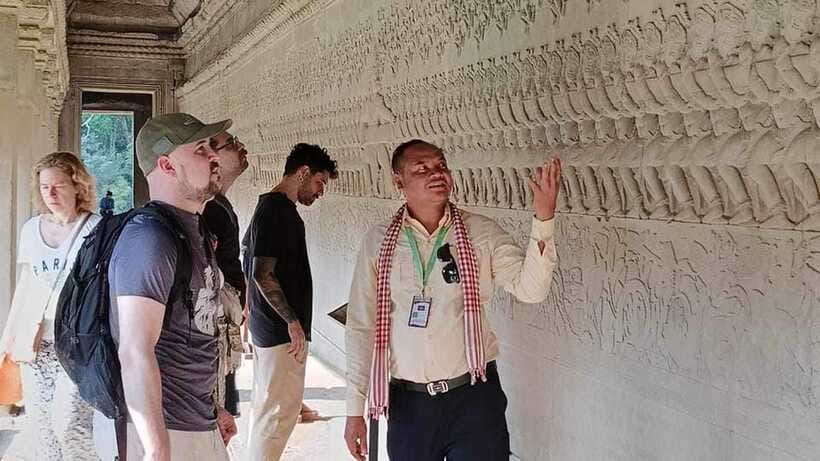
Angkor is walk-heavy and sun-heavy. The tour guidance is simple and correct:
- Wear comfortable shoes you can trust on uneven stone.
- Bring a hat, sunscreen, and camera.
- Carry water, even if cool water is provided during the tour.
- Bring a passport or ID card, and a copy is accepted.
Also remember the site rules:
- No flash photography
- No littering
These are small rules, but they shape your experience. No flash pushes you toward better natural lighting and steadier phone or camera technique. And littering is just a basic respect thing, because you are walking through a living heritage site.
Who this tour suits best (and who should skip it)
This tour fits you well if you want:
- A structured two-day route that covers Angkor Wat sunrise plus major surrounding temples
- A guide explanation that connects what you see to Khmer history and culture
- A blend of iconic stops (Angkor Wat, Ta Prohm, Angkor Thom/Bayon) and less-hyped temples (like Banteay Kdei)
It is probably not the best choice if:
- You need a wheelchair-friendly route or have mobility limitations (the tour is not suitable)
- You’re traveling with kids under 12 (not suitable)
- You hate early mornings and walking and climbing steps (the itinerary includes sunrise and temple stairs like Ta Keo)
Should you book this Siem Reap 2-day Angkor tour?
I’d book it if you want the best Angkor experience pattern: two days, sunrise and sunset light, and a guide to translate the meaning behind the shapes. The price-to-inclusions ratio is strong for $39, especially because transport, pickup/drop-off, and comfort touches are included. You also avoid the common trap of only seeing the headline temples by adding the lesser-known circuit stops.
I’d think twice if you’re trying to travel super lightly, skip early wake-ups, or need accessibility accommodations. This tour is about active temple time, not sitting and watching buses roll by.
If you like your travel practical—good timing, clear rules, and a guide who can explain why it all matters—this is a solid way to do Angkor without turning it into a stressful checklist.
FAQ
What is the duration of the tour?
It lasts 2 days, with sunset viewing on day 1 and sunrise viewing on day 2.
What does the tour price include?
You get a guided tour, transportation by AC van, hotel pickup and drop-off, sunset and sunrise viewings, rest breaks, cool water and wipe towel, plus local tax.
Are temple entrance fees included?
No. Temple entrance fees are not included, and you purchase the temple pass separately.
Is food included?
No. Foods are not included on this tour.
Is the guide English-speaking?
Yes. The tour has a live English tour guide.
How do I get the temple pass?
The temple pass can be purchased online or at the ticket office. The tour info points to https://www.angkorenterprise.gov.kh/.
Do I need to bring anything, and are there any rules for photos?
Bring comfortable shoes, a hat, camera, and sunscreen, plus water. Flash photography is not allowed, and you should not litter.
More Days at the Temples
- Siem Reap: Angkor Wat 2-Day Tour with Sunrise and Sunset
★ 4.9 · 4,429 reviews - Angkor 2-Day Sunset & Sunrise Small-Group Tour
★ 5.0 · 2,567 reviews - 2 Days Exclusive Temple Highlights with Sunset and Sunrise Tour
★ 5.0 · 1,157 reviews - Siem Reap: Angkor Sunrise 1- or 2-Day Guided Temples Tour
★ 4.9 · 1,132 reviews - 2 Days Guided Historical Tour in Angkor
★ 5.0 · 855 reviews
More Temple Circuits Around Siem Reap
- Angkor Wat Sunrise or Sunset Tour with Guide from Siem Reap
★ 5.0 · 12,109 reviews - Siem Reap: Angkor Wat: Small-Group Sunrise or Sunset Tour
★ 5.0 · 9,444 reviews - Siem Reap: Angkor Wat 2-Day Tour with Sunrise and Sunset
★ 4.9 · 4,429 reviews - Siem Reap: Full-Day Angkor Wat Guided Tour with Sunset
★ 4.9 · 3,803 reviews - Angkor Wat Sunrise tour with Small – Group and Guide tours
★ 5.0 · 3,655 reviews
Angkor Wat, a Few More Ways In
- Angkor Wat Sunrise or Sunset Tour with Guide from Siem Reap
★ 5.0 · 12,109 reviews - Siem Reap: Angkor Wat: Small-Group Sunrise or Sunset Tour
★ 5.0 · 9,444 reviews - Siem Reap: Angkor Wat 2-Day Tour with Sunrise and Sunset
★ 4.9 · 4,429 reviews - Siem Reap: Full-Day Angkor Wat Guided Tour with Sunset
★ 4.9 · 3,803 reviews - Angkor Wat Sunrise tour with Small – Group and Guide tours
★ 5.0 · 3,655 reviews
Just Added: Fresh Siem Reap Tour Reviews

Angkor Wat Temple Tours, compared.
 ★ 5.0Angkor Wat Sunrise or Sunset Tour with Guide from Siem ReapFrom $1812,109 reviews
 ★ 5.0Angkor Wat: Small-Group Sunrise or Sunset TourFrom $159,444 reviews
 ★ 4.9Angkor Wat 2-Day Tour with Sunrise and SunsetFrom $344,429 reviews
 ★ 4.9Full-Day Angkor Wat Guided Tour with SunsetFrom $153,803 reviews
 ★ 5.0Angkor Wat Sunrise tour with Small – Group and Guide toursFrom $143,655 reviews
 ★ 5.0Angkor Wat Highlights and Sunrise Guided Tour from Siem ReapFrom $233,213 reviews
 ★ 5.0Angkor Wat Sunset Small Group Tour with Lunch IncludedFrom $203,059 reviews
 ★ 5.0Full-Day Angkor Wat Sunrise Private Tour with Guide from Siem ReapFrom $602,920 reviews
Browse the lists this tour appears in