
Reviewed · KHMER COOKING CLASSES
Siem Reap Cooking Class
Want Khmer cooking skills, not just photos? This Siem Reap cooking class turns a break from Angkor temple sightseeing into a hands-on food lesson, starting with a market tour and ending in a purpose-built garden pavilion. I love how clearly you practice core techniques, and I also love that the menu is built around real Khmer favorites (not watered-down tourist dishes). One thing to consider: the class depends on good weather and can be canceled if conditions or minimum numbers don’t work out.
The format is simple and fun: you choose three dishes from a Khmer menu, cook them with a chef, then sit down to eat what you made. It’s designed for beginners too, so you don’t need any cooking background—just a good appetite and a willingness to get your hands a bit messy. With a maximum of 8 people, you should get enough attention to follow along without feeling rushed.
You’ll also get pickup from your accommodation, plus a mobile ticket, so day-of friction is usually low. The vibe is very “learn the method,” not “watch someone else cook,” which is exactly what makes this a standout food activity in Siem Reap.
In This Review
- Key highlights you’ll feel right away
- Khmer cooking class in Siem Reap: what you’re really paying for
- From pickup to the Krong Siem Reap market stop
- Choosing three Khmer dishes: keeping it focused
- Chef Dee’s garden pavilion: hands-on lessons that actually stick
- The dishes you’ll cook (and what to expect from each)
- Fish Amok with steam rice
- Spring rolls (vegetable or meat)
- Bananas in palm sugar with coconut juice
- Vegetarian adjustment (if you need it)
- Timing and group size: why max 8 people is a big deal
- Meeting point and how to plan your day around it
- Price and value: what $35 buys you in Siem Reap
- Weather dependence and the one drawback to keep in mind
- Who should book this Siem Reap cooking class?
- Should you book this cooking class in Siem Reap?
- FAQ
- How long is the Siem Reap Cooking Class?
- What does the class include?
- What dishes can I expect to make?
- Is pickup included?
- How big is the group?
- What meeting point does the tour use?
- What should I know about weather?
Key highlights you’ll feel right away
- Market tour with a local guide so you can connect ingredients to the dishes you’ll make
- Three-dish structure (starter, main, dessert) that keeps the class focused and doable
- Chef Dee’s teaching style—ingredients are shown clearly, with some coming from her garden
- Garden pavilion cooking space that’s set up for interactive, hands-on learning
- Small group size (max 8) which helps you ask questions and keep up
- Food you can recreate at home, including Fish Amok, spring rolls, and palm-sugar bananas
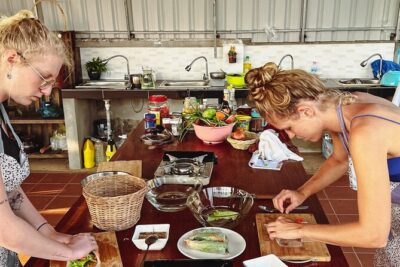
Aprons on for another Khmer kitchen
- Siem Reap: Khmer Cooking Class at a Local’s Home★ 5.0 · 1,108 reviews
- Award-Winning Cooking Class Experience with Professional Teacher★ 5.0 · 745 reviews
- Cambodian Village Cooking Class★ 5.0 · 265 reviews
- Cambodian Cooking Class from Siem Reap★ 4.9 · 190 reviews
Khmer cooking class in Siem Reap: what you’re really paying for
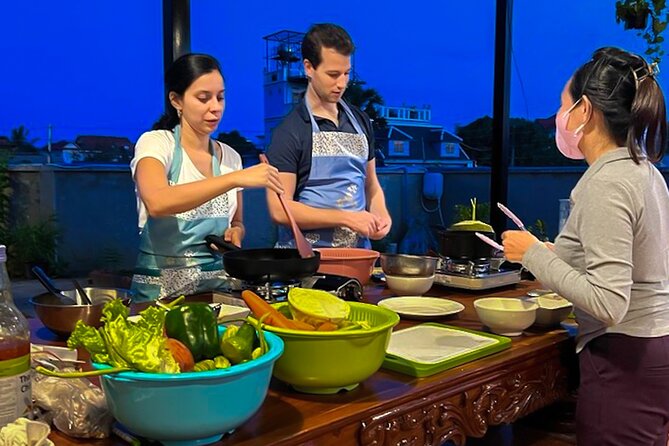
This is a $35-per-person, roughly 3-hour Siem Reap cooking class, and the value is mostly in what’s included: a market ingredient walk, a guided practice session with a Khmer chef, and a meal built from your own cooking. In a place like Siem Reap, where tours can feel like a checklist, this one feels like a skill you can reuse long after you leave Cambodia.
You’re not just learning recipes. You’re learning how to think like a home cook: how ingredients fit together, what textures to aim for, and how Khmer cooking balances flavor and technique. The class is structured around one starter, one main, and one dessert, which keeps it manageable even if you’re new to cooking.
The class is also set up for groups and students, and it’s child-friendly, so it tends to be a more relaxed environment than formal “culinary school” vibes. If you’ve been living on pub meals between Angkor temple visits, this is a very satisfying reset.
From pickup to the Krong Siem Reap market stop
Your day starts with either pickup from your accommodation or with meeting at Siem Reap Pub Hostel (near Angkor Night Market area, with the activity ending back at the meeting point). That pickup piece matters because Siem Reap traffic can be its own adventure, and you’ll likely arrive less frazzled than if you’re trying to coordinate transport on your own.
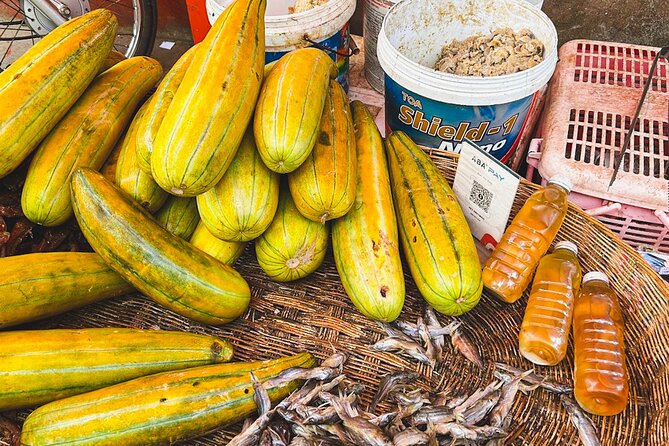
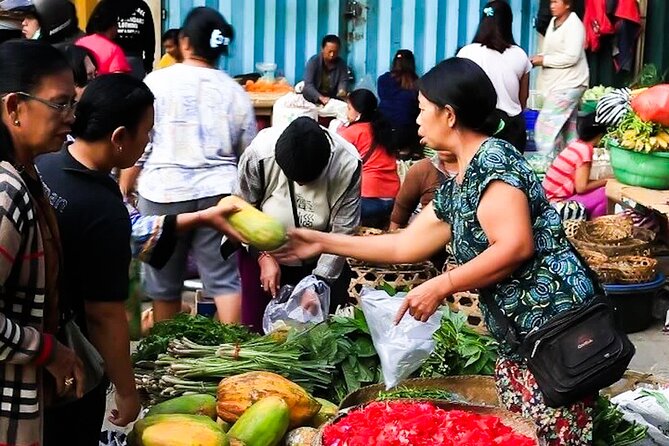
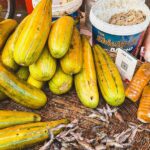
Once you’re together, you’ll head out to a local market with a guide. This is where the class becomes more than cooking. You get to see the ingredients used in Khmer food—fresh produce, proteins, and flavor-makers—so later, when you’re standing at the kitchen station, you’re not guessing what something is supposed to taste like.
Even if you don’t consider yourself a “market person,” this stop helps you understand why certain dishes taste the way they do. You’ll also get the visual cues for shopping later: how ingredients look when they’re at their best and what to look for when you’re trying to recreate the dishes back home.
Choosing three Khmer dishes: keeping it focused
After the market, you’ll go to the cooking location and start the hands-on part with your chef. The menu is Khmer, and you choose three dishes across the categories: starter, main course, and dessert.
This choice is one of the smartest design decisions in the whole class. Instead of being locked into a long menu, you can pick the dishes that match your appetite and your comfort level. If you’re tempted by the “signature” option, Fish Amok is on the menu; if you prefer something crispy and savory, spring rolls fit; if you want something sweet at the end, bananas in palm sugar with coconut juice is the dessert option.
For most people, the best payoff comes from making those decisions with your future self in mind. Pick at least one dish you’ll realistically cook again after you get home. That way, the class turns into a repeatable win, not just a fun one-time meal.
Chef Dee’s garden pavilion: hands-on lessons that actually stick
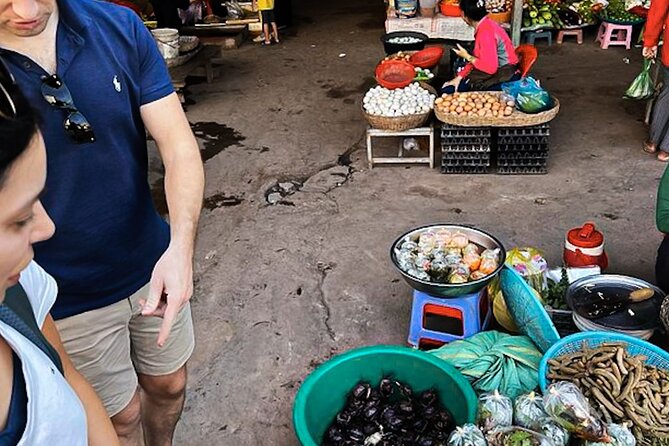
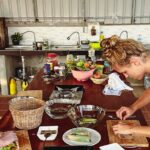
The cooking happens at a purpose-built garden pavilion, and that setting makes a difference. It’s not a cramped kitchen where you’re watching from the sidelines. You’re actively working as you learn, which helps the technique “lock in” faster.
Chef Dee is the name you’ll hear most often in the class experience, and the teaching approach is practical. In particular, I like the way ingredients are shown separately and explained clearly. That helps a lot when you’re cooking with unfamiliar ingredients or techniques and you need a reference point, not just a verbal explanation.
Also, it’s a clean, well-run setup. One review specifically called out a clean kitchen and cold water being available throughout the activity—small details, but they matter when you’re cooking in a hot climate and moving between tasks.
More time at the stove
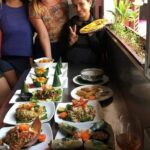
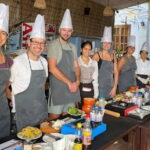
The dishes you’ll cook (and what to expect from each)
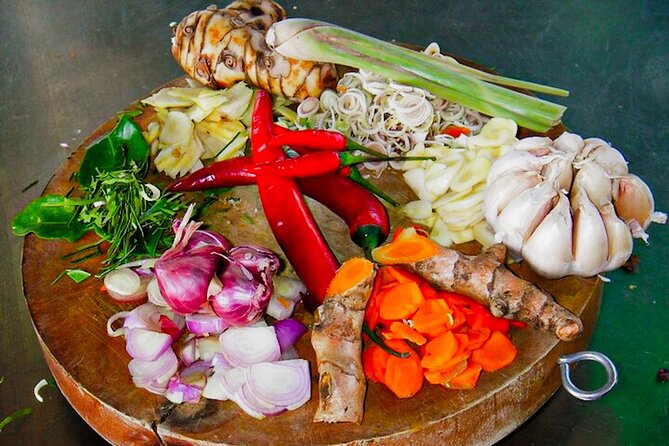
Here’s what you can expect to cook during the class. The exact order will vary, but the dish types below are specifically mentioned as options.
Fish Amok with steam rice
Fish Amok is one of those Khmer dishes that feels special even when you’re just tasting it—coconut flavor, fragrant seasoning, and a comforting texture. In this class, Fish Amok comes with steam rice, so you’re not just learning the main component; you’re also practicing the pairing that makes the dish complete.
If you’re the type who likes learning “the signature method” of a region’s cuisine, this is the dish to prioritize. It’s also a great benchmark for quality: once you understand the technique behind it, you’ll recognize it in other Cambodian meals too.
Spring rolls (vegetable or meat)
Spring rolls give you a different cooking skill set: prepping fillings and then working toward the right final texture. You can choose vegetable or meat versions, so it’s an easy win for different dietary preferences and comfort levels.
Even if you’ve eaten spring rolls before, this class is about doing the steps yourself and getting the method right. Pay attention to what makes the filling feel cohesive and how the wrapping influences the final crispness.
Bananas in palm sugar with coconut juice
This dessert option is simple in concept but really satisfying in execution. You’re working with bananas, palm sugar, and coconut juice—an unmistakably Khmer combo that lands somewhere between caramel sweetness and creamy richness.
Desserts are where beginners sometimes fall off, but in this class it’s designed to be approachable. If you want a sweet finish that’s also culturally specific, this is a strong choice.
Vegetarian adjustment (if you need it)
If you’re vegetarian, you might find the chef can adapt some recipes. One review specifically mentioned that Chef Dee adapted recipes to allow vegetarian options. That’s not something every class can promise, so if this matters to you, it’s worth mentioning when you book so you’re not surprised later.
Timing and group size: why max 8 people is a big deal
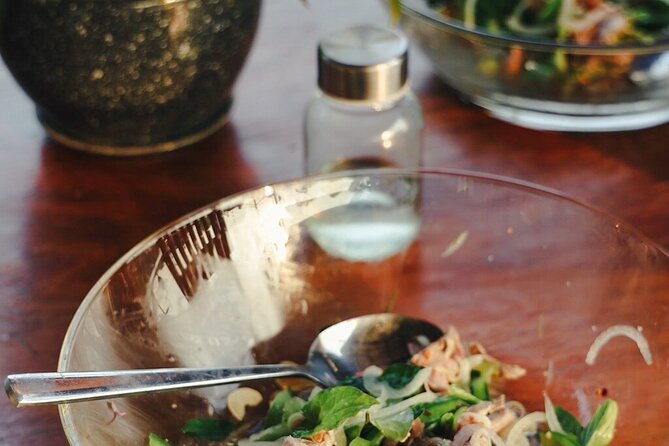
This runs about 3 hours. That’s short enough to fit between Angkor temple visits, but long enough that you actually cook, not just taste.
The class caps at 8 travelers, which changes the feel of the lesson. In a small group, the chef can keep an eye on what each person is doing, and you’re more likely to get help if something doesn’t turn out the way you expected. It also makes the meal feel more communal—less like a class, more like a shared food mission.
Meeting point and how to plan your day around it
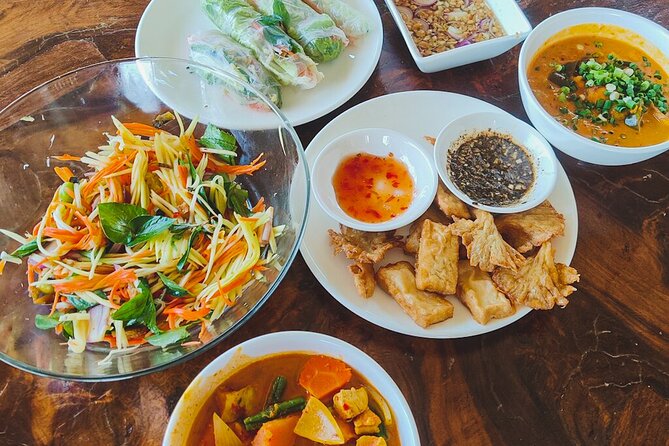
Your start point is Siem Reap Pub Hostel (behind Angkor Night Market area). The activity ends back at the meeting point. If you’re planning your day, treat this like a self-contained experience: you’ll likely want to keep that time block free so you can focus on the cooking and not rush between sites.
Pickup is offered, and the key practical detail is this: when you book, you’ll need to share where you’re staying and a contact number. That’s the difference between a smooth start and a minor scramble.
Also, the activity is near public transportation, which can help if you decide to meet at the start point instead of using pickup. Having a backup plan in Siem Reap is never a bad idea.
Price and value: what $35 buys you in Siem Reap
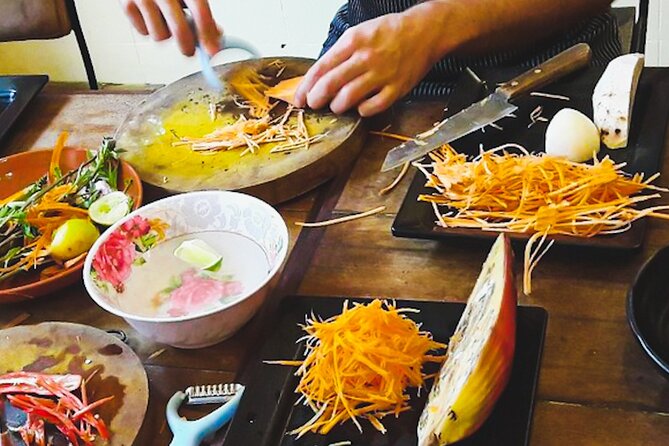
$35 for a 3-hour, hands-on Khmer cooking class with market time and a meal you made yourself can feel like good value. You’re not only paying for instruction—you’re paying for the ingredient selection, the setup (garden pavilion kitchen), and the time the chef spends guiding you through three dishes.
What I like most about this pricing structure is that it’s built around practice. If you’ve ever taken a “cooking demo” where you learn nothing because you weren’t hands-on, you’ll probably appreciate this format more. You get a complete, structured outcome: a starter, a main, and a dessert, plus the confidence to recreate the dishes later.
Weather dependence and the one drawback to keep in mind
The class requires good weather. If weather doesn’t cooperate, you’ll be offered another date or a full refund. There’s also a minimum number of travelers requirement, meaning it can be adjusted if enough people don’t book.
This isn’t a reason to skip the activity. It’s just worth booking it early in your Siem Reap stay, so you have flexibility if something shifts. If your schedule is tight and you’re only in town for a short window, you’ll want to treat this as a priority early booking rather than a last-day gamble.
Who should book this Siem Reap cooking class?
You’ll probably love this if you want:
- A hands-on Khmer cooking experience, not a passive tour
- A short activity that fits between temple days
- A small-group lesson where you can ask questions and stay engaged
- A food souvenir you can reproduce at home (not just pictures)
It also fits well for families and mixed-experience groups. One review described cooking with people at different skill levels, and the class still worked for everyone—exactly the kind of structure that makes cooking classes feel welcoming.
If you’re extremely picky about technique and timing, you might prefer a more advanced, specialty class. But for most people, this is a sweet spot: beginner-friendly, culturally focused, and practical.
Should you book this cooking class in Siem Reap?
Yes, you should book it—especially if you want Khmer flavors you can bring home. The market-to-kitchen flow helps you learn ingredients in context, and the three-dish format keeps you moving through the lesson without losing the thread. With max 8 people and Chef Dee’s clear, step-by-step approach, it’s one of the better ways to spend a few hours in Siem Reap that doesn’t feel like another temple line.
If you go, pick dishes you’ll actually want to cook again (Fish Amok and palm-sugar bananas are strong choices). And book it with some scheduling slack for weather, since the class depends on good conditions.
FAQ
How long is the Siem Reap Cooking Class?
It lasts about 3 hours.
What does the class include?
You’ll join a market tour with a local guide, then take part in a hands-on cooking class where you make three dishes: one starter, one main course, and one dessert, and then you eat the food you prepare.
What dishes can I expect to make?
The menu can include Fish Amok (served with steam rice), spring rolls (vegetable or meat), and bananas in palm sugar with coconut juice.
Is pickup included?
Pickup is offered. You’ll be asked to provide where you’re staying when you book, along with a contact number.
How big is the group?
The class has a maximum of 8 travelers.
What meeting point does the tour use?
The start point is Siem Reap Pub Hostel behind Angkor Night Market (with the meeting point code listed in the details). The activity ends back at the meeting point.
What should I know about weather?
The class requires good weather. If it’s canceled due to poor weather, you’ll be offered another date or a full refund.
Learn Another Khmer Dish
- Khmer Cooking Class at a Local’s Home in Krong Siem Reap
★ 5.0 · 2,731 reviews - Siem Reap: Khmer Cooking Class at a Local’s Home
★ 5.0 · 1,108 reviews - Award-Winning Cooking Class Experience with Professional Teacher
★ 5.0 · 745 reviews - Cambodian Village Cooking Class
★ 5.0 · 265 reviews - Cambodian Cooking Class from Siem Reap
★ 4.9 · 190 reviews
More Tour Reviews in Siem Reap
- Angkor Wat Sunrise or Sunset Tour with Guide from Siem Reap
★ 5.0 · 12,109 reviews - Siem Reap: Angkor Wat: Small-Group Sunrise or Sunset Tour
★ 5.0 · 9,444 reviews - From Siem Reap: Kampong Phluk Floating Village Tour by Boat
★ 4.9 · 6,979 reviews - Sunset tour of Kampong Phluk stilts home village on the Tonle Sap
★ 5.0 · 4,865 reviews - Siem Reap: Angkor Wat 2-Day Tour with Sunrise and Sunset
★ 4.9 · 4,429 reviews
Cook It Yourself: Khmer Classes
- Khmer Cooking Class at a Local’s Home in Krong Siem Reap
★ 5.0 · 2,731 reviews - Siem Reap: Khmer Cooking Class at a Local’s Home
★ 5.0 · 1,108 reviews - Award-Winning Cooking Class Experience with Professional Teacher
★ 5.0 · 745 reviews - Cambodian Village Cooking Class
★ 5.0 · 265 reviews - Cambodian Cooking Class from Siem Reap
★ 4.9 · 190 reviews
Just Added: Fresh Siem Reap Tour Reviews

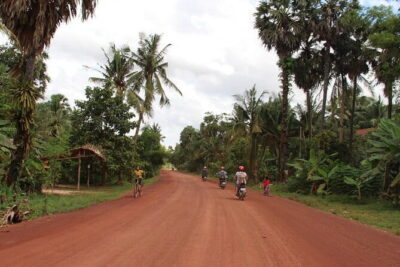

Khmer Cooking Classes, compared.
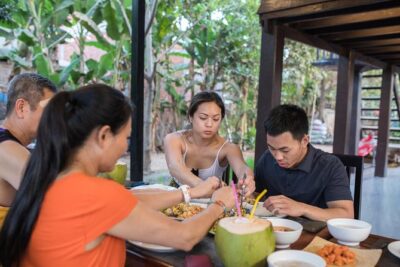 ★ 5.0Khmer Cooking Class at a Local’s Home in Krong Siem ReapFrom $272,731 reviews
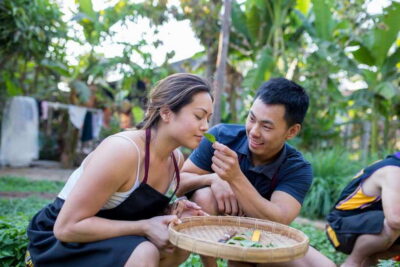 ★ 5.0Khmer Cooking Class at a Local’s HomeFrom $291,108 reviews
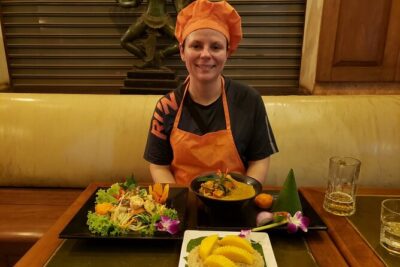 ★ 5.0Award-Winning Cooking Class Experience with Professional TeacherFrom $22745 reviews
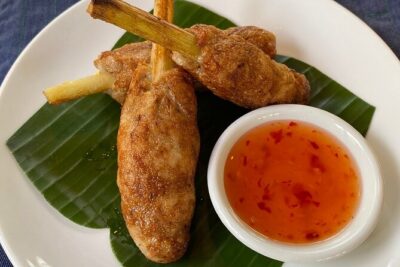 ★ 5.0Cambodian Village Cooking ClassFrom $32265 reviews
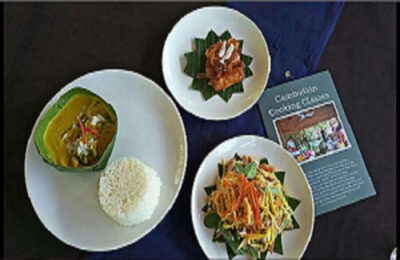 ★ 4.9Cambodian Cooking Class from Siem ReapFrom $32190 reviews
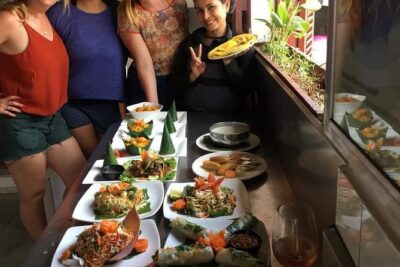 ★ 5.0Khmer Gourmet Cooking ClassFrom $21145 reviews
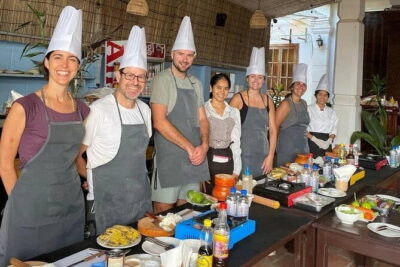 ★ 5.0Khmer Cooking Class in CambodiaFrom $3536 reviews
 ★ 4.53-Hour Siem Reap Guided Cooking Class and Market with Pick upFrom $3226 reviews
Browse the lists this tour appears in