
Temple mornings in Siem Reap start before coffee. This 3-day private tour strings together the big names (Angkor Wat and Angkor Thom) with the quieter stops like Phnom Kulen and the floating village on Tonlé Sap. I especially like the built-in timing for Angkor Wat sunrise plus a sunset option later at Phnom Bakheng or Pre Rup.
I also like the practical side: door-to-door pickup, A/C transport, and small comfort touches like cool water and cool towels. One drawback to plan for is cost on top of the tour price—temple tickets are required (listed as $37 per person for a single day), and entrance fees plus lunch aren’t included.
In This Review
- Key Points at a Glance
- Why This 3-Day Plan Works in Siem Reap
- The Big Value: Private Guide + A/C Transfers + Comfort Extras
- Day 1: Angkor Thom South Gate, Bayon Smiling Faces, Then Sunset Time
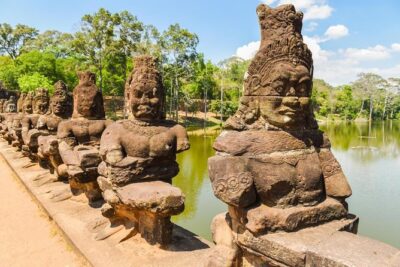
- South Gate of Angkor Thom: Start at the entry ritual
- Prasat Bayon: The faces that follow you
- Prasat Baphoun and Prasat Pimeanakas: Royal-city geometry
- Lunch break in Angkor Park
- Angkor Wat after lunch: the big icon
- Day 2: Phnom Kulen Waterfall, River of 1000 Lingas, Then Banteay Srei and Tonlé Sap
- Phnom Kulen: nature plus sacred sites
- Lunch, then the art stop: Banteay Srei
- Tonlé Sap: floating village and floating market
- Day 3: Angkor Wat Sunrise at 5:00 am, Then Ta Prohm Before the Rush
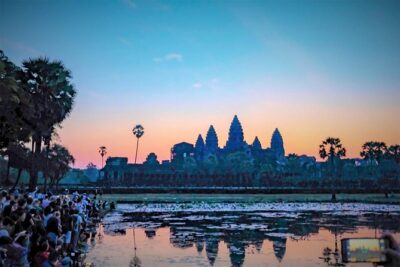
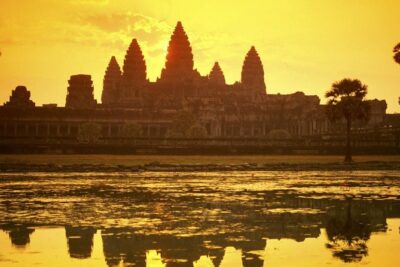
- Angkor Wat at dawn: why early is worth it
- Ta Prohm: the forest-choked temple vibe
- The “big ancestor” and the water temples: Preah Khan, Neak Poan, Ta Som
- Pre Rup: brick sanctuary and a final big look
- Price and Value: What the $171.50 Actually Buys You
- Temple-Day Reality Check: Tickets, Dress Code, and Heat
- Tickets and entrance fees
- Dress code that actually matters
- Who This Tour Suits Best (And Who Might Want Another Option)
- Guides and Drivers: Why People Keep Calling This One Out
- Should You Book This Siem Reap 3-Day Temple and Waterfall Tour?
- FAQ
- What does the tour price include?
- Are Angkor and temple entrance fees included?
- Is this tour private?
- What time does the tour start on Day 1?
- What time is Angkor Wat sunrise on Day 3?
- Is lunch included?
- Is free cancellation available?
Key Points at a Glance
- Private, door-to-door pacing: You’re not bouncing between buses and strangers.
- Sunrise and sunset timing: Angkor Wat early, and Pre Rup or Phnom Bakheng later.
- Day 2 adds nature and worship sites: Phnom Kulen waterfall, the river of 1000 lingas, and a reclining Buddha.
- Banteay Srei is the art stop: Pink sandstone and intricate Khmer details.
- Tonlé Sap is more than a detour: Floating village and floating market time at the end of the day.
- Guides do more than point: The experience tends to feel personal, with guides praised for professionalism and photo help.
More temple circuits, set side by side
- Angkor Wat Sunrise or Sunset Tour with Guide from Siem Reap★ 5.0 · 12,109 reviews
- Siem Reap: Angkor Wat: Small-Group Sunrise or Sunset Tour★ 5.0 · 9,444 reviews
- Siem Reap: Angkor Wat 2-Day Tour with Sunrise and Sunset★ 4.9 · 4,429 reviews
- Siem Reap: Full-Day Angkor Wat Guided Tour with Sunset★ 4.9 · 3,803 reviews
Why This 3-Day Plan Works in Siem Reap
Siem Reap is a “roads and ruins” kind of town. Without reliable public transport, you’ll waste energy figuring out rides instead of watching sunlit stones. A 3-day format also matters here: Angkor isn’t one temple you quickly tick off. It’s a full visual world with different moods—huge ceremonial spaces, carved faces, forest-grown ruins, and viewpoints.
This itinerary is built around three smart ideas.
First, you get an early start for Angkor Wat sunrise, when the light turns stone gold and the crowds are easier to manage. Second, you’re not stuck doing the same kind of sight all day long. Day 2 shifts from temple circuits to Phnom Kulen’s waterfall and river features, and then into the Tonlé Sap floating village scene. Third, you’ll cover a lot without feeling like a human luggage cart, thanks to the private setup.
That private angle is real value. Reviews highlight guides who were professional and friendly, and drivers who kept things smooth. If you care about having someone explain what you’re seeing (and not just moving you to the next stop), this is the right structure.
The Big Value: Private Guide + A/C Transfers + Comfort Extras
The tour includes pickup and drop-off in Siem Reap, plus an A/C car/van/minibus. That sounds standard until you’ve spent a day in Cambodia heat and realize your “standard” transport becomes your comfort level.
Two practical touches help more than you’d think:
- Cool water and cool towels during the day.
- A driver/guide who keeps the routing tight so you’re not hunting for meeting points.
In the reviews, people called out smooth timing and planning. One praised a guide named Young for being knowledgeable, kind, and fun—plus a driver who stayed warm and respectful. Another mentioned guide Makara for professionalism and for taking great photos. There’s a pattern: this tour seems designed so your guide does the explaining and the driver handles the logistics.
If you’re traveling with family or mixing ages, this matters. The pace is more controllable when you’re not squeezed into a group van schedule.
Day 1: Angkor Thom South Gate, Bayon Smiling Faces, Then Sunset Time
Day 1 starts at 8:00 am, with Angkor Thom first. That’s a smart move because Angkor Thom’s South Gate and inner temples are best when you’re still fresh.
South Gate of Angkor Thom: Start at the entry ritual
You’ll begin at the South Gate and then move inside. This sets the tone: you’re not just walking through random ruins. You’re approaching a city space designed for processions and power.
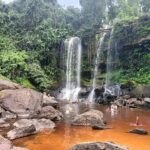
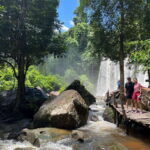
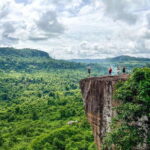
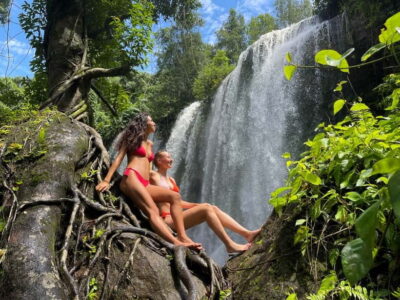
Up the holy mountain to the falls

Prasat Bayon: The faces that follow you
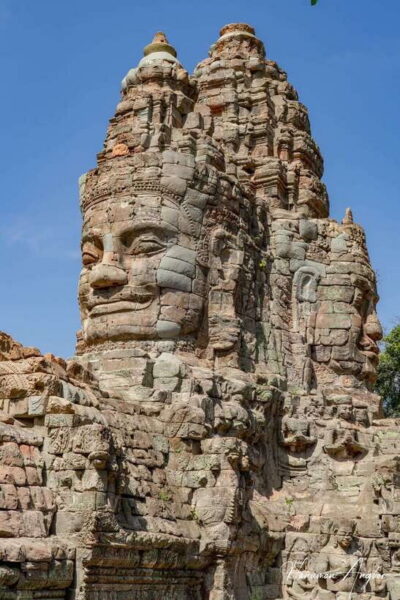
Next is Prasat Bayon (Bayon Temple), described as the Buddhist state temple built in the late 12th century and dedicated to Avalokesvara. The most memorable visual detail is the hundreds of smiling stone faces.
The guide will also point out the relief work showing everyday life and war themes, including conflict tied to invaders from the Champa Kingdom. That context helps you see the carvings as stories, not just decoration.
Prasat Baphoun and Prasat Pimeanakas: Royal-city geometry
After Bayon, you’ll head toward Prasat Baphoun and then Prasat Pimeanakas beside the royal swimming pool. The tour route keeps you moving across different “zones” of the Angkor Thom complex rather than repeating the same architectural style.
Lunch break in Angkor Park
You’ll pause for lunch in Angkor Park and get time to rest. This break is important if you want to enjoy the afternoon instead of rushing through it.
Angkor Wat after lunch: the big icon
In the afternoon, you’ll visit Angkor Wat. The tour describes an uncovered Angkor Wat experience, and then you’ll be taken to catch sunset at either Phnom Bakheng or Pre Rup (depending on timing and plan).
Sunset is tricky in Angkor. The best move is to have a driver who already knows how to position you, and to come with flexible expectations. Even if cloud cover changes the colors, the point is the shift in mood—the way light slides off carved surfaces and makes everything look sharper.
Day 2: Phnom Kulen Waterfall, River of 1000 Lingas, Then Banteay Srei and Tonlé Sap
Day 2 starts again at 8:00 am, and it’s the day that breaks the “only temples” pattern.
Phnom Kulen: nature plus sacred sites
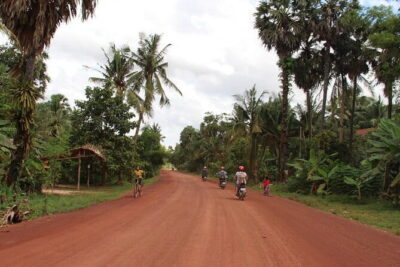
You’ll go to Phnom Kulen Waterfall first. Along the way, you’ll see Khmer people working and living in daily life, plus the views from the hill road.
On arrival, the tour frames Phnom Kulen as a key early shrine and birthplace area for the Khmer empire. You’ll also see:
- the waterfall itself
- the river of 1000 lingas
- a large reclining Buddha image
This combination makes the site feel different from Angkor’s flat, massive temple complexes. It’s more physical. You’ll likely notice the sounds and movement more than you do in the stone-dense Angkor core.
Lunch, then the art stop: Banteay Srei
After lunch and some downtime, you’ll visit Banteay Srei, a pink sandstone temple. It’s often called the jewelry of Khmer arts, and the tour’s description points you toward why: the scale is smaller, but the carvings and Khmer art style feel more intimate.
That’s the real value of Banteay Srei. It slows you down. When Angkor Wat can feel like a grand statement, Banteay Srei is like close-up craftsmanship—details you don’t want to rush.
Tonlé Sap: floating village and floating market
The final stop is Tonlé Sap, with time at a floating village and a floating market. This is a good way to end day 2 because it shifts from carved stone to lived culture.
Even if you’ve seen photos before, the floating village feels different in person. You’re not just viewing an attraction—you’re watching how people adapt their daily routines to water and seasonal changes.
Day 3: Angkor Wat Sunrise at 5:00 am, Then Ta Prohm Before the Rush
Day 3 starts earlier: 5:00 am pickup from your hotel to see the sunrise in Angkor Wat.
Angkor Wat at dawn: why early is worth it
Getting there before the day fully heats up gives you two wins:
1) better light for photos and mental “wow”
2) a calmer experience than later hours
After sunrise, you’ll go to a local restaurant for breakfast. That small detail matters. Morning tours that skip breakfast leave you grumpy fast.
Ta Prohm: the forest-choked temple vibe
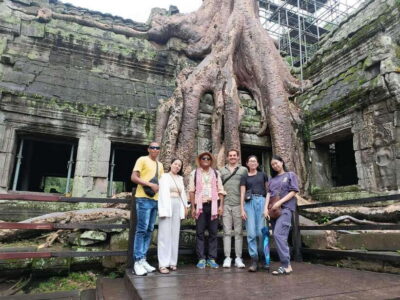
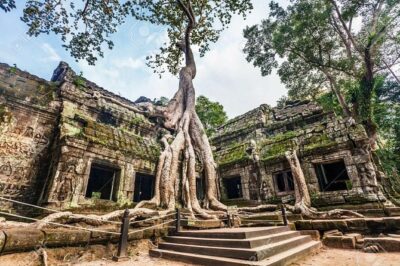
Then you’ll head to Ta Prohm, the temple famously associated with a Tomb Raider film. The tour includes a timing angle here: you’ll visit before crowds build up.
Ta Prohm is one of those stops where you don’t need to be an expert to feel it. Roots grabbing stone makes the scene feel alive, and it’s the kind of place where you’ll want to look up often.
The “big ancestor” and the water temples: Preah Khan, Neak Poan, Ta Som
You’ll also visit:
- Prasat Preah Khan, described as a major ancestor temple built by a Buddhist king in honor of his father
- Prasat Neak Poan, noted as the holy pool in the middle of the reservoir
- Prasat Ta Som, on the bank of the water reservoir
This is where the itinerary gives you variety. Day 3 isn’t only about one famous face or one iconic hall. It’s about moving through a connected system of water and worship spaces.
Pre Rup: brick sanctuary and a final big look
You’ll end at Pre Rup, described as a royal state temples built in the 10th century, and a major brick sanctuary that’s still standing. Pre Rup is a great final “wow” because the building material and structure feel distinct from other Angkor spots.
By the end of day 3, you’ll probably realize the tour’s real success isn’t just the checklist—it’s how it mixes:
- scale (Angkor Wat, Ta Prohm)
- storytelling carvings (Bayon)
- nature and religious geography (Phnom Kulen)
- and water-world culture (Tonlé Sap)
Price and Value: What the $171.50 Actually Buys You
The tour price is $171.50 per person for three days. Entrance fees and lunch aren’t included, and the temple ticket is listed as $37 per person for a single day.
So how do you judge value?
This price is buying you:
- private door-to-door transfers in an A/C vehicle
- a guide who handles route flow and temple context
- early sunrise logistics (hard to do well without local help)
- small comfort extras (cool water and cool towels)
The entrance ticket cost is the big addition you should budget for. Because the ticket is “per person per single day,” plan on paying for the days you’re entering temple sites. If you’re comparing to cheaper options, keep in mind that half-day DIY plans usually cost you in time, stress, and transport inefficiency.
In practical terms, I think this tour is a good fit if you want to see the main sights without turning your trip into a logistics project. If you’re the type who loves negotiating rides, mapping circuits, and spending time waiting around, you might do it cheaper on your own. But you’ll pay in fatigue.
Temple-Day Reality Check: Tickets, Dress Code, and Heat
A smooth Angkor day isn’t just about time—it’s also about how prepared you are.
Tickets and entrance fees
The tour specifically notes that entry fees and tickets aren’t included. It also states a temple ticket is required at $37 per person for a single day. That means your total trip cost depends on how many days you’ll be inside the Angkor complex and other ticketed areas.
If you want to avoid surprises, treat the tour price as the transport + guide package, and treat temple ticketing as the separate required layer.
Dress code that actually matters
You’ll need to dress properly for temple visits. The tour notes:
- avoid shorts and T-shirts unless they cover to the knee and shoulders
- no tank tops
- no scarf or shawl
It’s a bit stricter than some places you might have visited. Pack light cotton clothes for hot, humid weather, and consider that Nov–Jan is described as nice weather.
A practical tip: wear breathable fabric that covers your legs and shoulders without feeling like you’re stuck in a sauna. You’ll be thankful by the time you climb stairs or wait for sunset.
Who This Tour Suits Best (And Who Might Want Another Option)
This tour fits best if you want:
- private attention and a calmer schedule
- sunrise and sunset timing without DIY guesswork
- a balanced mix of major Angkor sites plus Phnom Kulen and Tonlé Sap
It’s also a strong pick for families or mixed groups because private transport and a guided plan reduce the “everyone move separately” problem. The reviews include examples of groups with kids and family-like service, which usually means the guide adjusts pacing and explanations.
You might consider a different option if:
- you’re traveling extremely budget-focused and willing to handle tickets and transportation yourself
- you hate early mornings (day 3 starts at 5:00 am)
- you don’t want to pay separate entrance fees on top of the tour price
Guides and Drivers: Why People Keep Calling This One Out
Even without naming every team member, the reviews point to consistent strengths:
- Guides described as professional, kind, and knowledgeable
- Guides who make it feel personal, not like a scripted factory tour
- Guides who help with photos (Makara is specifically mentioned as being a wonderful photographer)
- Drivers like Chantha noted as kind and supportive
- One highlight is Young, praised as the best guide ever—professional, knowledgeable, and with a playful sense of humor
That kind of feedback matters because temple touring is half “what you see” and half “how it’s explained.” A good guide can turn the same carved face into a clear story. A good driver can turn long days into manageable ones.
Should You Book This Siem Reap 3-Day Temple and Waterfall Tour?
Book it if you want a high-coverage Angkor experience without the stress of arranging rides and timing on your own. The sunrise plan, the structured day-by-day routing, and the inclusion of A/C pickup plus comfort extras make the $171.50 feel reasonable—especially once you factor that temple days are already ticket-heavy.
Think twice if early mornings and extra entrance costs will annoy you. Day 3 starts at 5:00 am, and temple tickets are required and listed as $37 per person per day, with lunch not included.
My bottom-line advice: if you want to spend your energy on temples, views, and real culture—rather than transport hassles—this is a solid way to do Siem Reap in three days.
FAQ
What does the tour price include?
The price includes pick up & drop off in Siem Reap, A/C car/van/minibus transportation, and cool water and cool towels.
Are Angkor and temple entrance fees included?
No. Entry fees and tickets are not included, and a temple ticket is required (listed as $37 per person for a single day).
Is this tour private?
Yes. It’s a private tour/activity, and only your group participates.
What time does the tour start on Day 1?
Day 1 starts at 8:00 am.
What time is Angkor Wat sunrise on Day 3?
Day 3 starts at 5:00 am to see the sunrise in Angkor Wat.
Is lunch included?
No. Lunch is not included.
Is free cancellation available?
Yes. Free cancellation is available up to 24 hours in advance of the experience’s start time for a full refund.
More Days at the Temples
- Siem Reap: Angkor Wat 2-Day Tour with Sunrise and Sunset
★ 4.9 · 4,429 reviews - Angkor 2-Day Sunset & Sunrise Small-Group Tour
★ 5.0 · 2,567 reviews - 2 Days Exclusive Temple Highlights with Sunset and Sunrise Tour
★ 5.0 · 1,157 reviews - Siem Reap: Angkor Sunrise 1- or 2-Day Guided Temples Tour
★ 4.9 · 1,132 reviews - 2 Days Guided Historical Tour in Angkor
★ 5.0 · 855 reviews
Kulen Mountain and the Falls
- Kulen Waterfall Join-in Tour (local Picnic lunch)
★ 5.0 · 2,434 reviews - Kulen Mountain: Small-Group Tour and Picnic lunch
★ 4.9 · 1,802 reviews - Siem Reap: Kulen Mountain, Beng Mealea and Tonle Sap Tour
★ 5.0 · 1,483 reviews - Phnom Kulen Waterfall & the Sacred 1000 Lingas (with Lunch)
★ 4.8 · 974 reviews - Kulen Mountain with Beng Mealea and Tonle Sap Small Group Tour
★ 5.0 · 780 reviews
More Temple Circuits Around Siem Reap
- Angkor Wat Sunrise or Sunset Tour with Guide from Siem Reap
★ 5.0 · 12,109 reviews - Siem Reap: Angkor Wat: Small-Group Sunrise or Sunset Tour
★ 5.0 · 9,444 reviews - Siem Reap: Angkor Wat 2-Day Tour with Sunrise and Sunset
★ 4.9 · 4,429 reviews - Siem Reap: Full-Day Angkor Wat Guided Tour with Sunset
★ 4.9 · 3,803 reviews - Angkor Wat Sunrise tour with Small – Group and Guide tours
★ 5.0 · 3,655 reviews
Just Added: Fresh Siem Reap Tour Reviews

Angkor Temple Tours, compared.
 ★ 5.0Angkor Wat Sunrise or Sunset Tour with Guide from Siem ReapFrom $1812,109 reviews
 ★ 5.0Angkor Wat: Small-Group Sunrise or Sunset TourFrom $159,444 reviews
 ★ 4.9Angkor Wat 2-Day Tour with Sunrise and SunsetFrom $344,429 reviews
 ★ 4.9Full-Day Angkor Wat Guided Tour with SunsetFrom $153,803 reviews
 ★ 5.0Angkor Wat Sunrise tour with Small – Group and Guide toursFrom $143,655 reviews
 ★ 5.0Angkor Wat Highlights and Sunrise Guided Tour from Siem ReapFrom $233,213 reviews
 ★ 5.0Angkor Wat Sunset Small Group Tour with Lunch IncludedFrom $203,059 reviews
 ★ 5.0Full-Day Angkor Wat Sunrise Private Tour with Guide from Siem ReapFrom $602,920 reviews
Browse the lists this tour appears in