
Reviewed · ANGKOR TEMPLE TOURS
Two Day Angkor Temples Tours
Angkor feels bigger when you have the map. This private two-day Angkor temples tour is built for smooth temple-hopping with an air-conditioned vehicle, plus a guide who can adjust to what you care about (photos, history, or just not rushing). It’s the kind of setup that helps Angkor’s scale make sense fast, instead of feeling like a checklist you’re trying to survive.
I also love how the guide team brings the temples to life with clear English and a focus on what you’re actually seeing—Borey Hang, Kimhoeun, Mr. Kim, and Mr. Bunleat are specifically mentioned for tailoring the pace and sharing the story behind Hindu and Buddhist sites. One possible drawback: admission tickets are not included, so you’ll want to budget for entry fees on top of the tour cost, and you’ll still be doing a fair amount of walking with moderate physical fitness in mind.
In This Review
- Key points at a glance
- Two days in Siem Reap: what you’re really signing up for
- Your guide in the driver’s seat: flexible pace, real English, photo help
- Price and ticket reality: what the $102.57 covers (and what it doesn’t)
- Day 1: from Banteay Srei’s pink stone to Preah Khan’s maze corridors
- Banteay Srei (about 1 hour)
- Banteay Samre (about 1 hour)
- Preah Khan (about 1 hour)
- Neak Pean (about 40 minutes)
- Ta Som (about 30 minutes)
- Eastern Mebon (about 50 minutes)
- Pre Rup (about 40 minutes)
- Day 2: Angkor Wat first, then Angkor Thom and Ta Prohm’s tree-choked drama
- Angkor Wat (about 2 hours)
- Phnom Bakheng (about 1 minute)
- Angkor Thom (about 2 hours)
- Ta Prohm (about 1 hour)
- Pacing, comfort, and avoiding the Angkor burnout
- What you’ll actually see at each site: quick expectations
- Who this tour fits best (and who should rethink it)
- Should you book this Two Day Angkor Temples Tour?
- FAQ
- What does the tour cost, and how far ahead do people usually book?
- Are admission tickets included for the temples?
- Is this tour private?
- Do you get pickup and air-conditioned transportation?
- Where do we meet for the tour?
- Do I need a certain fitness level, and what happens with bad weather?
Key points at a glance
- Private group touring: only your group joins, so the schedule can actually match your energy.
- AC transport plus pickup: temple days in Cambodia feel easier when you get regular comfort between stops.
- Guides who tailor time: you can get extra time where you’re most interested (including a pivot around Ta Prohm).
- Classic Angkor mix: Day 1 focuses on smaller, detailed temples; Day 2 hits the big three—Angkor Wat, Angkor Thom, and Ta Prohm.
- Photo-friendly coaching: guidance includes photography tips, including iPhone help, and time for the right angles.
- Admission tickets not included: plan ahead so you’re not scrambling at the gate.
More temple circuits, set side by side
- Angkor Wat Sunrise or Sunset Tour with Guide from Siem Reap★ 5.0 · 12,109 reviews
- Siem Reap: Angkor Wat: Small-Group Sunrise or Sunset Tour★ 5.0 · 9,444 reviews
- Siem Reap: Angkor Wat 2-Day Tour with Sunrise and Sunset★ 4.9 · 4,429 reviews
- Siem Reap: Full-Day Angkor Wat Guided Tour with Sunset★ 4.9 · 3,803 reviews
Two days in Siem Reap: what you’re really signing up for
This is a two-day Angkor temples circuit from Siem Reap designed to give you both the iconic hits and the “wait, look closer” sites. The itinerary spreads famous names across two days rather than stuffing everything into one grueling blast. That matters, because Angkor is visually repetitive only until someone explains what you’re looking at.
With pickup offered and an air-conditioned vehicle included, you should expect comfortable transfers between temple zones. The overall time blocks per stop are short to moderate, which is ideal if you like moving at a steady pace and getting fresh perspectives instead of lingering in long lines.
The other big factor is the guide. This tour is run by professional guides who are described as flexible and attentive—meaning they’re not just reading facts off a card. If you care about photography, they’ll talk about angles and timing. If you care about religion and symbolism, they connect what you see to Hindu and Buddhist contexts.
Your guide in the driver’s seat: flexible pace, real English, photo help
Angkor can feel confusing if you don’t have a human translator for the carvings and layout. This tour leans hard into the guide experience, and the guide names that come up again and again include Borey Hang, plus guides such as Kimhoeun, Mr. Kim, and Mr. Bunleat.
What you’re paying for isn’t just “someone who knows the names.” The most praised guides are described as responsive to what you want, with the patience to explain details without making you feel rushed. One repeated theme is schedule flexibility: if your group falls in love with a particular ruin—Ta Prohm is the one that’s specifically called out—your day can bend around that interest.
You’ll also get practical photography support. Some guides even share iPhone photography skill, plus tips on where to stand for better shots. That’s valuable because a lot of the “best photo spots” at Angkor are about positioning—relative to doorways, faces, and tree lines—more than fancy equipment.
And yes, small comfort details matter on temple tours. A clean, modern vehicle with strong air-conditioning and cold water are specifically mentioned, which helps when the heat follows you from stone to stone.
Price and ticket reality: what the $102.57 covers (and what it doesn’t)
The listed price is $102.57 per person for a tour that runs about 2 days. On average, people book around 28 days in advance, which is a sign you should plan ahead if you’re traveling near peak times.
This price includes:
- Air-conditioned vehicle
- Pickup offered
- Group discounts
- Private tour setup (only your group participates)
This price does not include:
- Admission tickets
- GST (Goods and Services Tax)
So what’s the value? For Angkor, the biggest cost is time and logistics. You’re paying to avoid the stress of assembling transport and figuring out routes across multiple temple zones. And because it’s private, you’re not stuck with a pace that fits strangers.
If you’re comparing options, think like this: if you can already handle the navigation, then you might not need the tour. But if you want the temples explained clearly and want someone to shape the day around your interests, this is a solid way to convert the high ticket price of admission into a smoother experience.
Day 1: from Banteay Srei’s pink stone to Preah Khan’s maze corridors
Day 1 is the “detailed Angkor” day. It mixes Hindu temples, Buddhist sites, and lesser-visited ruins so you’re not just staring at the same mega-complex look.
More time at the temples, spread over days

Banteay Srei (about 1 hour)
Banteay Srei is described as the jewel in the Angkorian art crown. It’s a Hindu temple dedicated to Lord Shiva, built in the 10th century, and it’s carved from a pinkish stone. The reason this stop works on day one is that it encourages you to slow down. When someone points out the craftsmanship, the temple stops being a pretty ruin and becomes a lesson in Angkor-era artistic obsession.
A practical note: stone details reward good lighting. If you like photos, you’ll usually do better by asking the guide where to stand before the light disappears.
Banteay Samre (about 1 hour)
Banteay Samre dates from the same period as Angkor Wat and was built by Suryavarman II in the 12th century for Lord Vishnu. It’s noted as fairly healthy in preservation, which helps when you want clear views of structure without constantly watching where the floor is failing.
This stop complements Banteay Srei nicely: you get a different style and a different feel while still staying within the Angkor “language” of Hindu dedication.
Preah Khan (about 1 hour)
Preah Khan is one of the largest complexes at Angkor. It’s known for a maze of vaulted corridors and fine carvings, plus lichen-clad stonework. One detail worth your attention: it’s described as seeing slightly fewer visitors than Ta Prohm, which means it often feels less like you’re inside a crowd.
For many people, this is where Angkor starts to feel immersive in a practical way—because the ruins are complex and structured. You’ll enjoy it more if the guide is actively helping you read the layout instead of only explaining from a distance.
Neak Pean (about 40 minutes)
Neak Pean is a smaller Buddhist temple built by Jayavarman VII, connected to Preah Neak Poan, the intertwined snake. It sits on an artificial island in the middle of a manmade lake area (Jayatataka, also referred to as north Baray). The key idea for your visit: this is a “pause and look” temple.
It’s short on time, but that’s the point. It gives your day texture—ritual space and water setting—without needing a full long sit-down.
Ta Som (about 30 minutes)
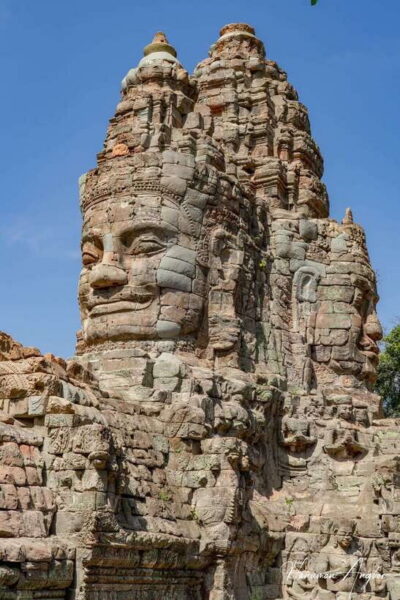
Ta Som is a satellite temple of Preah Khan, built by Jayavarman VII in the late 12th century. It’s described as small, but worth a quick stop. The eastern gate has big head carvings that you can spot and frame quickly if you’re ready.
If you’re tired by this point, don’t worry about lingering. A 30-minute stop works best as a reset: you get one more memorable angle and then move on.
Eastern Mebon (about 50 minutes)
Eastern Mebon is a Hindu temple erected by Rajendravarman II (r. 944–68). Historically, it would have been on an islet in the Eastern Baray, but it’s now more on dry land. That change is part of the lesson: Angkor’s water systems mattered, and over time the setting shifted.
This stop tends to reward visitors who like context. If your guide links the geography to why the temple was built, you’ll get more out of those views across the reservoir area.
Pre Rup (about 40 minutes)
Pre Rup is another Rajendravarman II temple, from the 10th century. It’s built as a pyramid-shaped temple-mountain with three tiers. Even if you only have about 40 minutes, this is a strong “structure check” stop: it helps you understand the Angkor theme of mountains-as-world-centers.
If you’re planning photos, watch for heat and glare. Ask your guide for a shaded moment for the group so your photos don’t all turn into squinting marathons.
Day 2: Angkor Wat first, then Angkor Thom and Ta Prohm’s tree-choked drama
Day 2 is your big-ticket day. It includes Angkor Wat, Angkor Thom (the great city), and Ta Prohm, which many people describe as the most atmospheric ruin at Angkor.
Angkor Wat (about 2 hours)
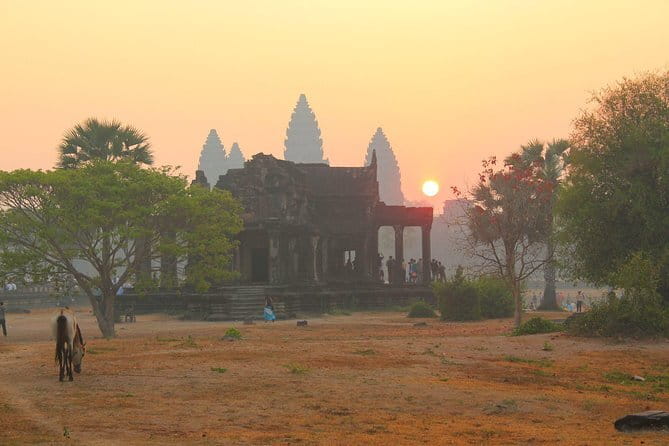
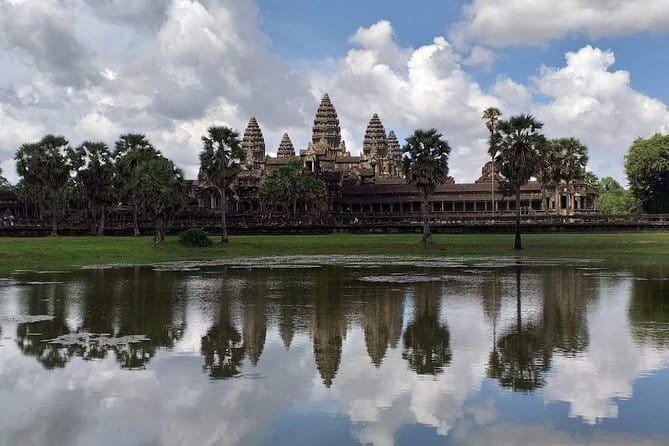
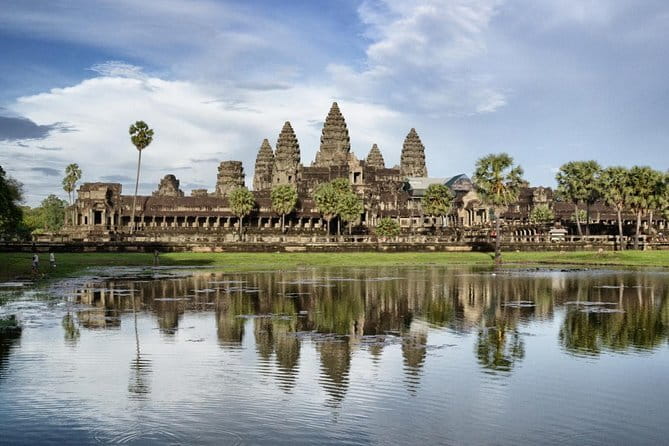
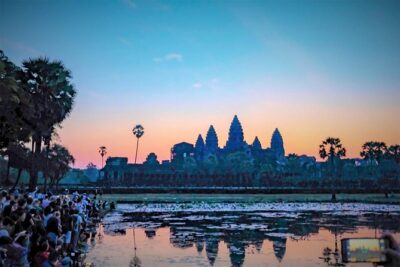
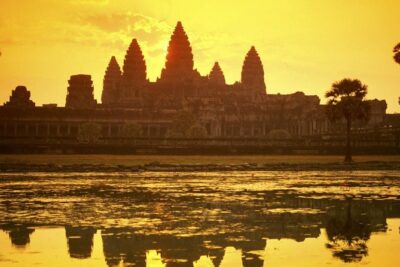
Angkor Wat was built by Suryavarman II in the 12th century to honor Lord Vishnu. It’s the largest monument of Angkor and is described as the most breathtaking of the Angkor complex.
What you’ll want from a guide here is not only “what the building is,” but “what to notice.” Angkor Wat has different layers—approach, outer spaces, central axis—and if you get a quick mental map, you’ll enjoy it more and feel less lost.
Two hours gives you time to do what works: walk the main areas without rushing every single corner, and still stop to look up at carvings and doorway details.
Phnom Bakheng (about 1 minute)
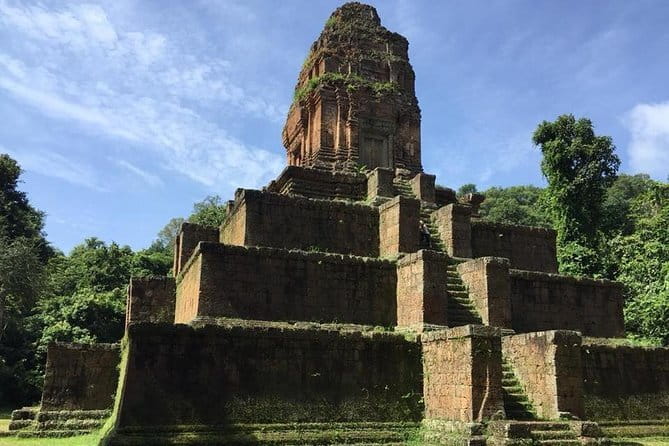
Phnom Bakheng is built by Yasovarman I in the early 10th century and is described as the first temple-mountain built in the vicinity. It has five tiers and seven levels.
The time block listed is extremely short, so your goal here is simple: see it briefly, understand what it represents, and move on. If you like viewpoints, you might find yourself wishing for more time, but the schedule is designed to keep you moving through the larger story of Angkor.
Angkor Thom (about 2 hours)
Angkor Thom was the last city of Angkor, built by Jayavarman VII. It’s centered on the Bayon, and it’s noted that at its peak the surrounding region may have supported about one million people. That scale is hard to picture until you stand inside the layout and realize it was a functioning city, not just monuments.
This is where a good guide earns their price. You’ll enjoy Angkor Thom more if the guide connects the urban plan and the Bayon focus to the city’s purpose—especially through the religious framing of Jayavarman VII’s era.
Ta Prohm (about 1 hour)
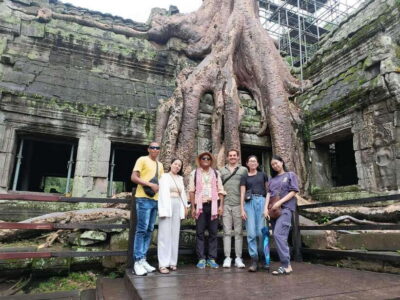
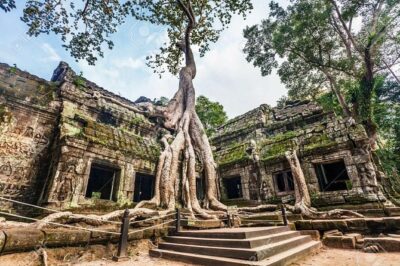
Ta Prohm is described as the most atmospheric ruin at Angkor and it’s famous for being swallowed by trees. The attraction here is easy to understand even before someone explains it: the way the roots and stones interact creates a dramatic scene.
Your 1 hour is about enough to experience the mood, not enough to get bored. If your group wants to linger, the flexibility you get from attentive guiding can matter—some guides have suggested a day pivot based on where families spent the most time enjoying Ta Prohm.
Pacing, comfort, and avoiding the Angkor burnout
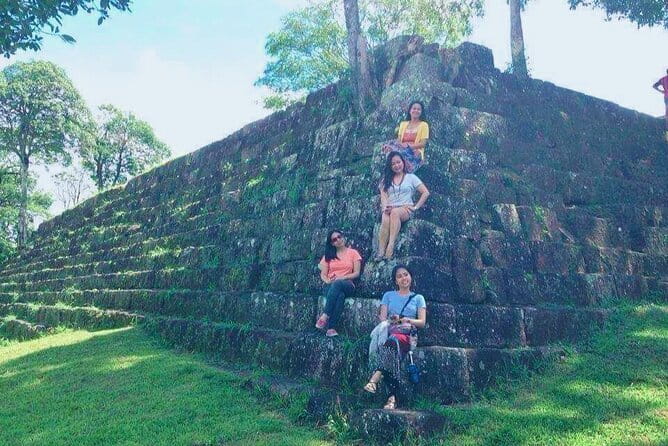
Two-day Angkor tours succeed or fail on pacing. This one uses short blocks on day one to protect your energy, then longer blocks on day two for the biggest icons.
If you’re the type who loves photos, plan for this: temple photography is slow. You’re waiting for light, adjusting your angle around other people, and sometimes needing a moment of breathing room to frame carvings. That’s where I like the photo coaching angle. When a guide tells you where to stand and how to use your phone camera more effectively, you lose less time guessing.
Comfort also matters. The included AC vehicle and the mention of cold water are practical benefits, not luxury fluff. Your schedule is broken into walking zones and car breaks, and that rhythm helps you keep your head clear—especially in the hottest hours.
One more pacing tip: bring a small routine for water and shade. Your guide can’t replace your own body’s needs. Aim to move early where possible and treat the day’s middle as the time for breaks and shorter stops.
What you’ll actually see at each site: quick expectations
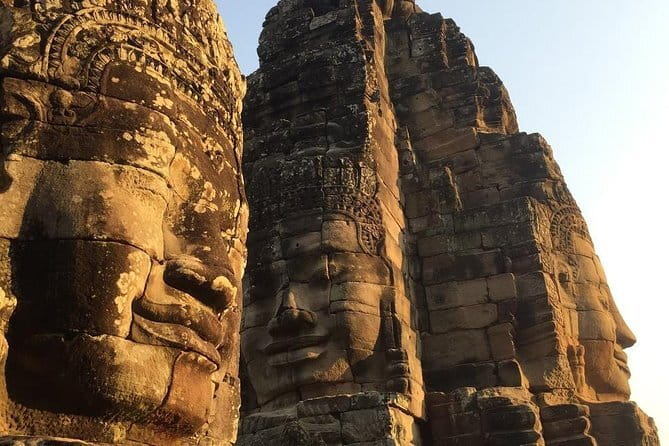
Here’s the practical feel of what each stop brings, so you know what you’re getting before you arrive.
- Banteay Srei: smaller and art-focused. Expect detailed stonework and a temple that rewards attention.
- Banteay Samre: Vishnu dedication with preserved structure. Good for clear architectural views.
- Preah Khan: corridors and carvings. Feels bigger and more maze-like than it looks on a map.
- Neak Pean: Buddhist, water-setting temple. Best as a calm visual break.
- Ta Som: quick gate and head carvings. Great as a short “photo plus” stop.
- Eastern Mebon: Hindu temple with shifting water context. Useful for understanding Angkor’s water system ideas.
- Pre Rup: temple-mountain pyramid tiers. Strong structural clarity.
- Angkor Wat: must-see scale and symmetry. Ideal for walking with context, not just selfies.
- Phnom Bakheng: brief viewpoint temple-mountain feel.
- Angkor Thom: city-scale space with Bayon at the center. Best with guided interpretation.
- Ta Prohm: tree-wrapped ruins. Dramatic atmosphere and lots of photo opportunities.
The tour works best if you go in with flexible expectations. Some stops are meant for close looking. Others are meant for quick hits that keep the story moving.
Who this tour fits best (and who should rethink it)
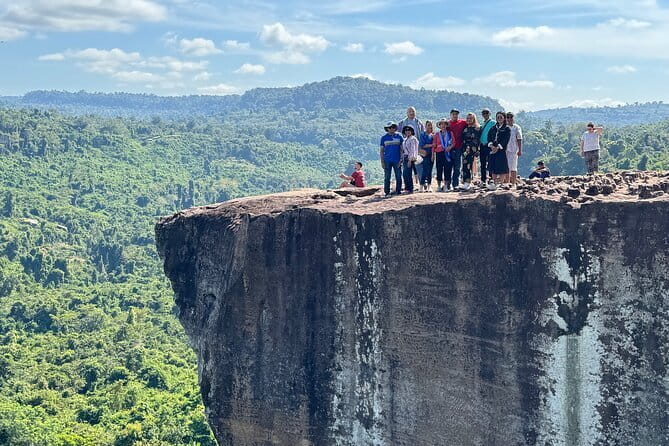
This tour fits you if you want:
- a private schedule with pickup and AC transport
- clear explanations tied to what you’re seeing
- enough structure to cover the big icons in two days
- help with photography timing and phone camera angles
It may be less ideal if you:
- want zero walking and only minimal stairs (the tour calls for moderate physical fitness)
- expect admission fees to be handled for you (they are not included)
- hate group travel logistics completely, because even though it’s private, the route still follows shared temple access rhythms
If you’re traveling with family, this kind of guide flexibility can be a big deal. One guide suggestion pivoted the plan toward Ta Prohm because it was where the group’s attention landed.
Should you book this Two Day Angkor Temples Tour?
I’d book it if you want two days that feel organized without feeling like a race. The mix of sites hits Angkor Wat, Angkor Thom, and Ta Prohm, then supports that with smaller temples that help you understand how Angkor thought about art, religion, and place.
It’s especially worth it if you care about learning something real—not just collecting stamps. The guide team is the selling point here: responsive pacing, strong English, and practical photo advice from guides like Borey Hang, Kimhoeun, Mr. Kim, and Mr. Bunleat.
Just plan for the one obvious catch: admission tickets and GST are not included, so do your math before you fall in love with the itinerary. Also, bring enough stamina for “moderate physical fitness.” Angkor rewards curiosity more than speed.
If you want a smooth, guide-led introduction to Angkor across two days, this is a good choice.
FAQ
What does the tour cost, and how far ahead do people usually book?
The price is $102.57 per person, and bookings are typically made about 28 days in advance on average.
Are admission tickets included for the temples?
No. Admission tickets are not included, so you’ll need to budget for entry fees separately.
Is this tour private?
Yes. It’s a private tour/activity, and only your group will participate.
Do you get pickup and air-conditioned transportation?
Pickup is offered, and an air-conditioned vehicle is included.
Where do we meet for the tour?
The ticket redemption point is Angkor Enterprise, Apsara Rd, Krong Siem Reap, Cambodia.
Do I need a certain fitness level, and what happens with bad weather?
You should have a moderate physical fitness level. The experience also requires good weather, and if it’s canceled due to poor weather you’ll be offered a different date or a full refund.
More Tour Reviews in Siem Reap
- Angkor Wat Sunrise or Sunset Tour with Guide from Siem Reap
★ 5.0 · 12,109 reviews - Siem Reap: Angkor Wat: Small-Group Sunrise or Sunset Tour
★ 5.0 · 9,444 reviews - From Siem Reap: Kampong Phluk Floating Village Tour by Boat
★ 4.9 · 6,979 reviews - Sunset tour of Kampong Phluk stilts home village on the Tonle Sap
★ 5.0 · 4,865 reviews - Siem Reap: Angkor Wat 2-Day Tour with Sunrise and Sunset
★ 4.9 · 4,429 reviews
More Days at the Temples
- Siem Reap: Angkor Wat 2-Day Tour with Sunrise and Sunset
★ 4.9 · 4,429 reviews - Angkor 2-Day Sunset & Sunrise Small-Group Tour
★ 5.0 · 2,567 reviews - 2 Days Exclusive Temple Highlights with Sunset and Sunrise Tour
★ 5.0 · 1,157 reviews - Siem Reap: Angkor Sunrise 1- or 2-Day Guided Temples Tour
★ 4.9 · 1,132 reviews - 2 Days Guided Historical Tour in Angkor
★ 5.0 · 855 reviews
More Temple Circuits Around Siem Reap
- Angkor Wat Sunrise or Sunset Tour with Guide from Siem Reap
★ 5.0 · 12,109 reviews - Siem Reap: Angkor Wat: Small-Group Sunrise or Sunset Tour
★ 5.0 · 9,444 reviews - Siem Reap: Angkor Wat 2-Day Tour with Sunrise and Sunset
★ 4.9 · 4,429 reviews - Siem Reap: Full-Day Angkor Wat Guided Tour with Sunset
★ 4.9 · 3,803 reviews - Angkor Wat Sunrise tour with Small – Group and Guide tours
★ 5.0 · 3,655 reviews
Just Added: Fresh Siem Reap Tour Reviews

Angkor Temple Tours, compared.
 ★ 5.0Angkor Wat Sunrise or Sunset Tour with Guide from Siem ReapFrom $1812,109 reviews
 ★ 5.0Angkor Wat: Small-Group Sunrise or Sunset TourFrom $159,444 reviews
 ★ 4.9Angkor Wat 2-Day Tour with Sunrise and SunsetFrom $344,429 reviews
 ★ 4.9Full-Day Angkor Wat Guided Tour with SunsetFrom $153,803 reviews
 ★ 5.0Angkor Wat Sunrise tour with Small – Group and Guide toursFrom $143,655 reviews
 ★ 5.0Angkor Wat Highlights and Sunrise Guided Tour from Siem ReapFrom $233,213 reviews
 ★ 5.0Angkor Wat Sunset Small Group Tour with Lunch IncludedFrom $203,059 reviews
 ★ 5.0Full-Day Angkor Wat Sunrise Private Tour with Guide from Siem ReapFrom $602,920 reviews
Browse the lists this tour appears in