
Reviewed · MULTI-DAY ANGKOR TOURS
2-Days Tour (The Best Historical of Khmer Empire)
Angkor makes more sense with a guide. This private 2-day plan pairs a local English-speaking guide with a driver who keeps the day moving while you learn how the Khmer Empire fits together.
I also really like the comfort extras—cool waters and cool wet towels—because temple days in Siem Reap can feel long fast.
One catch: the Angkor pass and lunch aren’t included, so you’ll need to budget a bit and plan food on your own.
In This Review
- Key points I’d bookmark before you go
- Why this 2-day Khmer Empire plan works (even when you hate crowds)
- Price and what you’re really paying for at $145
- Your comfort setup in Siem Reap: vehicle, guide style, and small perks
- Day 1: Angkor Thom’s royal city loop, from Bayon to Pre Rup
- Bayon Temple and the 37 towers people photograph first
- Baphuon: the state temple and the Shiva connection
- Elephant Terrace and Terrace of the Leper King: carving stories you can walk along
- Preah Palilay and Phimeanakas: smaller stops with a different vibe
- Afternoon shift: Banteay Srei and Banteay Samre
- Pre Rup sunset: false doors and countryside views
- Day 2: Angkor Wat and Ta Prohm, then the older roots at Roluos and Hariharalaya
- Angkor Wat in the morning: architecture first, then the mood
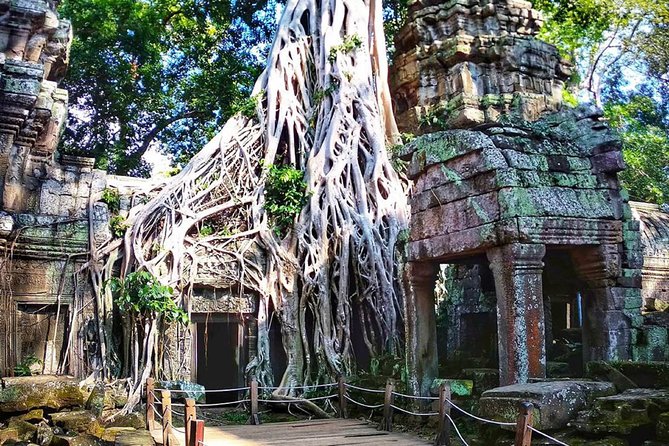
- Ta Prohm: tree-in-temple photos, but with a quiet edge
- Bakong and Lolei: the Roluos Group and the earlier temple-mountain idea
- Preah Ko: early Khmer capital of Hariharalaya
- Old Market (Psar Chaa) and Artisans Angkor: shopping with a purpose
- Practical notes that can save your day at Angkor
- Who should book this tour?
- Should you book Hidden Angkor Tour’s Best Historical of Khmer Empire 2-Day plan?
- FAQ
- Is Angkor Wat entry included in the $145 price?
- What’s included in the tour price?
- Are meals included?
- What about pickup and drop-off?
- Do I need to follow a dress code?
- Can I cancel and get a full refund?
- Is this a private tour?
Key points I’d bookmark before you go
- Private, full-day pace with an English-speaking guide and air-conditioned vehicle
- Angkor Thom first day order that starts with Bayon and builds through the royal-city temples
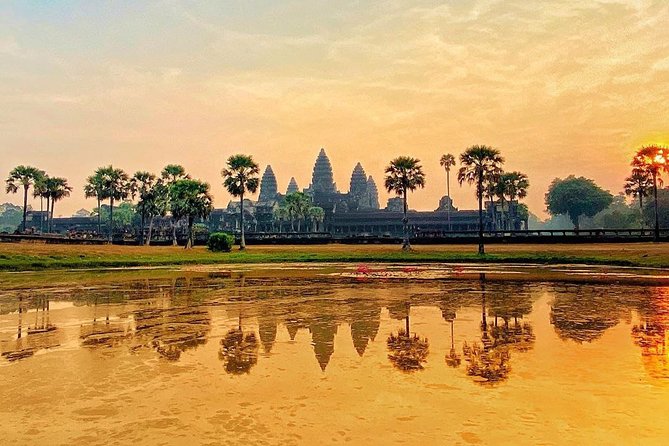
- Pre Rup sunset timing for those wide countryside views and false-door carvings
- Banteay Srei stop that trades mega-scale crowds for fine, delicate stonework
- Roluos Group on day two so you see the empire’s earlier capital roots, not just the headline temples
- Artisans Angkor and Old Market for souvenirs plus a quick look at local craft training
More time at the temples, spread over days
- Siem Reap: Angkor Wat 2-Day Tour with Sunrise and Sunset★ 4.9 · 4,429 reviews
- Angkor 2-Day Sunset & Sunrise Small-Group Tour★ 5.0 · 2,567 reviews
- 2 Days Exclusive Temple Highlights with Sunset and Sunrise Tour★ 5.0 · 1,157 reviews
- Siem Reap: Angkor Sunrise 1- or 2-Day Guided Temples Tour★ 4.9 · 1,132 reviews
Why this 2-day Khmer Empire plan works (even when you hate crowds)
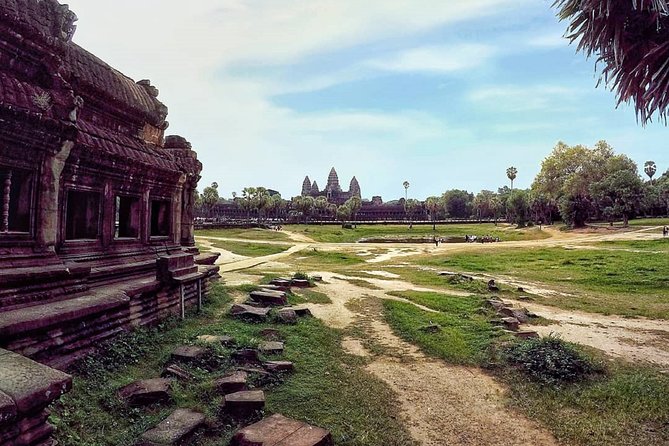
If you’re coming to Siem Reap for Angkor, you’re probably picturing the big names: Angkor Wat, Ta Prohm, Bayon. What this tour does well is the order and the explanations. You don’t just walk through stone. You start learning why each temple looks the way it does—who built it, what it was used for, and how the whole city plan connects.
On day one, you move through Angkor Thom, the walled royal city, where the architecture reads like a myth book: Shiva and Buddhism themes, royal palaces, terraces full of carved animals and demons. By the time you reach Pre Rup, the shift feels earned rather than random.
The other reason this tour feels satisfying is it’s private. That matters when you want photos, shade breaks, or a slower walk through a carved doorway. You’re not stuck matching your group’s pace to someone else’s energy level.
Price and what you’re really paying for at $145
At $145 per person, this is a middle-of-the-road price for a private 2-day temple program. The value is in three things that add up fast on your own:
- Transport + guide: air-conditioned vehicle with a professional driver plus a licensed English-speaking guide
- Heat management: cool waters and cool wet towels, which make a real difference between enjoying temples and just surviving them
- Temple coverage: you’re not doing only Angkor Wat and leaving. You hit Angkor Thom, Banteay Srei, Ta Prohm, plus Roluos Group and Hariharalaya-era sites like Preah Ko.
What’s not included is also clear, and this is the part you should plan for early. You must purchase the Angkor Archaeological Site pass at the main gate, and lunch is excluded (you’ll arrange it yourself). If you show up assuming everything is in the price, you’ll feel surprised.
Also note the dress code requirement at some temples (shoulders covered, and clothes falling below the knees). Pack for it and you’ll have fewer hassles at entry points like Baphuon.
Your comfort setup in Siem Reap: vehicle, guide style, and small perks
This tour is designed for comfort under pressure. You get an air-conditioned vehicle driven by a professional driver, and the day includes cool waters and cool wet towels. That might sound minor until you’re walking in the midday sun and trying to keep your energy up.
The guide approach seems to be a big reason people rate this so highly. In the experiences shared, guides such as Veasna and Vutha are repeatedly described as passionate and humorous, with a talent for explaining what you’re seeing in plain terms. Sophea also comes up as a standout guide in feedback. Many guides also help with practical photo timing, including angles you can’t easily guess on your own.
If you’re traveling as a family, this is one of the safer ways to handle kids and still see a lot. Some guides have shown flexibility, tailoring pacing to what children can handle. Just tell your guide what your group needs early.
Day 1: Angkor Thom’s royal city loop, from Bayon to Pre Rup
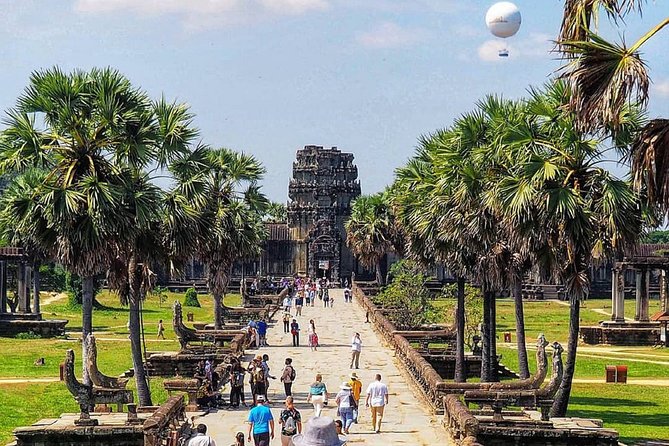
Day one is a strong “read the city” route. You start with the symbols everyone recognizes, then you work into the terraces and palace zones where details are harder to understand unless someone points them out.
Deeper into old Siem Reap
Bayon Temple and the 37 towers people photograph first
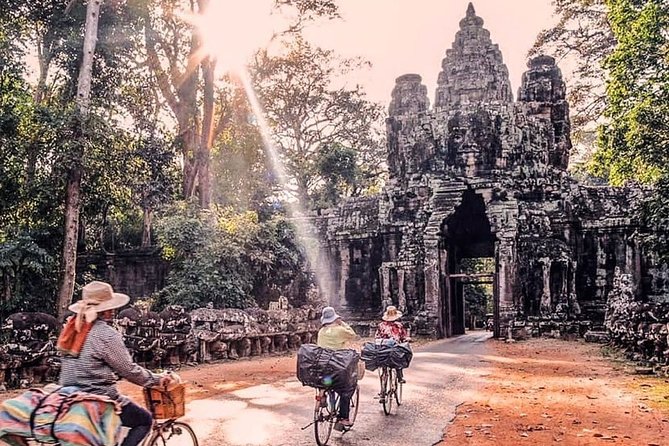
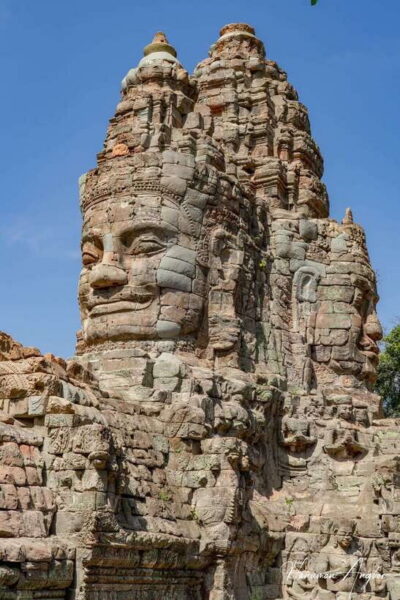
Bayon is your starting point at Angkor Thom. You’ll see the giant stone faces tied to classic Khmer art and architecture. The temple has 37 standing towers, and the effect is bigger than the photos. The guide’s job here is to help you notice patterns—where the faces sit, how the tower layout feels like a planned royal statement rather than random ornament.
Time on site: about 40 minutes.
Practical tip: arrive with a basic plan for photos: one wide shot for the towers, then circle for close facial details. A guide can often suggest when to move so you’re not stuck waiting for the worst crowd moment.
Baphuon: the state temple and the Shiva connection
Next is Baphuon, a three-tiered “temple mountain” style structure built as the state temple of Udayadityavarman II, dedicated to Shiva. You also get historical context that Baphuon was built before Angkor Wat.
Time on site: about 30 minutes.
Consideration: some Angkor temples enforce strict dress rules. Shoulders covered and knees below is the safe standard. If you’re in a T-shirt and shorts, plan ahead.
Elephant Terrace and Terrace of the Leper King: carving stories you can walk along
Then you hit two terrace zones that make Angkor Thom feel alive.
- Elephant Terrace runs through the heart of Angkor Thom. It’s about 300 meters long, decorated with elephants and garudas, with carvings that are easy to miss if you just rush through.
- Terrace of the Leper King sits nearby and is named for the status of a figure at the top. It’s a double terrace wall with deeply carved nagas and demons, plus other mythological beings.
Time on site: about 20 minutes for Elephant Terrace, and about 15 minutes for the Leper King terrace.
Practical tip: this is where a guide earns their fee. The carvings are dense. Having someone explain what you’re looking at makes the difference between seeing “pretty stone” and understanding the story.
Preah Palilay and Phimeanakas: smaller stops with a different vibe
Preah Palilay is a sandstone and laterite tower in a shaded forest setting, with Buddhist-themed carvings on the eastern gopura. The vibe is calmer than Bayon. It’s a nice mental reset during a busy day.
Phimeanakas follows. It’s a 10th-century pyramid Hindu temple located in the center of the old Royal Palace of Angkor Thom, and you’ll visit it along with the royal enclosure wall.
Time on site: about 20 minutes each (per the schedule).
What I like about these stops: they’re shorter, so you don’t feel trapped inside a long crowd line, but they still give you the sense that Angkor Thom wasn’t only about the iconic faces. It was about the whole sacred complex system.
Afternoon shift: Banteay Srei and Banteay Samre
After lunch break (lunch isn’t included, so you’ll arrange it), you head to smaller but highly rewarding temples.
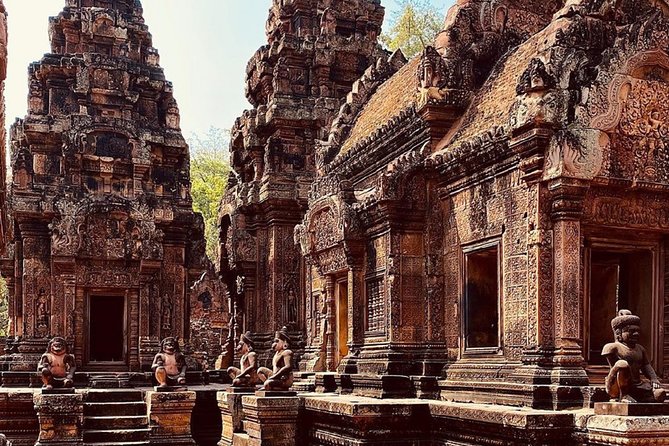
Banteay Srei (about 1.5 hours) is often called the citadel of women, linked to the delicate beauty of its carvings. This is the kind of stop where you’ll want to slow down, because the value is in the craft. If you like details, this is a highlight.
Banteay Samre (about 45 minutes) is a large, flat temple with Angkor Wat-style architecture and artistry. There’s also a legend connected to how the monument got its name, involving a farmer and a mistaken killing. Again, the guide’s storytelling makes the site click.
My practical advice: if you’re tired, tell your guide. They can adjust pace without ruining your ability to enjoy the carvings.
Pre Rup sunset: false doors and countryside views
Pre Rup is optional sunset, and it’s scheduled for about an hour. It’s described as architecturally and artistically superior, with false doors carved on the upper level. The other reason to come at sunset is the view over the surrounding countryside.
Time on site: about 1 hour.
Tip: sunset at Angkor can feel rushed if you treat it like a quick photo stop. If you can, stay for a few minutes longer after the first shots. Light changes the way stone looks.
Day 2: Angkor Wat and Ta Prohm, then the older roots at Roluos and Hariharalaya
Day two keeps the drama, then shifts to “where it all began.” That combo is what makes this more than a greatest-hits tour.
Angkor Wat in the morning: architecture first, then the mood
Angkor Wat gets about 2 hours. This is the big one: decorative details plus architectural style that feels monumental even from a distance. You’ll want time to walk through key areas slowly, not just circle and leave.
How to get more out of it: ask your guide to point out what you’re seeing besides the obvious towers and gates—how elements repeat, how the structure feels planned, not random.
Ta Prohm: tree-in-temple photos, but with a quiet edge
Ta Prohm gets about 2 hours. It’s known for the jungle feel because it’s only partially cleared, leaving trees growing among the ruins. That’s why it’s such a photo favorite.
Practical tip: even with the “jungle temple” vibe, it’s still a temple site. Stay aware of footing and be respectful around walls and carved areas.
Bakong and Lolei: the Roluos Group and the earlier temple-mountain idea
After lunch break on day two, you move to the Roluos Group.
Bakong (about 1 hour) is described as the most impressive temple mountain of the group and sits at the center of the first Angkorian capital. It’s also noted as the first temple mountain of sandstone construction by rulers of that early capital period.
Lolei (about 20 minutes) is an island-temple ruin in the middle of a now-dry Baray Indratataka, and it’s a smaller Hindu temple built in the 9th century.
Why this matters: Angkor Wat can feel like the end point of a story. Bakong and Lolei help you understand it as a sequence, where earlier capitals experimented with how to build sacred “mountains” and water connections.
Preah Ko: early Khmer capital of Hariharalaya
Preah Ko (about 15 minutes) is one of the first major temples of the empire, tied to the early Khmer capital of Hariharalaya. The stop is short, but it gives a meaningful time jump backward.
If you like context: this is a good place to ask your guide how the Khmer capital moved and why early temples mattered for later big sites like Angkor Wat.
Old Market (Psar Chaa) and Artisans Angkor: shopping with a purpose
Most temple days end with some shopping, but this plan doesn’t just throw you into a souvenir maze.
Psar Chaa – Old Market gets about 1 hour. You’ll find a deep selection of souvenirs and curios, with vendors spread around the market area. This is a good stop for practical buying—small gifts, magnets, simple crafts—when you want something easy without hunting around.
Then comes Artisans Angkor (about 1 hour). It’s described as a training ground for unschooled rural youth, helping them learn handicraft skills to make a living from production. If you’re the kind of person who cares where money goes, this adds a real local layer to the day.
My advice: set a simple shopping rule for yourself. Decide what you’ll buy before you enter the market, so you don’t end up carrying random “maybe” items.
Practical notes that can save your day at Angkor
These are the parts that can make or break your comfort and photos.
- Dress code is real: some temples (including Baphuon) uphold strict rules. Plan for clothes that cover shoulders and fall below the knees.
- Walking is required: expect some walking between sights and across temple areas.
- Sun and heat planning: bring sunglasses, a hat/cap, and high SPF sunscreen even if it’s cloudy.
- Protect your electronics: natural elements can damage phones and cameras. Wrap and protect your gear.
- Lunch isn’t included: you’ll need to plan food around your guide’s timing.
- Your Angkor pass must be carried: the pass grants access to sights around Angkor and should be visible at all times. Children under 12 are free of charge on the pass.
Who should book this tour?
Book this if you want:
- A private experience with an English guide and a smooth driver-managed route
- Angkor Thom plus Angkor Wat plus Ta Prohm, without sacrificing earlier temple context
- A guide-led approach that turns stone carvings into understandable stories
- A better end to the day than only shopping—adding Artisans Angkor is a nice touch
You might consider a different style if:
- You hate paying extra on arrival (the Angkor pass is not included)
- You want a fully self-paced tour with no guide explanations
- Your group needs a very light-footstep day with minimal walking, since you’ll still be moving between multiple temple sites
Should you book Hidden Angkor Tour’s Best Historical of Khmer Empire 2-Day plan?
I think it’s a strong choice if you’re aiming for value, not just boxes checked. At $145 per person, you’re getting a private vehicle, an English-speaking guide, and comfort support that actually matters in the heat. The temple mix also feels smart: you get the headline temples on day two, but you still spend day one in Angkor Thom where the Khmer royal-city details live.
Just go in with two plans: budget for the Angkor pass and handle lunch on your own. If you do that, you’ll spend your energy on what you came for—understanding the Khmer Empire through temples you can finally see with meaning, not just admiration.
FAQ
Is Angkor Wat entry included in the $145 price?
No. The entrance pass to the Angkor Archaeological site is not included. You’ll need to purchase the pass at the main gate (it’s charged in US dollars and gives access to sights in and around Angkor). Children under 12 are free of charge.
What’s included in the tour price?
Transportation in an air-conditioned vehicle with a professional driver, a licensed English-speaking guide, cool waters and cool wet towels, and applicable taxes and service charges are included.
Are meals included?
Lunch is excluded. You’ll arrange lunch on your own during the tour day.
What about pickup and drop-off?
Pickup and return transfers apply for customers staying in and inside Siem Reap. You’ll need to provide the correct hotel information for pickup/drop-off to work smoothly.
Do I need to follow a dress code?
Yes. Some temples have strict dress rules, including covering shoulders and wearing clothes that fall below the knees. This matters for sites like Baphuon.
Can I cancel and get a full refund?
Yes. You can cancel up to 24 hours in advance for a full refund. If you cancel less than 24 hours before the start time, the amount paid will not be refunded.
Is this a private tour?
Yes. It’s operated on a full private basis with only your group participating, and it includes an English-speaking guide. Other languages may be available on request for supplementary charges.
More Siem Reap Tours to Compare
- Angkor Wat Sunrise or Sunset Tour with Guide from Siem Reap
★ 5.0 · 12,109 reviews - Siem Reap: Angkor Wat: Small-Group Sunrise or Sunset Tour
★ 5.0 · 9,444 reviews - From Siem Reap: Kampong Phluk Floating Village Tour by Boat
★ 4.9 · 6,979 reviews - Sunset tour of Kampong Phluk stilts home village on the Tonle Sap
★ 5.0 · 4,865 reviews - Siem Reap: Angkor Wat 2-Day Tour with Sunrise and Sunset
★ 4.9 · 4,429 reviews
More Tour Reviews in Siem Reap
- Angkor Wat Sunrise or Sunset Tour with Guide from Siem Reap
★ 5.0 · 12,109 reviews - Siem Reap: Angkor Wat: Small-Group Sunrise or Sunset Tour
★ 5.0 · 9,444 reviews - From Siem Reap: Kampong Phluk Floating Village Tour by Boat
★ 4.9 · 6,979 reviews - Sunset tour of Kampong Phluk stilts home village on the Tonle Sap
★ 5.0 · 4,865 reviews - Siem Reap: Angkor Wat 2-Day Tour with Sunrise and Sunset
★ 4.9 · 4,429 reviews
More Days at the Temples
- Siem Reap: Angkor Wat 2-Day Tour with Sunrise and Sunset
★ 4.9 · 4,429 reviews - Angkor 2-Day Sunset & Sunrise Small-Group Tour
★ 5.0 · 2,567 reviews - 2 Days Exclusive Temple Highlights with Sunset and Sunrise Tour
★ 5.0 · 1,157 reviews - Siem Reap: Angkor Sunrise 1- or 2-Day Guided Temples Tour
★ 4.9 · 1,132 reviews - 2 Days Guided Historical Tour in Angkor
★ 5.0 · 855 reviews
Just Added: Fresh Siem Reap Tour Reviews

Multi-Day Angkor Tours, compared.
 ★ 4.9Angkor Wat 2-Day Tour with Sunrise and SunsetFrom $344,429 reviews
 ★ 5.0Angkor 2-Day Sunset & Sunrise Small-Group TourFrom $492,567 reviews
 ★ 5.02 Days Exclusive Temple Highlights with Sunset and Sunrise TourFrom $491,157 reviews
 ★ 4.9Angkor Sunrise 1- or 2-Day Guided Temples TourFrom $191,132 reviews
 ★ 5.02 Days Guided Historical Tour in AngkorFrom $35855 reviews
 ★ 5.02-Day Angkor Wat With Small, Big Circuit and Banteay Srei TourFrom $158545 reviews
 ★ 4.92-Day Temple Highlights Sunrise and Sunset OptionFrom $46445 reviews
 ★ 4.9Angkor Wat 2-Day complex Sun rise & Sun set with Guided TourFrom $30439 reviews
Browse the lists this tour appears in