
Reviewed · MULTI-DAY ANGKOR TOURS
3-Day Tour (The Historical of Khmer Empire)
If you only have a few days, this route helps you see more of Cambodia’s Khmer core. It’s a private 3-day circuit built around the big classics plus the off-the-main-grid temples that many shortcuts miss. You’ll move through Angkor Thom, Angkor Wat, remote Koh Ker, and jungle-heavy Beng Mealea with an English-speaking guide and a driver handling the driving.
I especially like the pacing: you’re out early and back around 5pm, with enough time at each stop to actually notice details. I also like that the tour is set up as fully private and customizable, so you’re not stuck in a shuffle line of strangers. One consideration: the Angkor Archaeological site pass isn’t included, and you’ll want the right dress code for some temples.
In This Review
- The Khmer Empire tour that skips the crowd-pressure
- Key things that make this 3-day Angkor-style tour work
- Price and what you really get for $250.50 per person
- Day 1 in Angkor Thom: Bayon faces, terraces, and Banteay Srei refinement
- Afternoon shift: Banteay Srei and Banteay Samre
- A practical optional finish: sunset at Pre Rup
- Day 2: Angkor Wat, Ta Prohm’s trees, and the Roluos-area classics
- Roluos Group: Bakong, Lolei, and Preah Ko
- Psar Chaa (Old Market) for a real break from stone
- Day 3: Koh Ker’s remote capital and Beng Mealea’s jungle puzzle
- Optional second sunset call: Pre Rup again
- Getting the timing right: 8:00am starts and avoiding the worst heat
- Guide quality and on-the-ground help you can feel
- Dress code and entry rules that can make or break the day
- Who this 3-day private Khmer Empire route suits best
- Should you book this 3-day Khmer Empire tour?
- FAQ
- Is the Angkor Archaeological site entrance pass included?
- What meals are included during the tour?
- What are the daily tour times?
- Is this tour private or group-based?
- Do I need to cover my shoulders and knees?
- Is pickup included from my hotel in Siem Reap?
- What happens if weather is bad?
The Khmer Empire tour that skips the crowd-pressure
This is the kind of tour that lets you look, pause, and ask questions without feeling rushed. The “private & luxury day out” format matters here because several of these sites get packed, and crowd avoidance isn’t just a comfort thing—it changes how you experience stonework and carvings.
On top of that, the guide-led storytelling is built into the day. You’ll see temples like Bayon’s iconic faces, Banteay Srei’s delicate carvings, and Koh Ker’s remote capital role, and then connect them to the Khmer rulers and religious mix of Hindu and Buddhist themes.
More time at the temples, spread over days
- Siem Reap: Angkor Wat 2-Day Tour with Sunrise and Sunset★ 4.9 · 4,429 reviews
- Angkor 2-Day Sunset & Sunrise Small-Group Tour★ 5.0 · 2,567 reviews
- 2 Days Exclusive Temple Highlights with Sunset and Sunrise Tour★ 5.0 · 1,157 reviews
- Siem Reap: Angkor Sunrise 1- or 2-Day Guided Temples Tour★ 4.9 · 1,132 reviews
Key things that make this 3-day Angkor-style tour work
- Fully private format: only your group, with an English-speaking guide and dedicated driver.
- A/C transportation plus cool water and wet towel to manage Siem Reap heat and long temple days.
- Two zones beyond the main core: Koh Ker (113 km) and Beng Mealea (about 60 km) on separate days.
- Optional sunset choices at Pre Rup so you can trade midday crowds for golden-hour views.
- Strict entry rules planned for: dress code covering shoulders and knees helps prevent disappointment.
Price and what you really get for $250.50 per person
At $250.50 per person for three days, the price makes sense if you value private logistics: you’re paying for your own guide, your own air-conditioned vehicle, and someone to keep the sequence efficient. This isn’t just a drive-by bus tour. The day is structured from 8:00am to about 5:00pm with a guide at each stop, and that’s the part that usually costs you the most in time (and sanity) if you try to DIY.
What’s not included is equally important. You’ll need to buy the Angkor Archaeological site entrance pass at the main gate (fees charged in US dollars, valid from 1 day up to 7 days). Meals are also not included, and lunch is excluded during the full-day tour—you’ll eat on your own at local restaurants your guide can point you toward.
Day 1 in Angkor Thom: Bayon faces, terraces, and Banteay Srei refinement
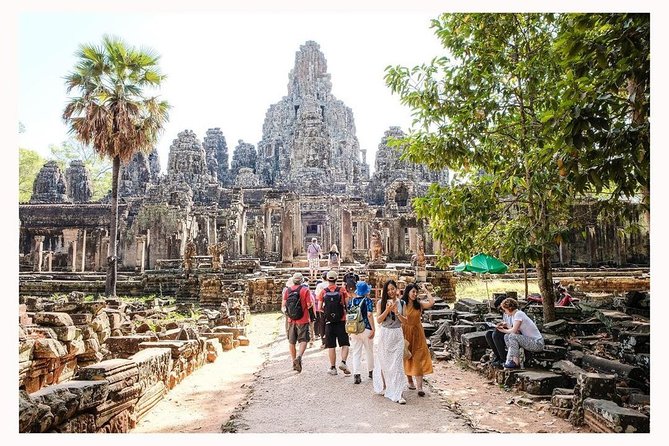
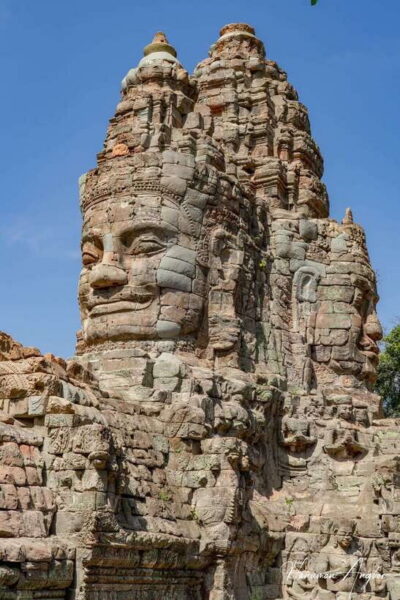
Day 1 is all about Angkor Thom, the walled city that feels like a stone stage set for Khmer power. You start with Bayon, famous for its giant stone faces and the visual rhythm of 37 towers. The experience is strongest when you’re not just snapping photos—you let your eyes adjust to different angles, then watch how the “expressions” shift as you move.
Next is Baphuon, a temple-mountain connected to Udayadityavarman II and dedicated to Shiva. Even if you’re not a temple scholar, it’s one of those stops where your guide can explain why it looks the way it does, and how the Khmer blended politics and religion into architecture.
Then you get the “wow-wall” storytelling at Terrace of the Elephants and the Terrace of the Leper King. The Elephant Terrace runs for about 300 meters and is lined with carved elephants and garudas. The Leper King terrace is a double terrace wall with deeply carved nagas and demons, and it’s named for the figure on top. These terraces can feel like background if you’re rushing—slow down and you’ll start seeing layers.
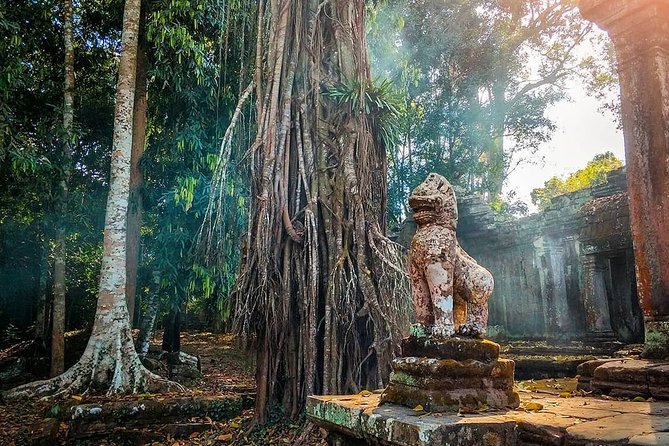
You finish Angkor Thom with Preah Palilay, set in a cool, shaded forest. The key benefit here is contrast: after open courtyards and bright stone, you get a calmer mood and Buddhist-themed carvings worth taking your time on.
Afternoon shift: Banteay Srei and Banteay Samre
After lunch at a local restaurant in the Angkor area (lunch is on your own), the tour turns more delicate and decorative.
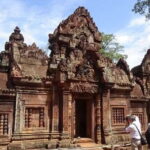
Banteay Srei is often a favorite because it’s called the citadel of women in translation, with a reputation for some of the finest carving work. It’s smaller than Angkor Wat-scale sites, which means you can get closer and read the details better.
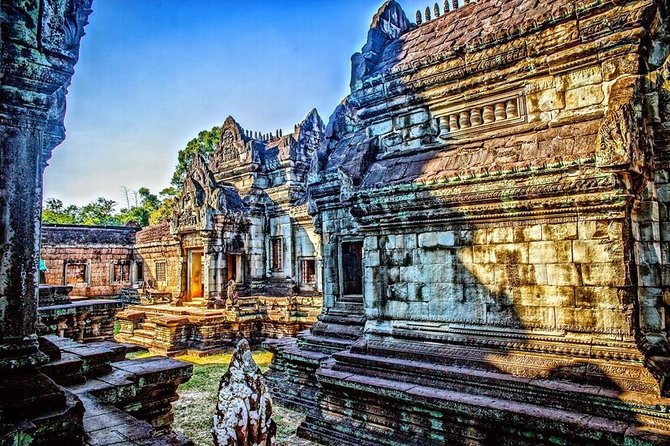
Banteay Samre is different: it’s flatter and spreads out, built with Angkor Wat-style architecture and artistry. There’s also a naming legend tied to a farmer who accidentally killed someone associated with the throne—your guide can use that story to connect the temple to how Khmer communities held myths and rulers in their heads.
Deeper into old Siem Reap
A practical optional finish: sunset at Pre Rup
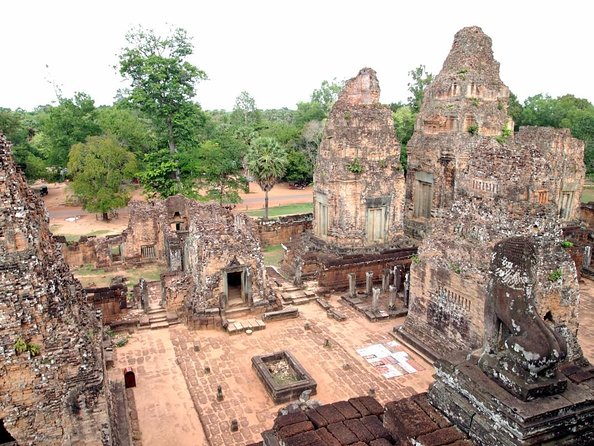
The schedule includes an optional Pre Rup sunset. If you choose it, plan for the late-day shift: temple-mountain views can be fantastic when the light changes, and the carvings include those distinctive false doors on the upper level. Even if you don’t go at sunset, the temple still works as a strong day-closer.
Day 2: Angkor Wat, Ta Prohm’s trees, and the Roluos-area classics
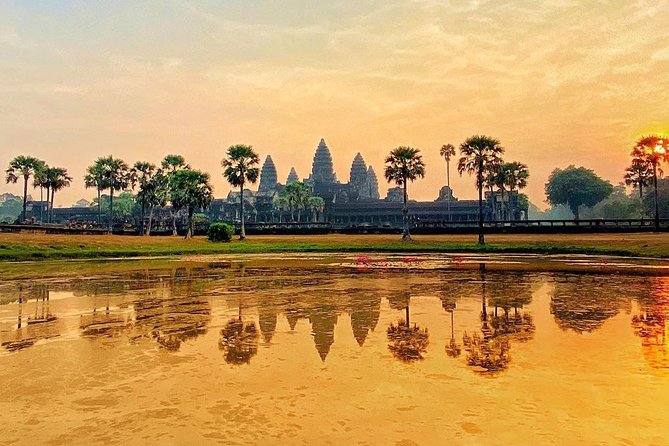
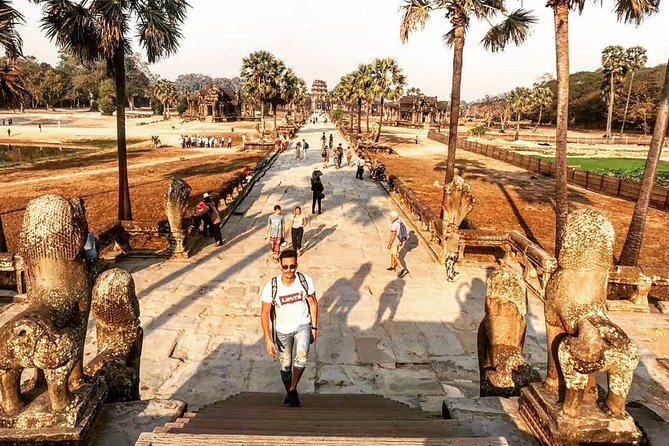
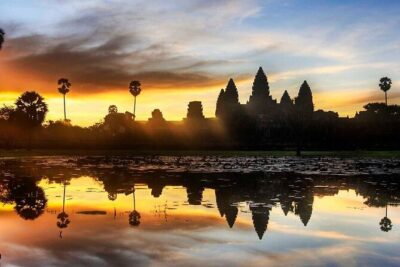
Day 2 starts with Angkor Wat, which is the big one. You’ll get about two hours here, enough time to take in the overall geometry and then focus on decorative details instead of only the main viewpoint. What makes this day work is the order: after Angkor Thom yesterday, Angkor Wat feels like the Khmer empire at full clarity—more symmetry, more deliberate monument-making.
Then comes Ta Prohm, the jungle temple that’s partially cleared of overgrowth and famous for tree-in-temple photos. You’ll spend about 1.5 hours, and the trick is to treat it like a “choose your angle” site. If you wander without direction, you end up taking the same photo as everyone else. A guide helps you find the calmer spots and the better sightlines.
After that you’ll visit Ta Nei, a jungle temple reminiscent of Ta Som. It includes classic artistry associated with Jayavarnan VII, and you can look for Apsara and lintel carvings. This is the kind of stop that feels small at first glance—until you slow down and let the guide’s explanations pull the details forward.
Roluos Group: Bakong, Lolei, and Preah Ko
In the afternoon you shift into the Roluos Group and nearby early-capital temples. Bakong sits at the center of the first Angkorian capital and is one of the most impressive members of the group. It’s a good counterbalance after Ta Prohm: more structure, less jungle drama.
Then you go to Lolei, an island-temple built in the middle of a now-dry baray. That dry landscape changes the way you experience the temple. Instead of water reflecting the design, you’re seeing the plan and layout in a more literal way.
Next is Preah Ko, called Sacred Bull, one of the first major temples of the empire at early Khmer capital Hariharalaya. It’s a shorter stop, but it helps connect the empire’s origin story to the later monument scale.
Psar Chaa (Old Market) for a real break from stone
To close the day, you’ll visit Psar Chaa (Old Market), a major souvenir and curiosity hub. You’ll have around two hours here. This isn’t the highlight for everyone, but it’s useful if you want to browse without guessing where to go, and it gives your feet time to recover.
Day 3: Koh Ker’s remote capital and Beng Mealea’s jungle puzzle
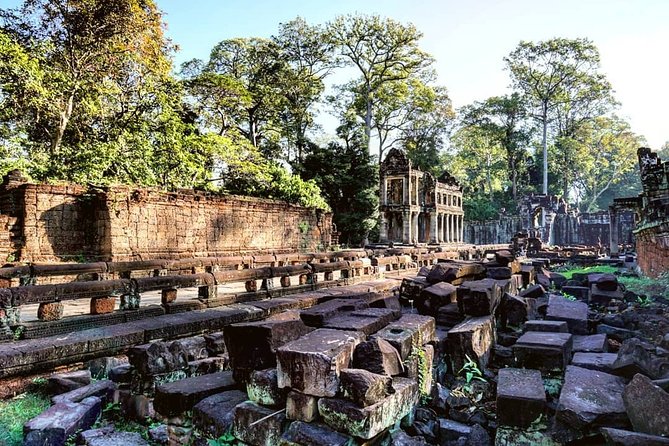
Day 3 is where this tour earns its name as historical rather than just sightseeing. You leave Siem Reap’s main Angkor zone and head to the places that sit outside the daily crowd loop.
First stop: Koh Ker Temple. It’s about 113 km from Siem Reap and tied to a rough political period inside the Angkorian kingdom, when Koh Ker became a temporary capital under King Jayavarman IV. The distance matters. You’ll feel it in the drive time, but that’s also what makes the temple feel like a different chapter instead of another version of the same stones.
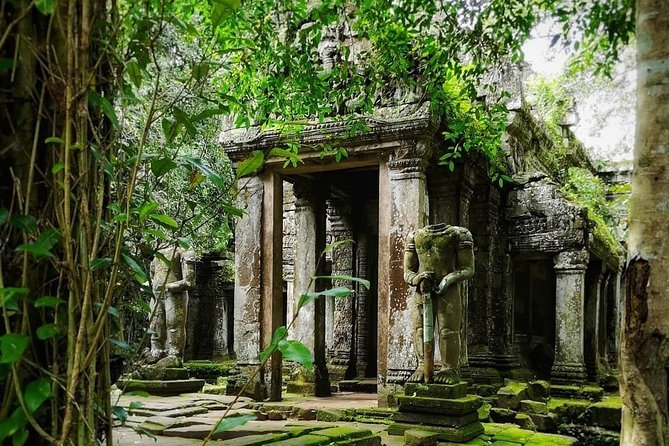
Then you go to Beng Mealea, roughly 60 km from Siem Reap. This is the jungle-heavy contrast day. The temple is Hindu and built around the end of the 11th century, and the area is covered by jungle across more than one square kilometer. What you’ll likely appreciate most is the atmosphere: it’s less restored “museum clean” and more broken, swallowed, and real in the way a site looks when nature has a long grip.
Optional second sunset call: Pre Rup again
The plan also includes an optional Pre Rup sunset. If you didn’t do it Day 1, Day 3 gives you another shot. Pre Rup is described as architecturally and artistically superior, with false doors and surrounding countryside views. It’s one of the few stops in the itinerary where sunset is explicitly framed as part of the experience.
Getting the timing right: 8:00am starts and avoiding the worst heat
The daily rhythm runs roughly from 8:00am to 5:00pm, and that’s a smart structure for Angkor. You avoid the mid-morning crush, then work through sites before late-day heat becomes miserable. It also keeps your hotel day from turning into a half-day disaster.
Still, you should plan for long days. Even with dedicated transport, you’re walking temple grounds repeatedly over three days, and the humidity can sneak up on you. This is where the supplied cool water and cool wet towel are genuinely useful, not just a nice extra.
If you’re choosing the optional sunset at Pre Rup, plan your energy accordingly. Sunset is great, but it can turn the final hours into slower walking and more waiting. If your group is mixed in age or stamina, ask for the option that keeps everyone comfortable.
Guide quality and on-the-ground help you can feel
One of the most praised parts of this tour is the way the guide handles both history and logistics. People repeatedly mention guides such as Mr. Veasna and Mr. Sophea/Sophia leading the experience with clear explanations and solid pacing, plus drivers like Mr. Sophan and Mr. Vandy keeping pickups and transitions running on time.
That matters because the Angkor complex is big, and without guidance you can end up memorizing names but not understanding why the monuments look the way they do. A good guide also helps with photo planning. You can still take great pictures on your own, but getting the better angles and calmer moments saves you time and frustration.
Dress code and entry rules that can make or break the day
This is one of those tours where “what you wear” turns into “whether you’re allowed in.” The dress code is light clothes, but you must cover shoulders and keep knees covered. Some temples, such as those like Baphuon, uphold a strict dress standard.
Also keep your outfit respectful. You may be refused entrance if you wear shirts with obscene or disrespectful prints, or brightly-coloured clothing. I know it sounds strict, but it’s part of how these sacred sites manage visitors.
Finally, bring something practical for the weather. Rain and humidity happen, and electronics don’t like it. The tour info notes natural elements can damage devices, so protect your phone and camera from moisture and dust.
Who this 3-day private Khmer Empire route suits best
This tour fits best if you want a structured plan but don’t want to be trapped with a crowd. If you’re traveling as a couple, a family, or a group of friends, the private format is a big advantage because you control the pace and can ask to adjust stops.
It’s also a strong choice if you’re curious about the Khmer empire beyond Angkor Wat. Koh Ker and Beng Mealea aren’t “add-ons.” They’re core to the historical arc, especially if you like the story of shifting capitals and temples that feel partly reclaimed by the jungle.
If you’re the type who loves markets and daily-life breaks, the Old Market stop gives you that outlet without needing to figure out where to go.
Should you book this 3-day Khmer Empire tour?
Book it if you want private temple time, a guide to connect the monuments to Khmer rulers and religious themes, and a plan that includes both the big icons and the remote sites like Koh Ker and Beng Mealea. For $250.50 per person, you’re really paying for comfort, time-saving routing, and an English-speaking guide across three full days.
Hold off if you’re hoping the Angkor pass and meals are included in the price, or if you don’t want to deal with dress code rules. You’ll still be able to visit, but you need to plan your spending and outfit in advance.
FAQ
Is the Angkor Archaeological site entrance pass included?
No. The entrance pass is not included. You purchase it at the main gate, and it gives access to sights in and around Angkor. Fees are charged in US dollars only, and children under 12 are free.
What meals are included during the tour?
Meals are not included. Lunch is excluded on the full-day tour, so you’ll pay for it on your own at local restaurants during the day.
What are the daily tour times?
Each day runs from about 8:00am to 5:00pm, with the specific temple stops scheduled within that window.
Is this tour private or group-based?
It’s fully private. Only your group participates, with an English-speaking guide and transportation by air-conditioned vehicle.
Do I need to cover my shoulders and knees?
Yes. The dress code requires light clothing that covers shoulders and keeps knees covered. Some temples have strict dress requirements, and refusal of entry is possible for disrespectful prints or brightly-coloured clothing.
Is pickup included from my hotel in Siem Reap?
Pickup is offered, and return transfers for the excursion apply only for customers staying in and inside Siem Reap. The exact pickup time is confirmed as part of the reservation process.
What happens if weather is bad?
This experience requires good weather. If it’s canceled due to poor weather, you’ll be offered a different date or a full refund.
If you want, tell me your travel dates and your group size, and I’ll help you sanity-check whether you’d likely buy a 1-day vs multi-day Angkor pass based on how much you plan to do beyond this tour.
More Siem Reap Tours to Compare
- Angkor Wat Sunrise or Sunset Tour with Guide from Siem Reap
★ 5.0 · 12,109 reviews - Siem Reap: Angkor Wat: Small-Group Sunrise or Sunset Tour
★ 5.0 · 9,444 reviews - From Siem Reap: Kampong Phluk Floating Village Tour by Boat
★ 4.9 · 6,979 reviews - Sunset tour of Kampong Phluk stilts home village on the Tonle Sap
★ 5.0 · 4,865 reviews - Siem Reap: Angkor Wat 2-Day Tour with Sunrise and Sunset
★ 4.9 · 4,429 reviews
More Tour Reviews in Siem Reap
- Angkor Wat Sunrise or Sunset Tour with Guide from Siem Reap
★ 5.0 · 12,109 reviews - Siem Reap: Angkor Wat: Small-Group Sunrise or Sunset Tour
★ 5.0 · 9,444 reviews - From Siem Reap: Kampong Phluk Floating Village Tour by Boat
★ 4.9 · 6,979 reviews - Sunset tour of Kampong Phluk stilts home village on the Tonle Sap
★ 5.0 · 4,865 reviews - Siem Reap: Angkor Wat 2-Day Tour with Sunrise and Sunset
★ 4.9 · 4,429 reviews
More Days at the Temples
- Siem Reap: Angkor Wat 2-Day Tour with Sunrise and Sunset
★ 4.9 · 4,429 reviews - Angkor 2-Day Sunset & Sunrise Small-Group Tour
★ 5.0 · 2,567 reviews - 2 Days Exclusive Temple Highlights with Sunset and Sunrise Tour
★ 5.0 · 1,157 reviews - Siem Reap: Angkor Sunrise 1- or 2-Day Guided Temples Tour
★ 4.9 · 1,132 reviews - 2 Days Guided Historical Tour in Angkor
★ 5.0 · 855 reviews
Just Added: Fresh Siem Reap Tour Reviews

Multi-Day Angkor Tours, compared.
 ★ 4.9Angkor Wat 2-Day Tour with Sunrise and SunsetFrom $344,429 reviews
 ★ 5.0Angkor 2-Day Sunset & Sunrise Small-Group TourFrom $492,567 reviews
 ★ 5.02 Days Exclusive Temple Highlights with Sunset and Sunrise TourFrom $491,157 reviews
 ★ 4.9Angkor Sunrise 1- or 2-Day Guided Temples TourFrom $191,132 reviews
 ★ 5.02 Days Guided Historical Tour in AngkorFrom $35855 reviews
 ★ 5.02-Day Angkor Wat With Small, Big Circuit and Banteay Srei TourFrom $158545 reviews
 ★ 4.92-Day Temple Highlights Sunrise and Sunset OptionFrom $46445 reviews
 ★ 4.9Angkor Wat 2-Day complex Sun rise & Sun set with Guided TourFrom $30439 reviews
Browse the lists this tour appears in